A 50-mg clomifene tablet is not a complete fertility-treatment decision: the patient’s diagnosis, cycle timing, monitoring plan, and safety screening determine whether it belongs in the treatment pathway. By comparing clinical suitability with product identity, Chilean market authorization, landed cost, and institutional documentation, you can separate a usable Santiago supply option from a quotation that only looks attractive.
Key takeaways
- Use 50 mg only after clinician-confirmed ovulatory dysfunction.
- Track ovulation and treatment response during each clomifene cycle.
- Reject packs with missing batch numbers, expiry dates, or damaged seals.
- Verify supplier licensing, product registration, and institutional-order documents.
When is a 50-mg clomifene tablet suitable for a patient?
A 50-mg tablet is suitable only after a clinician confirms ovulatory dysfunction and finds no reason to choose another fertility treatment. Clomifene citrate stimulates ovulation; it does not correct every cause of infertility or replace fertility-clinic assessment.
1. Confirm the cause. Assess menstrual history, ovulation, ovarian function, and relevant hormone results rather than treating infertility by tablet strength alone.
2. Exclude pregnancy before treatment. Also screen for liver disease or previous liver dysfunction, unexplained abnormal uterine bleeding, uncontrolled thyroid or adrenal disease, and ovarian cysts unrelated to polycystic ovary syndrome.
3. Evaluate both partners. Obtain semen analysis and assess the fallopian tubes and uterine cavity when indicated. Blocked fallopian tubes prevent the egg and sperm from meeting, while severe male-factor infertility may require assisted reproductive treatment instead.
4. Check ovarian reserve and other diagnoses. Diminished ovarian reserve, endometriosis, uterine disease, or another identified cause can require a different plan, referral, or treatment sequence rather than clomifene alone.
5. Confirm supervised use. Clomifene increases the chance of multiple pregnancy and can enlarge the ovaries, so dispensing must follow a clinician’s monitoring plan.
A search for “clomifene citrate 50mg supplier in santiago” does not establish that a patient is an appropriate candidate or that the product is legally marketable. Before accepting it, verify the Chilean sanitary registration, registered name, manufacturer, dosage form, and active ingredient: clomifene, also called clomiphene or clomifeno.
How is clomifene used and monitored during treatment cycles?
The usual cycle is 50 mg of clomifene taken orally once daily for five days, beginning around menstrual cycle day five. If ovulation does not occur, a clinician may prescribe a later five-day course at 100 mg daily; do not increase the dose or repeat the course from a leftover supply.
Confirm that you are not pregnant before treatment starts. Repeat testing if menstruation is delayed, pregnancy symptoms develop, or the clinician requests it.
Monitoring should show whether ovulation occurred, not merely whether tablets were taken. Your clinician may use:
- Ultrasound to measure follicle growth and check the ovaries
- A follicular assessment to determine whether a mature follicle developed
- A progesterone blood test after the expected ovulation date
The clinician changes or stops the plan when ovulation fails, follicles do not develop, ovarian enlargement appears, or too many follicles raise the risk of twins or higher-order pregnancy. Report pelvic pain, marked abdominal swelling, or visual symptoms promptly.
Repeated or prolonged exposure requires reassessment of ovulation, ovarian response, pregnancy risk, and the underlying fertility diagnosis. Automatic refills can extend treatment without confirming benefit or safety. A clomifene tablet institutional supply therefore supports dispensing only when each course remains linked to an active clinical review.
Which exclusions and warning signs make clomifene unsafe?
Do not start clomifene until a clinician has excluded conditions that could make ovulation induction unsafe. Screening must cover:
- Pregnancy, with testing when pregnancy is possible
- Current liver disease or a history of liver dysfunction
- Unexplained abnormal uterine bleeding
- An ovarian cyst not caused by polycystic ovary syndrome
- Uncontrolled thyroid disease or adrenal disease
- A relevant history of hormone-dependent disease, including hormone-dependent tumours
These exclusions matter because clomifene can stimulate more than one follicle. Multiple pregnancy, especially twins, occurs more often than with spontaneous conception, while ovarian enlargement and ovarian hyperstimulation require clinical monitoring rather than routine repeat dispensing.
| Warning sign | Required action | Why it matters |
|---|---|---|
| Multiple pregnancy on ultrasound | Contact the treating fertility clinician promptly | Clomifene increases multiple-pregnancy risk |
| Increasing pelvic or abdominal pain, marked bloating, vomiting, or rapid abdominal swelling | Stop further doses and seek urgent medical assessment | These symptoms can indicate ovarian enlargement, hyperstimulation, torsion, or another complication |
| Flashes, scotomata, blurred vision, or other visual disturbance | Discontinue clomifene and obtain prompt ophthalmic evaluation | Visual effects can persist and become irreversible |
| Severe pain, fainting, or heavy bleeding | Seek emergency care | These symptoms need assessment for serious pelvic or abdominal complications |
Do not restart treatment after a visual symptom without specialist clearance. Repeated or prolonged courses also require reassessment of ovarian response, pregnancy status, and the original cause of infertility.
How should Clomisign 50 be compared with other fertility-treatment options?
A Clomisign 50 quotation is not automatically the right treatment: choice depends on the infertility diagnosis, monitoring available, and treatment goal. Clomifene suits selected patients with ovulatory dysfunction, while letrozole is commonly preferred for ovulation induction in polycystic ovary syndrome. Neither treats blocked tubes or severe male-factor infertility.
| Option | Monitoring burden and risks | Patient selection and purpose |
|---|---|---|
| Clomifene | Cycle tracking and ovulation assessment; higher twin risk than spontaneous conception, plus ovarian enlargement and hyperstimulation risk | Ovulation induction when the clinician confirms an appropriate indication |
| Letrozole | Similar cycle monitoring; lower multiple-pregnancy risk than clomifene in many PCOS protocols | Often selected for PCOS-related anovulation |
| Gonadotropin injections | Frequent ultrasound and hormone monitoring; greater ovarian-stimulation and multiple-pregnancy risk | Controlled stimulation when oral agents fail or a specialist needs injectable control |
| IVF or ICSI | Intensive monitoring, egg retrieval, laboratory work and embryo-transfer decisions; stimulation and multiple-pregnancy risks remain | Fertilisation outside the body, including cases involving tubal disease or severe male-factor infertility |
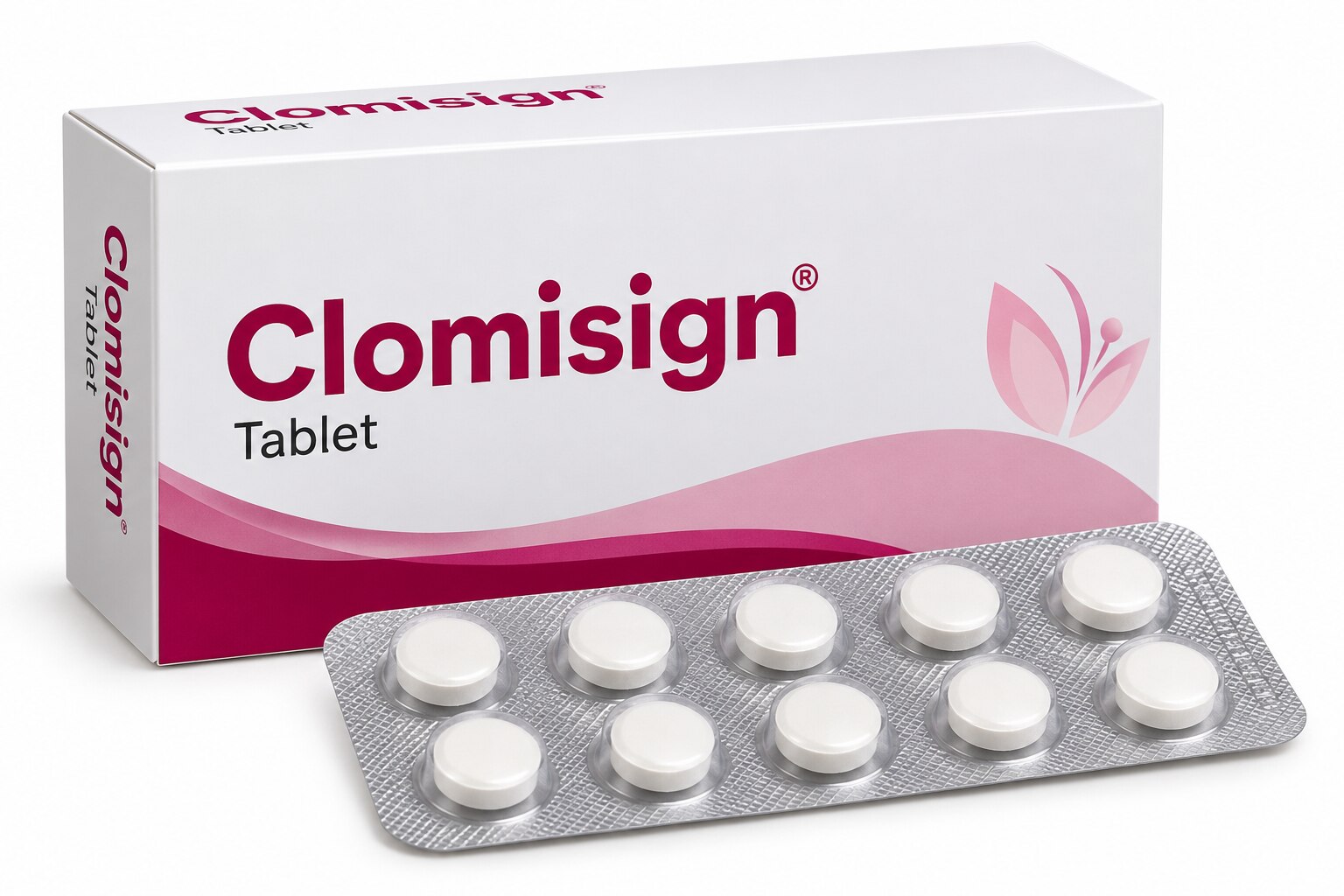
Treat “Clomisign 50” as a brand or pack description, not proof of identity or interchangeability. Ask whether each tablet contains clomifene (clomiphene) citrate equivalent to 50 mg of clomifene, and reconcile the Spanish term clomifeno.
Confirm the dosage form, formulation, approved active moiety, registered product details, and Chilean authorization; a search for clomisign 50 pharmaceutical supplier in santiago proves none of these. A familiar name cannot replace clinic monitoring or regulatory verification.
What must a Santiago buyer verify before accepting a supplier quotation?
A genuine quotation identifies the exact product, not just “clomifene 50 mg.” For clomisign 50 wholesale in santiago, ask for the manufacturer, registered product name, active-ingredient statement, 50-mg strength, tablet count, batch number, manufacture date, expiry date, seal description, storage range, minimum shelf life at delivery, and permitted batch-split terms.
NIBA HEALTHCARE can be one supplier in that comparison, but its documents still require Chilean verification.
Request these documents before accepting a clomifene tablet institutional supply offer:
- Chilean sanitary registration or documented import pathway showing the registered name, dosage form, strength, manufacturer, importer or registration holder, and sale condition.
- Approved artwork, current manufacturing authorization, certificate of pharmaceutical product or equivalent, and stability support for the marketed pack.
- A batch-specific certificate of analysis, not a generic specification sheet, covering clomifene identification and assay, dosage-unit uniformity, dissolution, impurities or degradation products, microbial limits where applicable, and packaging and label conformity.
- Written terms for short-dated or rejected batches, delivery temperature, storage conditions, delivery point, and any permitted split between batches.
Compare the commercial basis before comparing unit prices:
| Price basis | What it includes | What you still need to add |
|---|---|---|
| FOB | Export price to the named shipping point | Freight, insurance, customs, taxes, Santiago handling, warehousing, and importer costs |
| Ex-works | Goods collected at the manufacturer’s premises | All transport, insurance, customs, taxes, regulatory handling, and storage |
| Landed Santiago | Delivered cost with listed Chilean charges | Confirm each charge, registration-holder fee, and tax treatment in writing |
Related product
 | Clomifene Citrate 50mg Tablets Clomisign 50 Tablet is a medicine used to treat female infertility. View product → |
Frequently asked questions
When is a 50-mg clomifene tablet suitable for a patient?
A clinician may select 50 mg after confirming ovulatory dysfunction and excluding conditions that require another fertility treatment.
How is clomifene monitored during treatment cycles?
Clinicians monitor cycle timing, ovulation response, pregnancy status, and warning signs rather than treating without follow-up.
Which exclusions and warning signs make clomifene unsafe?
Do not use clomifene when a clinician identifies a contraindication such as pregnancy, unexplained abnormal bleeding, or untreated liver disease; seek care for severe pain, visual symptoms, or breathing difficulty.
How should Clomisign 50 be compared with other fertility treatments?
Compare the underlying infertility cause, expected monitoring, multiple-pregnancy risk, side effects, treatment setting, and clinician suitability.
What must a Santiago buyer verify before accepting a supplier quotation?
Request the supplier’s licence details, product registration evidence, batch and expiry information, certificate documents, storage conditions, minimum order, lead time, and delivery terms.