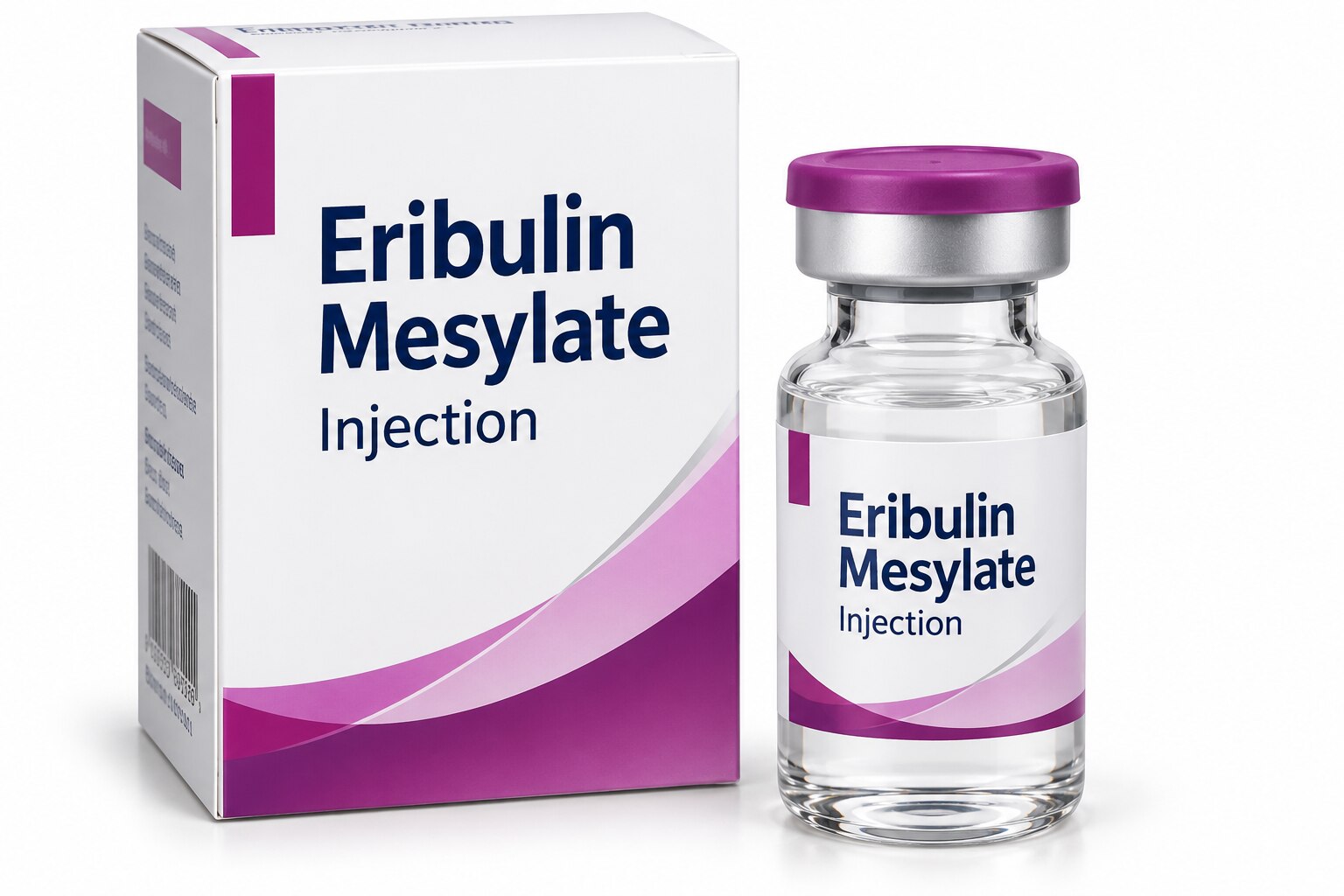
Eribulin mesylate injection is suitable for a hospital only when its approved oncology use, prescribing controls, infusion service, monitoring capacity and cytotoxic-drug procedures all align. By checking those clinical, operational and supplier requirements, a hospital can decide whether a proposed product is fit for patient care rather than judging it by vial price alone.
Key takeaways
- Confirm specialist oncology prescribing and intravenous chemotherapy capacity.
- Plan dosing by body surface area and discard unused vial contents.
- Require batch, expiry, storage, quality and regulatory documents before delivery.
- Reject the order if cytotoxic handling, monitoring or supply continuity is incomplete.
Which hospitals and patients are appropriate for eribulin?
An eribulin mesylate injection hospital supply belongs in an oncology service that has specialist prescribing authority, intravenous chemotherapy capacity, cytotoxic-medicine controls and follow-up for treatment toxicity. It is not a general-purpose first-line anticancer injection or a substitute for every metastatic cancer regimen.
| Patient or setting | Established fit | When it applies |
|---|---|---|
| Breast cancer | Appropriate indication | Locally advanced or metastatic disease that progressed after at least one chemotherapy regimen |
| Liposarcoma | Appropriate indication | Unresectable or metastatic disease after an anthracycline-containing regimen, unless an anthracycline was unsuitable |
| Other solid tumour or earlier-line treatment | Not established from these uses | Do not purchase or prescribe eribulin as a broad oncology substitute |
The patient must have a documented diagnosis, prior-treatment history and oncologist-approved treatment plan. Confirm that the disease is locally advanced, metastatic, unresectable or otherwise matches the approved indication; a cancer label alone is not enough.
Before purchasing, the hospital should confirm that its formulary, oncology pharmacist and prescriber use the same approved product information. The service also needs capacity to calculate body-surface-area dosing, manage dose delays or reductions, and administer the injection under its chemotherapy procedures.
A hospital without those capabilities should not add eribulin solely because a supplier can provide the vial.
How should the hospital plan dosing, administration and vial use?
Plan each order around two intravenous administrations: day 1 and day 8 of a 21-day cycle. The usual dose is 1.4 mg/m² of eribulin mesylate, calculated from the patient’s body-surface area, and administered over approximately 2–5 minutes through reliable venous access. It is not an intramuscular or subcutaneous injection.
Confirm the dose basis before approving a tender. Some product information states 1.4 mg/m² as eribulin mesylate; European information states the equivalent 1.23 mg/m² as eribulin. Use the approved local product information consistently across the label, prescription, oncology protocol and purchase order.
- Check whether the vial contains 1 mg in 2 mL, equal to 0.5 mg/mL as eribulin mesylate. A label showing about 0.44 mg/mL may express eribulin content instead; do not treat that concentration as the total vial dose.
- Calculate vials per patient for both day 1 and day 8, allowing for wastage from the single-dose vial.
- Model a full 21-day cycle, not just one administration.
- Recalculate after dose reductions or delays for neutropenia, thrombocytopenia, neuropathy, hepatic impairment or renal impairment.
- Require prescribing information and a pharmacovigilance contact alongside the quotation.
For eribulin injection procurement in Dodoma, compare usable cost per completed cycle and confirm supply continuity for both scheduled doses. A vial price alone can conceal patient-size variation, discarded balance and treatment interruptions.
What monitoring and cytotoxic controls must be ready before use?
Before accepting a vial, confirm that the hospital can monitor blood counts, neurological function and cardiac risk, while controlling every cytotoxic handling step from receipt to disposal. An anti cancer injection distributor in Tanzania can supply a registered product without proving that your staff, equipment and escalation pathways are ready.
1. Arrange complete blood count monitoring, including neutrophils and platelets, before each dose and during treatment. Define who delays or reduces treatment for neutropenia, febrile neutropenia or thrombocytopenia, and ensure urgent assessment and supportive care for fever.
2. Record peripheral neuropathy at baseline and before each administration. Worsening numbness, tingling, pain or weakness can require dose reduction, treatment interruption or discontinuation; do not rely on the patient to report severe symptoms without structured questioning.
3. Review hepatic and renal function because impairment can alter dosing. Assess cardiac history, medicines that prolong the QT interval and electrolyte abnormalities; obtain an ECG when the prescriber identifies QT risk and correct low potassium or magnesium.
4. Keep a cytotoxic-medicine procedure for receiving damaged-vial reports, restricted storage, preparation, intravenous administration over approximately 2–5 minutes, spills, staff exposure and waste. Use trained oncology pharmacy and infusion staff, cytotoxic labels, suitable protective equipment, spill kits and segregated sharps and pharmaceutical-waste disposal.
Before purchase, request the current prescribing information, safety data sheet and pharmacovigilance contact. Confirm that the supplier can replace damaged vials and maintain supply for both day 1 and day 8 doses without leaving the hospital to improvise controls.
Which regulatory, quality and delivery documents should you demand from a supplier?
Do not approve an eribulin mesylate medicine importer on a product description alone. For an eribulin mesylate injection for pharmaceutical supplier in dodoma, verify that the exact strength, manufacturer, pack size and source have TMDA authorization, and that the importer holds the permits required for the shipment.
| Document | What it proves | Reject or query when |
|---|---|---|
| TMDA authorization and import permit | The product and importer are legally accepted | The manufacturer, strength, pack size or source differs from the approved record |
| Batch certificate of analysis and release record | The supplied batch met tested specifications and was released | The certificate lacks batch number, test results, release date or authorized signatory |
| Storage and transport log | The shipment stayed within the labelled storage conditions, including below 30°C where specified | Temperature records are missing, show excursions or cannot be matched to the shipment |
| Expiry, complaint and recall contacts | You can quarantine, replace or trace defective stock | Remaining shelf life is unsuitable for both day-1 and day-8 doses, or no responsible contact is named |
Request the invoice, packing list, batch numbers, expiry dates, safety data sheet and written replacement terms before delivery. Confirm that the supplier identifies eribulin as a cytotoxic medicine and supports spill response, disposal and staff-exposure procedures; ordinary injection handling is not enough.
Ask NIBA HEALTHCARE for this same batch-specific file before accepting a quotation. A supplier that cannot provide it cannot demonstrate delivery continuity, even if its registration appears valid.
Confirm the diluent and compatibility instructions too: eribulin may be diluted in 0.9% sodium chloride, but must not be mixed with other medicines in the same infusion solution.
Related product
 | Anti Cancer Injection Minimum order quanity 10 Vial Strength 0.44 mg/ml Packaging Type Vial Packaging Size 2 ml Vial STORAGE CONDITION Store below 30 Degree C Country of... View product → |
What is the hospital’s final go-or-no-go decision?
Approve the purchase only when every clinical, operational and commercial gate passes. A low vial price does not justify an eribulin mesylate injection hospital supply if the hospital cannot administer the medicine safely, monitor toxicity or obtain both doses in the 21-day cycle.
1. Confirm that the oncology prescriber has selected eribulin for an eligible patient and that it is on the approved formulary. Record the indication, prescribed dose and authority for prescribing.
2. Confirm preparation and administration capacity: body-surface-area dose calculation, single-dose vial planning, cytotoxic handling, reliable venous access and trained staff for intravenous administration over approximately 2–5 minutes.
3. Confirm monitoring and response capacity. The hospital must provide CBC testing, neuropathy and organ-function review, escalation for febrile neutropenia, and documented rules for dose delay or reduction.
4. Accept the supplier only after reviewing TMDA authorization, the batch certificate of analysis, batch-release information, expiry and remaining shelf life, storage and transport records, recall contact and pharmacovigilance contact.
5. Calculate usable treatment-cycle cost from the prescribed dose, vial wastage, dose changes and administration supplies—not the price of one 1 mg/2 mL vial alone.
6. Require written assurance of delivery for both day 1 and day 8, replacement of damaged vials and a defined continuity plan. Apply the same test to eribulin injection procurement in Dodoma.
Write “approved,” “deferred,” or “rejected” in the purchasing record, with the failed gate and corrective action named. This makes the decision auditable and prevents an eribulin mesylate medicine importer’s registration from being mistaken for dependable hospital supply.
Frequently asked questions
Which hospitals and patients are appropriate for eribulin?
Eribulin belongs in hospitals with specialist oncology prescribing, intravenous chemotherapy facilities, cytotoxic controls and toxicity follow-up. Use it only for patients whose diagnosis, prior treatment and clinical status match the approved indication and prescriber’s treatment plan.
How should a hospital plan eribulin dosing, administration and vial use?
Plan dosing from the prescribed body-surface-area dose, schedule pharmacy preparation and administration, confirm the vial strength and storage instructions, and account for unused contents because single-dose vial leftovers require disposal under cytotoxic-waste procedures.
What monitoring and cytotoxic controls must be ready before use?
Prepare baseline and follow-up blood counts, liver-function assessment where clinically indicated, checks for neuropathy and QT-risk factors, plus trained staff, protective equipment, spill response and cytotoxic waste disposal.
Which documents should a hospital demand from an eribulin supplier?
Request the product registration or import documentation, manufacturer details, certificate of analysis, batch and expiry information, storage and transport records, packing list, invoice and temperature-monitoring evidence.
What is the hospital’s final go-or-no-go decision?
Proceed only when the indication, prescriber, administration capacity, monitoring plan, cytotoxic controls, product documents, shelf life and delivery conditions are all acceptable.