A hospital buyer must verify the exact Encicarb presentation before ordering: active ingredient, elemental-iron concentration, vial volume, registration status and approved instructions. By the end, you will know when intravenous ferric carboxymaltose is clinically appropriate, how its dose and administration are controlled, and which documents and safety checks to require in Dodoma.
Key takeaways
- Confirm the label states ferric carboxymaltose 50 mg/mL.
- Check dose, dilution and maximum administration limits before infusion.
- Screen for hypersensitivity, infection-related risks and iron overload.
- Ask a Dodoma supplier for licences, batch records and cold-chain evidence.
How to verify the Encicarb presentation before treatment
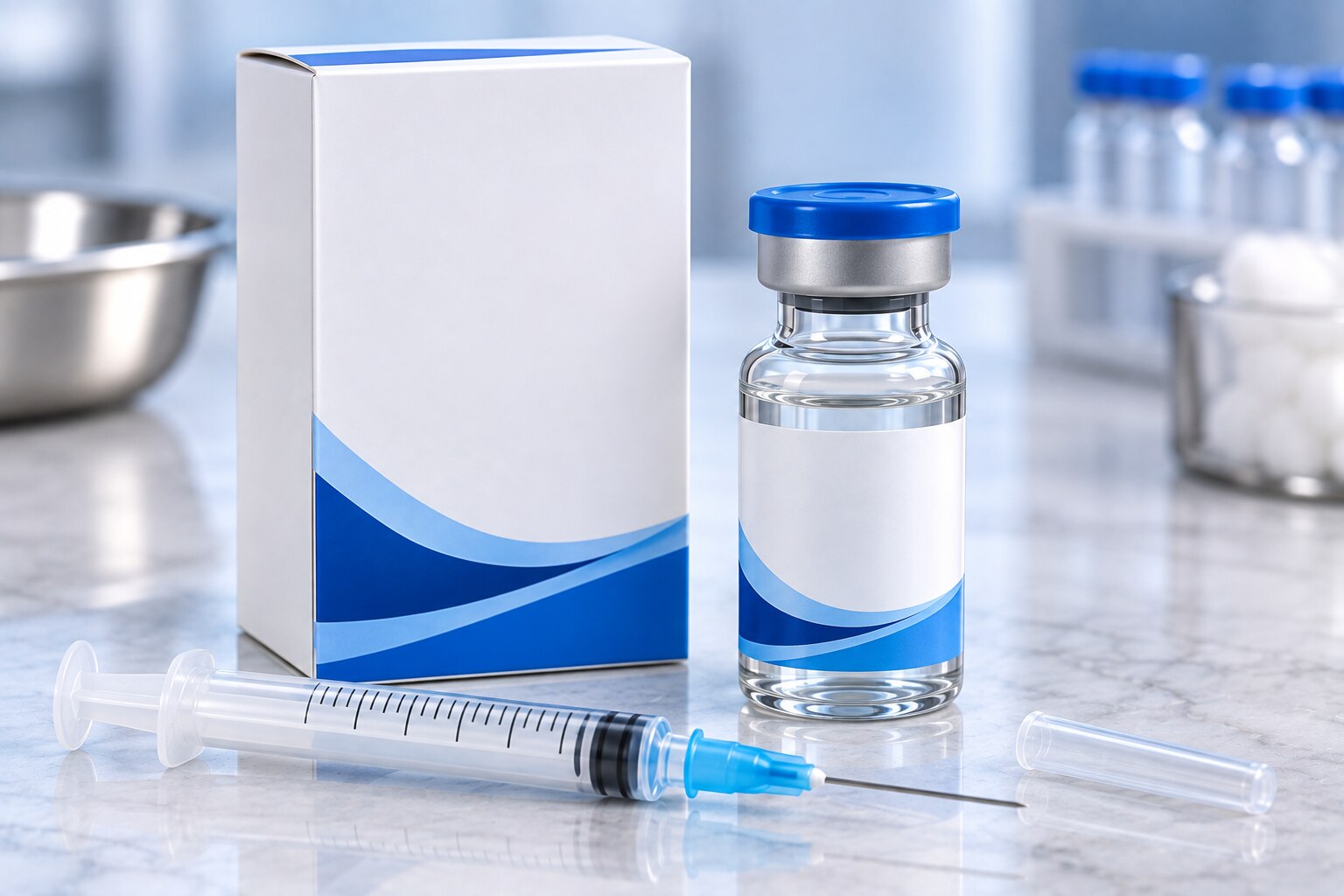
A 2 mL vial contains 100 mg of elemental iron only when the approved label states ferric carboxymaltose at 50 mg/mL. Do not read “100 mg” as 100 mg of the entire ferric carboxymaltose complex; confirm the elemental-iron amount printed on the pack.
Before treatment, complete this check:
1. Match the exact presentation: Encicarb, ferric carboxymaltose, 100 mg/2 mL, 50 mg/mL, injection or infusion, and the stated container type. Do not substitute a 10 mL presentation or another intravenous iron.
2. Inspect the vial and carton for an intact seal, clear readable print, manufacturer name, batch or lot number, manufacturing date, expiry date, and storage instructions. Reject a pack with leakage, damaged packaging, an unreadable label, or an expired date.
3. Confirm that the product is registered or lawfully importable in Tanzania and came through an authorised supply channel. A search for encicarb 100mg 2ml injection in dodoma identifies availability, not approval.
4. Request the certificate of analysis and delivery records linking the supplied batch to the invoice. An encicarb 100mg injection supplier should also provide the approved product information, not only a quotation.
5. Record the batch number and expiry in the patient or pharmacy record before opening the vial. The 100 mg vial is a presentation, not automatically the patient’s complete dose; staff must calculate treatment from the approved product information.
When ferric carboxymaltose is the right hospital iron
Choose intravenous ferric carboxymaltose when laboratory evidence confirms iron deficiency and oral iron is ineffective, poorly absorbed, not tolerated, or too slow for the clinical situation. A low haemoglobin alone is not enough: review ferritin, transferrin saturation, the patient’s symptoms, and causes such as gastrointestinal or menstrual blood loss before treatment.
A hospital assessing ferric carboxymaltose injection Tanzania supply should remember that it is intravenous only. Select the dose from the approved product information using body weight and haemoglobin; do not copy the schedule for iron sucrose or another preparation.
| Option | Main advantage | Limitation or proper use |
|---|---|---|
| Oral ferrous salt | Inexpensive, non-invasive replacement | Slower replenishment; nausea, constipation, poor adherence and malabsorption can prevent success |
| Ferric carboxymaltose | Delivers a substantial iron dose intravenously in fewer visits | Requires venous access, trained observation and product-specific dose limits |
| Iron sucrose | Established intravenous alternative | Usually requires smaller doses across more administrations; its concentration and infusion instructions differ |
| Ferric derisomaltose | Another intravenous replacement option | Not interchangeable milligram-for-milligram with ferric carboxymaltose |
| Blood transfusion | Rapidly raises oxygen-carrying capacity | Does not correct iron stores; reserve for acute haemorrhage, instability or severe symptomatic anaemia requiring urgent support |
Ferric carboxymaltose is the wrong choice for anaemia without iron deficiency or iron overload. Treat the source of blood loss or poor absorption as well; replacing iron alone allows the same deficiency to return.
Dose, dilution and administration limits
Calculate the prescribed elemental-iron dose from the approved ferric carboxymaltose dosing table, using the patient’s haemoglobin and body weight. Do not copy a dose or infusion rate from iron sucrose, ferric derisomaltose or another hospital iron injection in Dodoma.
If the approved pack confirms 100 mg in 2 mL, the concentration is 50 mg/mL. Calculate volume as prescribed iron dose ÷ 50. An 800 mg dose therefore requires 16 mL; a 1,000 mg dose requires 20 mL.
- For adults and adolescents aged 14 years or older, limit one administration to 1,000 mg or 20 mg/kg, whichever is lower.
- Limit the cumulative dose to 1,000 mg in a seven-day period. Separate a further dose by at least seven days.
- Give it intravenously only, either as an approved intravenous injection or infusion. Do not give it intramuscularly or subcutaneously.
- For infusion, dilute only in sterile 0.9% sodium chloride and follow the product label for the permitted volume and rate. Do not mix it with other medicines or dilute it below 2 mg/mL.
- A 1,000 mg infusion is commonly given in no more than 250 mL over at least 15 minutes, but the approved Encicarb instructions control.
- Administer where trained staff, oxygen, emergency medicines and resuscitation equipment are immediately available. Observe the patient during administration and for at least 30 minutes afterward.
Contraindications, reactions and post-dose observation
Exclude anyone with a previous serious reaction to ferric carboxymaltose or an excipient, iron overload, or anaemia that has not been shown to result from iron deficiency. A low haemoglobin result alone is not enough. Investigate blood loss, malabsorption and other causes before treatment.
Use extra caution after a previous intravenous-iron reaction, in patients with asthma, eczema or other allergies, during active infection, and during pregnancy when the expected benefit must justify treatment.
Repeated or high-dose courses increase the risk of hypophosphataemia; check serum phosphate in patients with phosphate-depletion risk, prolonged treatment or symptoms such as worsening fatigue, muscle weakness or bone pain.
| Reaction | What staff may see | Required response |
|---|---|---|
| Anaphylaxis | Wheeze, breathing difficulty, facial swelling, faintness, rash or collapse | Stop the injection, call the emergency team and follow the hospital anaphylaxis protocol |
| Common transient effects | Flushing, dizziness, nausea, headache or raised blood pressure | Check observations, provide clinical treatment and reassess before discharge |
| Extravasation | Pain, swelling or leakage at the injection site | Stop administration, assess the site and document it; brown skin staining can persist |
| Hypophosphataemia | Weakness, bone pain or persistent low phosphate after repeated treatment | Measure phosphate and reconsider further iron with the treating clinician |
Give the injection where trained staff, oxygen, emergency medicines and resuscitation equipment are immediately available. Monitor the patient during administration and for at least 30 minutes afterward, recording blood pressure, symptoms and the injection site. Do not discharge a patient with worsening breathing difficulty, hypotension or progressive swelling.
What to require from an Encicarb supplier in Dodoma
A quotation proves only that someone has named a price. Before a hospital accepts an Encicarb injection supplier in Dodoma, require evidence that the exact product is authorized, identifiable and transported under its labelled conditions.
Ask the supplier to send these documents with the quotation:
- The approved product name, active ingredient, strength, concentration and volume: ferric carboxymaltose, 100 mg elemental iron in 2 mL, if that is the offered presentation. Do not infer equivalence from the brand name.
- The manufacturer’s name and address, batch or lot number, manufacturing date, expiry date, and clear photographs of the carton, vial, tamper seal and label.
- A batch-specific certificate of analysis. Its lot number must match the vial, carton and delivery documents.
- The approved product information, storage range and transport conditions. Reject “keep cool” as a substitute for the labelled temperature range.
- Proof of Tanzanian authorization covering that exact presentation, plus the supplier’s authorization to distribute it. Confirm the document with the Tanzania Medicines and Medical Devices Authority or the named authority before payment.
- A delivery record showing the shipper, dispatch date, storage conditions, and procedure for temperature excursions or damaged seals.
Treat “ferric carboxymaltose injection Tanzania” search results as leads, not proof. A 10 mL quotation does not satisfy a 2 mL order. Assess NIBA HEALTHCARE by the same test: request its regulatory and batch documents, not merely its Indian exporter description.
Related product
 | FERRIC CARBOXYMALTOSE INJECTION Encicarb Injection 10 ml belongs to the group of anti-anaemic medicines used to treat iron deficiency anaemia in patients who are intolerant to oral... View product → |
Frequently asked questions
How do you verify an Encicarb 100 mg/2 mL presentation?
Confirm the pack identifies ferric carboxymaltose and states 100 mg elemental iron in 2 mL, equivalent to 50 mg/mL. Check the batch number, expiry date, seal and manufacturer details.
When is ferric carboxymaltose the right hospital iron treatment?
Use it when intravenous iron is clinically indicated, oral iron is unsuitable or ineffective, and the prescriber has assessed the patient’s iron deficiency and treatment needs.
What dose and dilution limits apply to Encicarb injection?
Follow the approved product label and prescriber’s calculation for elemental iron. Confirm the permitted dilution fluid, infusion volume, administration rate and maximum single and weekly doses before use.
What reactions require observation after ferric carboxymaltose?
Observe for hypersensitivity, hypotension, flushing, nausea, rash, breathing difficulty and other acute reactions during administration and afterward. Stop treatment and provide emergency care for suspected anaphylaxis.
What should you require from an Encicarb supplier in Dodoma?
Request the supplier’s licence copy, manufacturer or marketing-authorisation details, batch certificate, invoice, expiry information, storage records and evidence that the vial arrived sealed and traceable.