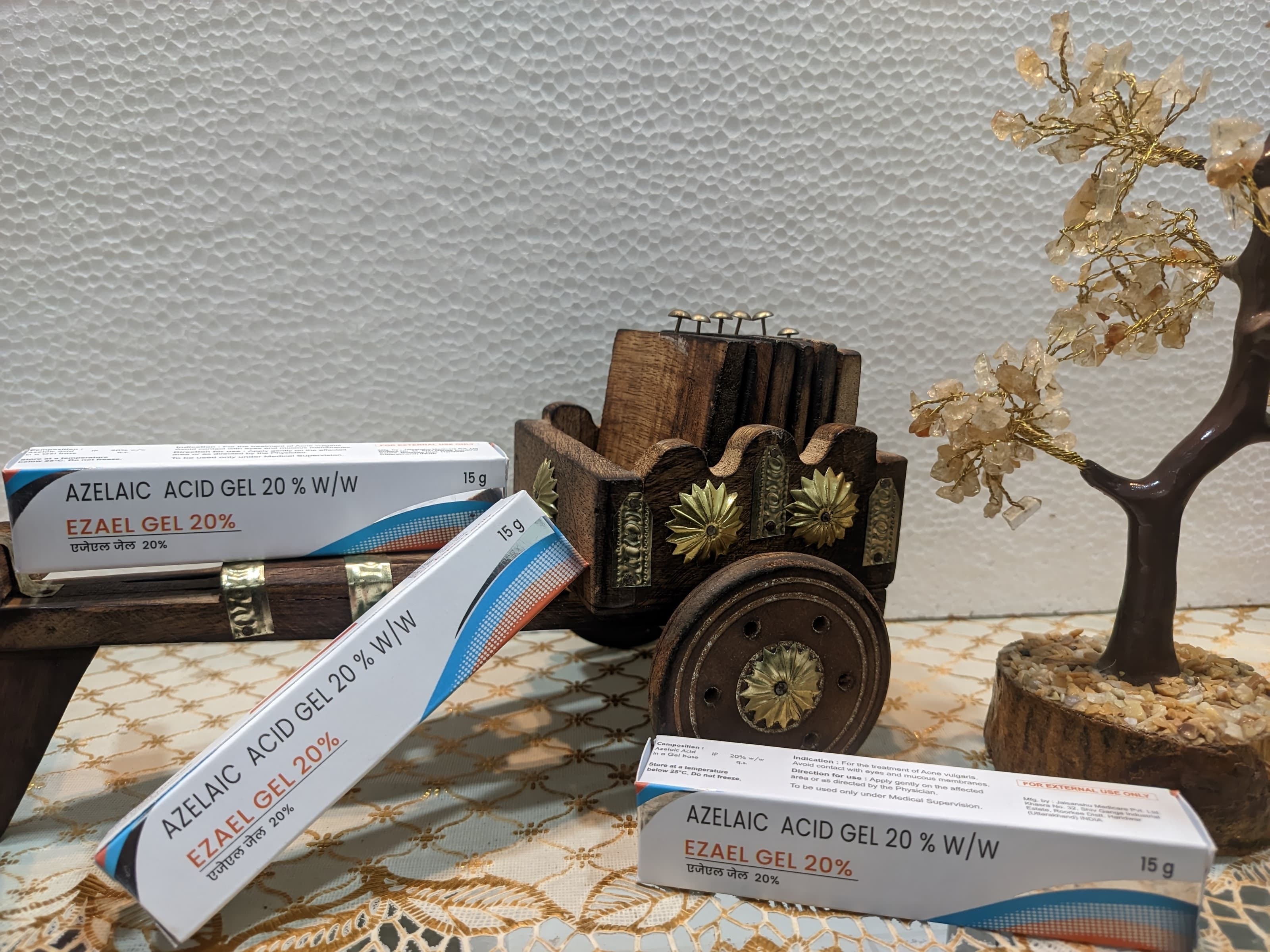
A 20% azelaic acid label does not tell you whether you are buying a gel, cream, cosmetic or regulated medicine, nor whether it suits the intended patient group. By the end, you will be able to define the product correctly, set a safe-use routine, compare Ezael with alternatives, and audit a supplier before placing an order.
Key takeaways
- Specify azelaic acid 20% w/w, gel form, fill size, market, and indication.
- Request the manufacturer, licence holder, approved artwork, and destination-market registration.
- Compare Ezael with Ezanic and alternatives by formulation, use, tolerability, and supply terms.
- Inspect seals, batch details, expiry dates, and shipment conditions before accepting delivery.
Confirm the product, indication and market before comparing suppliers
Specify Ezael Gel 20% as azelaic acid 20% w/w, gel dosage form, net fill, target country, pack type and intended indication before comparing suppliers. The phrase ezael gel 20 percent for skin care products supplier is not a product specification. Confirm the manufacturer, licence holder, approved artwork and destination-market registration as well.
| Product option | What differs | Procurement consequence |
|---|---|---|
| Ezael 20% gel | Gel vehicle, 20% w/w azelaic acid | Confirm the exact formula, pack and acne indication |
| Azelaic acid 20% cream | Cream vehicle at the same strength | Do not substitute without formulation, performance and stability data |
| Azelaic acid 15% gel | Gel vehicle at a different strength and possible indication | Do not treat it as an equivalent 20% product |
Limit positioning to the acne use established for the offered product and approved in the target market. Do not add claims for pigmentation, rosacea-like redness or another condition without clinical evidence, compliant labelling and regulatory approval.
Choose another product or strategy when:
- The buyer wants rapid cosmetic results rather than a medicinal acne treatment.
- The intended customer has severe acne requiring clinical assessment.
- The plan is cosmetic-only, with no medicinal classification and registration strategy.
A product can be a prescription medicine, non-prescription medicine or cosmetic depending on claims, presentation and country law. Set classification and registration before approving artwork, private-label packaging or promotion.
Build a practical application and irritation-management routine
Use Ezael Gel 20% on clean, dry skin. Apply a thin, even film across the affected area, not a concentrated spot. Patient instructions should state this amount clearly and include any approved measured quantity; “apply generously” invites overuse.
- Start with the face, avoiding the eyes, eyelids, lips, nostrils, mouth and broken skin.
- Let the gel dry, then apply moisturiser. If dryness is expected, a clinician may advise moisturiser before the gel as a buffer.
- Use sunscreen during daytime treatment and explain both steps during customer support.
- Use the chest or back only when the approved label allows it or a clinician directs it.
- Rinse thoroughly with water after accidental eye contact.
| Starting approach | Routine | When it fits |
|---|---|---|
| Daily application | Apply at the label-directed frequency | The user tolerates treatment without troublesome symptoms |
| Alternate-day start | Apply every other day, then increase only as tolerated and permitted | A new user is prone to dryness, stinging or irritation |
Burning, stinging, itching, dryness and peeling can occur, but worsening or persistent symptoms need attention. Reduce frequency or pause when irritation is troublesome; resume only after recovery if the label or clinician permits.
Stop and seek medical advice for severe reactions, swelling, blistering, marked pain or persistent irritation, and record suspected adverse events separately from expected local effects.
Review progress at four, eight and twelve weeks. Arrange product or clinical review if improvement is absent or the condition worsens. A buyer searching for an ezael gel skin care supplier should ensure these instructions match the approved label.
Compare Ezael with Ezanic and other active ingredients
A 20% label does not make two topical products interchangeable. Ezael 20 percent product options must be compared by vehicle, evidence and commercial terms, not strength alone.
| Option | Technical difference | Commercial checks |
|---|---|---|
| Ezael 20% Gel | Gel vehicle; assess spreadability, drying feel, solubilisation, crystals, deposition, irritation, release and stability | Confirm tube or container, pack size, MOQ, target market and private-label availability |
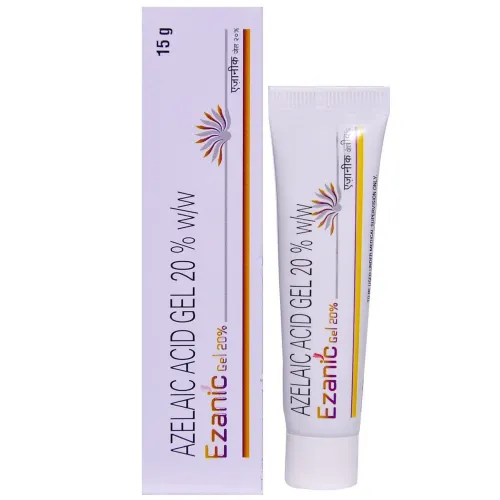
| Ezanic 20% Gel | A gel may differ in polymer, water or alcohol content, pH and viscosity; compare release data | Confirm the offered pack, MOQ, artwork route and market registration |
| Ezanic 20% Cream | Cream vehicle can change release, skin deposition, moisturising feel and crystal formation; it is not an automatic gel substitute | Confirm container or tube, pack size, MOQ, private-label terms and indication |
Ask for formulation composition, in-vitro release or performance data, and comparative stability data for the exact dosage form. Compare viscosity at the same temperature and shear condition; an unqualified viscosity figure says little about extrusion or delivered dose.
| Active | Procurement fit | Counselling burden |
|---|---|---|
| Azelaic acid 20% | Non-retinoid medicinal option for a buyer whose strategy supports it | Explain irritation and realistic review timing |
| Salicylic acid plus nicotinamide | Exfoliating and combination strategy | Address dryness, compatibility and claim support |
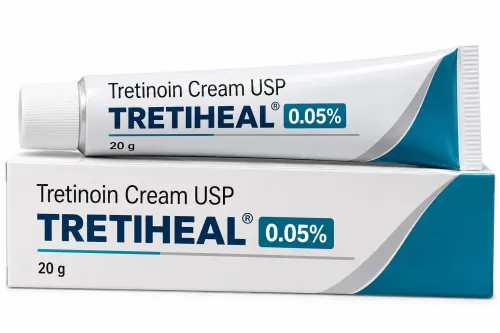
| Tretinoin 0.025% or 0.05% | Retinoid-led treatment strategy | Greater emphasis on irritation, photosensitivity and use restrictions |
| Tazarotene 0.05% | Retinoid option requiring a distinct clinical and regulatory strategy | Stronger counselling and contraindication review |
Do not choose an active because its percentage is higher or its marketing promises faster results. Choose the vehicle, evidence and regulatory position that match the intended market.
Audit an azelaic acid gel supplier before approving the order
Approve an azelaic acid gel supplier only after its quality file matches the exact product, tube and destination market. An assay-only certificate of analysis is not enough.
1. Request the manufacturing-site licence, applicable Indian GMP evidence, approved master formula, validation status and written batch-release responsibility. Confirm the product’s legal status in your destination country; a Free Sale Certificate, Certificate of Pharmaceutical Product or GMP certificate does not prove batch conformity.
2. Request the product specification and recent certificate of analysis. Check assay method and limits, identification, related substances, pH, appearance, fill weight, microbial limits and preservative content or effectiveness where applicable. Require viscosity at a stated temperature and shear condition.
3. Demand long-term and accelerated stability data for the exact filled package. The file must cover assay, degradation, pH, viscosity, microbial quality and preservative performance at defined intervals. ICH Q1A(R2) accelerated testing uses 40°C ± 2°C and 75% relative humidity ± 5% for six months; it does not replace long-term data.
4. Ask for compatibility evidence for the exact tube, laminate, cap and liner, including leakage, drug loss or adsorption, solvent or water loss, extractables or leachables where relevant, microbial ingress, corrosion and dose delivery through shelf life.
5. Compare batch size, lead time, minimum order quantity, remaining shelf life at dispatch, transport temperature controls, private-label artwork, complaint handling, recall procedure and retention samples. Assess NIBA HEALTHCARE against this evidence, not its product name alone, and ask any ezael gel 20 percent for skin care products supplier for the same records.
Related product
 | AZELAIC ACID GEL 20% EZEAL GEL 20% treats acne, commonly called pimples. It kills the acne-causing bacteria and prevents spots or pimples from appearing. View product → |
Verify the delivered packs and calculate the full operating cost
A receiving check confirms whether the shipment matches the approved Ezael Gel 20%, while a landed-cost review shows whether the order remains workable.
Check every pack for:
- Ezael Gel 20%, azelaic acid 20% strength, net quantity, manufacturer or licence holder, batch number, manufacturing date, expiry date and storage conditions
- The approved patient information leaflet and artwork for the destination market
- An intact tamper-evident seal, undamaged tube or container, correctly fitting cap, no leakage, legible printing and consistent colour, layout and text
Reconcile the batch number and expiry date with the certificate of analysis and shipping documents. Treat the search phrase skin care products supplier ezael as a lead, not as proof of product identity.
Request a Free Sale Certificate or Certificate of Pharmaceutical Product when the destination authority accepts it. Neither document proves that every batch meets your finished-product specification.
| Cost area | Include in the calculation | What goes wrong if omitted |
|---|---|---|
| Landed purchase | Unit price, pack size, minimum order quantity, freight, temperature conditions, customs and payment terms | A low unit price hides cash tied up in excess stock |
| Market readiness | Registration, document review, translation and artwork | Packs cannot be legally released or sold |
| Ongoing support | Counselling time, irritation-related queries, sunscreen and moisturiser guidance, repeat ordering | Customer-service costs erode margin |
| Risk provision | Complaint response, recall procedure and possible recall exposure | One quality event creates an unbudgeted loss |
Compare expiry at delivery, complaint response time and regulatory workload alongside price. A skin care products supplier ezael order is workable only when the documentation, shelf life and support burden fit the target market.
Frequently asked questions
What details should you confirm before comparing Ezael 20% suppliers?
Confirm azelaic acid 20% w/w, gel dosage form, net fill, target country, pack type, intended indication, manufacturer, licence holder, approved artwork, and destination-market registration.
How can you build an application and irritation-management routine for azelaic acid gel?
Set a consistent application routine, introduce the product cautiously, monitor stinging, dryness, redness, or peeling, and adjust use when irritation appears.
How should you compare Ezael with Ezanic and other active ingredients?
Compare the declared active strength, dosage form, formulation, intended indication, tolerability, pack options, regulatory status, and supplier documentation.
What should you audit in an azelaic acid gel supplier?
Check the supplier’s manufacturer and licence-holder details, approved artwork, destination-market registration, batch documentation, quality records, and ability to provide consistent packs.
How do you verify delivered Ezael packs and calculate the full operating cost?
Match the delivered product against the approved specification, inspect seals and printed batch and expiry details, then add product, freight, duties, storage, inspection, and handling costs.