A monobenzone cream is not a routine skin-brightening product, and a matching percentage on two labels does not prove that the products are equivalent. By the end, you will know how to compare clinical purpose, formulation, safety controls, and Tanzanian procurement documents before choosing or distributing a product.
Key takeaways
- Monobenzone removes remaining normal pigment; it is not a treatment for isolated dark marks.
- Compare active strength, excipients, batch testing, packaging, and expiry—not brand names alone.
- Use monobenzone only under specialist supervision because depigmentation can be permanent.
- Verify TMDA status, manufacturer details, certificate of analysis, batch number, and storage conditions.
Why monobenzone is different from ordinary pigment treatments
Monobenzone is used to remove remaining normal pigment, not to fade an unwanted mark. Benoquin is a brand of monobenzone, the monobenzyl ether of hydroquinone, and its clinical purpose is depigmentation for people with extensive, refractory vitiligo. Treatment aims to reduce the contrast between depigmented areas and surrounding skin.
| Condition or goal | Usual purpose | What can go wrong with substitution |
|---|---|---|
| Acne marks | Fade post-inflammatory hyperpigmentation | Monobenzone can depigment normal skin instead of correcting the mark |
| Melasma | Reduce excess facial melanin | Permanent or spreading pigment loss is an unacceptable trade-off |
| Tanning | Return skin toward its baseline shade | Monobenzone is not a temporary tan remover |
| Isolated dark spots | Target a limited area | Unwanted depigmentation can extend beyond the spot |
The key distinction in Benoquin cream versus other monobenzone creams in Dodoma is not a promise of fairness or bleaching. It is whether the product is intended for a clinician-supervised, widespread depigmentation plan. Pigment loss can be irreversible, difficult to reverse, and continue after treatment stops, including on surrounding normally pigmented skin.
Do not treat monobenzone as interchangeable with hydroquinone, tretinoin, azelaic acid, salicylic acid, niacinamide, kojic acid, arbutin, or corticosteroid combinations. Those products target excess pigment, acne, inflammation, or cell turnover; monobenzone changes the treatment goal from correcting discoloration to removing normal melanocyte function.
What to compare between two monobenzone creams
Same 20% label does not make two monobenzone creams therapeutically comparable. Compare the finished product, not the word “Benoquin”: confirm monobenzone identity, declared strength, pharmaceutical grade, dosage form, and batch-release evidence. A pharmacy-compounded cream is a different product from a registered finished cream, even when both labels say 20%.
| Check | Evidence for comparison | Warning sign |
|---|---|---|
| Active ingredient | Assay result, batch number, certificate of analysis, and concentration-uniformity data | Supplier relies only on the printed percentage |
| Vehicle | Named cream base, preservative system, particle dispersion, and container compatibility | Unspecified base, separation, crystals, or clumps |
| Quality | Microbiological results, manufacturing controls, manufacture date, expiry date, or compounded beyond-use date | No batch-release record or microbial testing |
| Pack and storage | Intact tamper evidence, sealed tube or jar, labelled temperature and light conditions | Damaged seal, missing dates, or storage instructions |
| Regulatory status | Evidence of registration or authorization for import into Tanzania | “Benoquin” presented as proof of legality or equivalence |
The base affects spread, stability, preservative performance, tolerability, and how consistently monobenzone is released onto skin. A stronger-looking cream is not a better choice when burning, erythema, itching, or allergic dermatitis reflects the active ingredient or vehicle.
Because depigmentation can continue after stopping and be difficult to reverse, reject listings that describe the product as temporary fairness or ordinary spot treatment.
What medical safeguards belong before and during treatment
Before treatment, a clinician should confirm extensive, refractory vitiligo and establish whether permanent or very difficult-to-reverse depigmentation is an acceptable goal. Record baseline photographs, examine the intended areas and surrounding skin, and review allergies, eczema, sun exposure, medicines, and the patient’s ability to follow follow-up and sun-protection instructions.
- Test a small area under clinical direction before wider use. Do not treat around the eyes, on mucous membranes, broken skin, or inflamed skin.
- Apply a thin, measured layer only to the normally pigmented skin included in the plan. Do not assume that treating vitiligo patches will improve the result.
- Wash hands after application, keep cream away from clothing and household contacts, and expand coverage gradually rather than coating large areas immediately.
- Arrange scheduled reviews with consistent photographs. Check for incomplete or patchy response, dermatitis, severe irritation, and whitening beyond the application area; report unexpected distant depigmentation promptly.
Monobenzone can affect melanocytes outside the treated patch, and pigment loss can continue after stopping. Stop and seek medical review for intense burning, swelling, blistering, or a spreading rash; do not treat irritation by applying more cream.
Depigmented skin has little natural melanin protection. Use broad-spectrum, high-SPF sunscreen, reapply as directed, and add shade, tightly woven clothing, a wide-brimmed hat, and avoidance of peak midday sun to reduce sunburn and ultraviolet injury.
What a Dodoma wholesale buyer must verify before ordering
A Dodoma address does not prove lawful pharmacy supply. Before placing a benoquin cream wholesale order, trace the chain from manufacturer to Tanzanian importer, licensed wholesaler, and seller. Request TMDA product registration or import authorization, the importer’s licence, and the import permit for the proposed shipment.
Ask the benoquin supplier in dodoma for:
- A batch-specific certificate of analysis showing monobenzone assay, microbiological results, batch number, release date, and authorised signatory.
- The manufacturer’s GMP evidence and a finished-product specification, not merely a statement that the cream is “Benoquin.”
- Photographs or samples showing an intact tube or jar, tamper evidence, declared concentration, batch number, manufacturing date, expiry date, storage temperature, and patient leaflet.
- The invoice, packing list, certificate of origin, transport records, and written confirmation of who bears responsibility for damaged or temperature-exposed stock.
- For compounded cream, the formula, compounding date, uniformity controls, preservative system, container-compatibility assessment, and beyond-use date.
| Record | Verify | Reject or investigate |
|---|---|---|
| Regulatory | TMDA status, importer licence, shipment permit, destination-country authorization for export | Foreign paperwork with no Tanzanian authorization chain |
| Quality | Batch COA, assay, microbial limits, GMP and release records | Generic COA that does not identify the supplied batch |
| Packaging and storage | Label conditions, seal, dates, container and transport evidence | Broken seal, missing dates, or storage history outside the label range |
| Commercial | Invoice, packing list, origin and agreed Incoterms | Documents naming a different manufacturer or batch |
A monobenzone cream exporter in dodoma must also disclose the receiving market’s import rules and provide export documents before dispatch. NIBA HEALTHCARE should be judged by this same traceable record set, including warnings about permanent depigmentation and high-SPF broad-spectrum sun protection.
Related product
 | Monobenzone 20 Cream Benoquin Ointment is used for depigmentation. It is used to permanently lighten the skin in people with extensive vitiligo. |
How monobenzone compares with tretinoin, azelaic acid, and cosmetic brighteners
The deciding question is whether you want to destroy pigment-producing cells or reduce excess pigment. Monobenzone is used for deliberate depigmentation in extensive or widespread vitiligo; it is not a routine treatment for acne marks, melasma, tanning, or one dark spot.
| Option | Main action | When it fits |
|---|---|---|
| Monobenzone | Damages melanocytes and can produce permanent or difficult-to-reverse depigmentation, including on nearby normal skin | Clinician-supervised extensive vitiligo depigmentation |
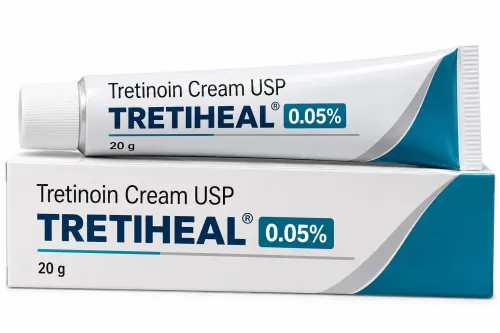
| Tretinoin | Speeds epidermal turnover and changes keratinisation; it does not intentionally destroy melanocytes | Acne, photoageing, and selected pigment disorders |
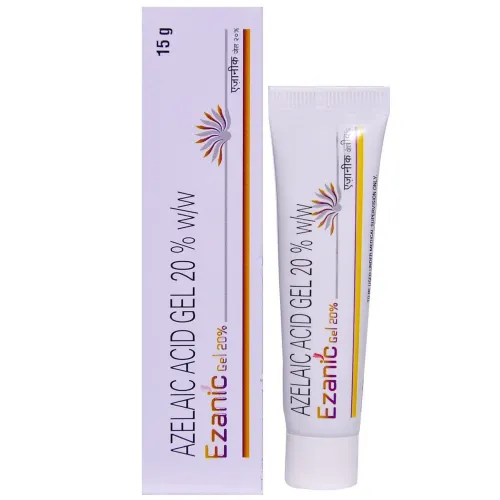
| Azelaic acid | Reduces tyrosinase activity and inflammation | Acne-associated marks, melasma, and post-inflammatory hyperpigmentation |
| Salicylic acid | Loosens surface scale through keratolysis | Acne and rough, blocked skin; weak choice for deep pigment |
| Niacinamide | Reduces transfer of melanosomes into keratinocytes | Mild uneven tone and cosmetic maintenance |
| Kojic acid | Inhibits tyrosinase, reducing melanin production | Limited cosmetic brightening, with irritation or allergy possible |
| Arbutin | Moderates tyrosinase activity without targeting melanocytes for destruction | Mild, gradual cosmetic brightening |
| Combination brightening gel | Depends on its listed ingredients; mixtures can include hydroquinone, tretinoin, corticosteroids, or cosmetic agents | A specific diagnosed problem only after checking every active ingredient |
That distinction changes selection immediately: choose a pigment-modulating product for reversible-looking marks, not monobenzone. For Tanzania buyers, a useful monobenzone cream comparison should never group all “lightening creams” together; the phrase monobenzone cream comparison tanzania must lead to a medical-purpose and ingredient-level comparison, not a fairness-product search.
Frequently asked questions
How is Benoquin different from other monobenzone creams?
Benoquin is a brand of monobenzone, also called monobenzyl ether of hydroquinone. Compare each product’s stated strength, excipients, manufacturer, batch test results, packaging, expiry date, and regulatory status rather than assuming two creams are interchangeable.
Is monobenzone suitable for ordinary hyperpigmentation or dark spots?
No. Monobenzone is used to remove remaining normal pigment in extensive, refractory vitiligo. It is not an ordinary spot-fading treatment and can cause lasting or permanent depigmentation.
What medical safeguards are needed before using monobenzone?
A qualified clinician should confirm the diagnosis, explain the possibility of permanent depigmentation, review skin sensitivity and treatment goals, and set monitoring instructions. Stop and seek medical advice for severe irritation, swelling, blistering, or rapidly spreading unwanted depigmentation.
What should a Dodoma wholesale buyer verify before ordering monobenzone cream?
Request the manufacturer’s legal name and address, product registration or authorization evidence for Tanzania, the stated monobenzone strength, certificate of analysis, batch number, manufacturing and expiry dates, sealed-pack photographs, storage conditions, and a traceable invoice.
How does monobenzone compare with tretinoin and azelaic acid?
Monobenzone is intended for broad depigmentation in selected extensive vitiligo cases. Tretinoin affects skin-cell turnover and is used for conditions such as acne and some pigmentation concerns, while azelaic acid is used for acne and certain uneven-pigmentation conditions. Cosmetic brighteners are a separate category and are not substitutes for medically supervised monobenzone.