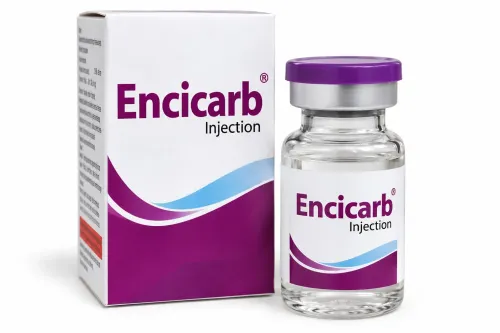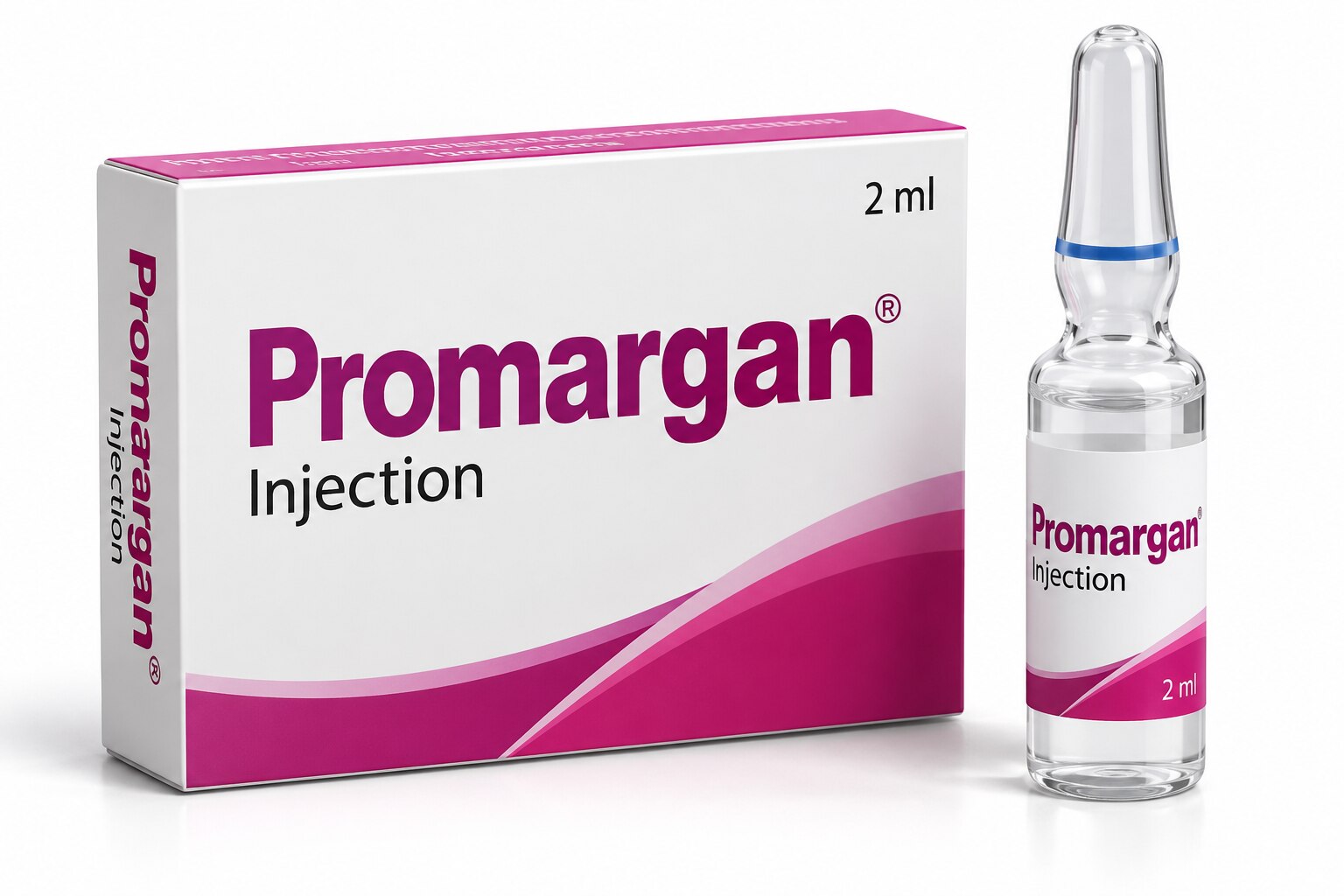
A pharmacy buyer must verify more than the Promargan name before ordering: the active ingredient, mg/mL strength, ampoule or vial presentation, approved route, and destination-market registration all affect safe use. By the end, you will have a practical checklist for comparing the injection with alternatives, reviewing batch evidence, and selecting a supplier for compliant pharmacy distribution.
Key takeaways
- Confirm promethazine hydrochloride strength, route, pack size, and market authorisation.
- Use deep intramuscular administration only when the approved product information permits it.
- Check sedation risks, respiratory disease, interacting medicines, and patient age before supply.
- Reject offers lacking batch records, certificates, export documents, and traceable temperature controls.
What should a Promargan injection product specification contain?
Promargan is a brand name, not the pharmacopoeial identity. A buyer evaluating a Promargan injection pharmaceutical injection for exporter must confirm promethazine hydrochloride, rather than assume that every Promargan presentation contains promethazine hydrochloride 25 mg/mL. Strengths, pack formats, and approved routes vary by market.
Use this specification format before issuing a purchase order:
1. Composition: promethazine hydrochloride; exact strength in mg/mL; total milligrams per ampoule or vial; fill volume; preservative name or “preservative-free”; container type; and units per carton.
2. Clinical and regulatory details: approved route of administration, approved indications, shelf life, storage instructions, destination-market registration number, and label language.
3. Supply identity: manufacturer, licensed manufacturing site, batch number, manufacturing date, expiry date, and the promargan injection exporter’s batch documents.
“Promethazine injection” alone is insufficient because it does not identify concentration, volume, container, preservative status, or lawful use in the receiving market. State the permitted route exactly; do not leave intravenous use, dilution, or deep intramuscular administration to assumption.
Before release, match the carton, ampoule or vial, package insert, and registration record character for character. Confirm storage and light-protection instructions from that approved presentation, not from a catalogue listing.
A promethazine hydrochloride injection supplier should correct any mismatch before shipment, because a familiar brand name cannot make an incorrectly specified medicine suitable for pharmacy supply.
Which route and handling controls prevent serious injection injury?
Accept a shipment only when its dossier states the permitted route, dilution, administration rate, and monitoring instructions. US labeling identifies deep intramuscular administration as preferred; subcutaneous and intra-arterial administration must not be used. Follow the approved local label if it differs, and require those instructions for any promargan injection pharmacy supply.
A promethazine injection exporter must not present intravenous use as an improvised alternative. When IV administration is unavoidable under the cited US label, dilute promethazine with 0.9% sodium chloride to no more than 1 mg/mL, infuse over 20 to 40 minutes, and do not exceed 25 mg per minute.
| Route | Required control | Main danger |
|---|---|---|
| Deep intramuscular | Preferred route under the cited US label; use a trained, authorised healthcare professional | Incorrect technique can still cause injury |
| Subcutaneous or intra-arterial | Do not administer | Burning, thrombophlebitis, tissue necrosis, gangrene, or limb amputation |
| Intravenous | Use only when necessary; apply the stated dilution and rate limits | Extravasation and severe local injury |
Inspect every ampoule or vial for leakage, a broken seal, damage, or visible particles before administration. Observe the patient afterward for pain, burning, swelling, colour change, breathing difficulty, collapse, or another adverse reaction.
Suspected extravasation or accidental intra-arterial injection requires urgent clinical assessment; do not wait for tissue damage to become obvious. Keep administration restricted to personnel trained in injection technique and emergency response, with escalation procedures documented in the receiving facility.
Which patients, medicines, and activities require a safety check?
Do not dispense promethazine injection to a child under 2 years: fatal respiratory depression is a contraindication. For children aged 2 years and older, use the lowest effective dose and check for respiratory depression, asthma, sleep apnoea, coma, severe central-nervous-system depression, seizure risk, or allergy to promethazine or other phenothiazines.
Review every medicine and substance before approving promargan injection pharmacy supply:
- Opioids, benzodiazepines, sedatives, hypnotics, or general anaesthetics
- Alcohol
- Anticholinergic medicines
- Monoamine oxidase inhibitors
These combinations can intensify sedation, impaired breathing, confusion, or collapse. A promethazine hydrochloride injection supplier should provide approved patient information, but pharmacy staff must confirm the patient’s medicines and respiratory status and dispense only against an authorised order.
| Situation | Required check | Consequence |
|---|---|---|
| Child under 2 years | Do not supply or administer | Fatal respiratory depression risk |
| Child aged 2 years or older | Confirm the lowest effective dose | Avoid excessive respiratory and central nervous system depression |
| Any patient after dosing | Assess alertness and supervision needs | No driving, machinery operation, or unsupervised activity while sedated |
Tell patients not to drive or operate machinery until fully alert, and arrange post-dose supervision when sedation is possible. Escalate breathing difficulty, severe drowsiness, collapse, abnormal movements, or an allergic reaction for urgent medical care.
When is injectable promethazine the wrong pharmacy choice?
Choose another dosage form or medicine when the patient does not need rapid parenteral treatment, cannot justify injection risk, or lacks an authorised clinical indication. For a patient who can swallow, oral promethazine usually avoids injection-site injury and reduces administration demands. Injection is unnecessary for ordinary allergy symptoms or nausea prevention without a clinician’s order.
Promethazine injection has labelled antiemetic and preoperative or procedural-sedation uses, so it is not interchangeable with every injectable antihistamine or antiemetic. Injectable chlorphenamine or diphenhydramine belongs in the comparison only when a clinician selects it for a different clinical purpose.
| Option | Route and speed | Sedation, respiratory risk and monitoring | When it fits |
|---|---|---|---|
| Oral promethazine | Oral; slower than parenteral treatment | Sedation and respiratory-depressant risk remain; routine oral supervision | Patient can swallow and rapid treatment is unnecessary |
| Injectable chlorphenamine or diphenhydramine | Parenteral; clinician-selected onset | Sedation and monitoring depend on the medicine and patient | A clinician specifies a different indication |
| Non-sedating antihistamine | Oral; suited to routine control | Lower sedation burden; no injection injury | Ordinary allergy management without a need for injection |
| Promethazine injection | Parenteral; rapid clinical use | Sedation, respiratory risk and administration monitoring | Approved allergy, antiemetic, or procedural use |
Compare route, speed, sedation, respiratory risk, monitoring burden, and local approval—not brand name alone. A buyer reviewing a Promargan injection pharmaceutical injection for exporter supply should require this comparison; a promethazine injection exporter should not present it as routine allergy treatment.
Stock the injectable only when trained administrators, emergency support, suitable storage, and a documented clinical need exist at the receiving facility.
What should you demand from a promethazine injection exporter?
Do not place an order until the exporter links the quoted Promargan presentation to a licensed sterile manufacturing site and a specific batch. The phrase promethazine hydrochloride injection supplier proves neither sterility nor authorization.
1. Demand a batch-specific certificate of analysis showing assay, identification, sterility test result, bacterial endotoxins, particulate matter, fill volume, container-closure details, batch number, manufacturing date, and expiry date.
2. Request the manufacturing licence, current GMP evidence, approved product dossier or registration, batch-release documentation, and proof of authorization for import into your country. Confirm the active ingredient, exact strength in mg/mL, total amount per ampoule or vial, preservatives, container type, route, pack size, and units per carton.
3. Require the exporter’s receiving inspection and sampling procedure. It must address ampoule or vial breakage, leakage, visible particles, seal integrity, rejected samples, quarantine, investigation, and deviation handling. One clear container does not prove sterility across the lot.
4. Obtain the approved label’s storage and transport instructions, including its controlled-room-temperature limits, such as 20–25°C where specified, permitted excursions, and protection from light. Do not accept “no special conditions” as a substitute for the label.
For promargan injection pharmacy supply, ask NIBA HEALTHCARE for these same batch-level documents, route confirmation, presentation details, and destination-market compliance evidence. Evaluate the records, not merely the words promargan injection exporter.
Related product
 | Promethazine Hydrochloride Injection Ip Promethazine injection is used to relieve or prevent some types of allergy or allergic reactions. View product → |
Frequently asked questions
What should a Promargan injection product specification contain?
Confirm the active ingredient as promethazine hydrochloride, concentration such as 25 mg/mL, dosage form, vial volume, approved routes, excipients, storage conditions, shelf life, batch number, and market-specific registration details.
Which route and handling controls prevent serious injection injury?
Follow the product's approved route and label instructions. Promethazine injection has serious tissue-injury risks if administered incorrectly, so verify the route, trained staff, dilution instructions where specified, inspection of the vial, and required storage controls before use.
Which patients, medicines, and activities require a safety check?
Review age, pregnancy, respiratory disease, reduced consciousness, allergy history, and medicines that cause sedation or respiratory depression. Warn patients about impaired driving and other hazardous activities when the product information requires it.
When is injectable promethazine the wrong pharmacy choice?
Choose an alternative when oral treatment is suitable, the patient has a contraindication or high sedation risk, the required injection route is unavailable, or the product lacks clear authorisation and traceability for the destination market.
What should you demand from a promethazine injection exporter?
Request the specification sheet, approved label and leaflet, manufacturing and export licences, certificate of analysis, batch and expiry details, stability and storage information, shipping conditions, and documents proving supply-chain traceability.