A quotation for ferric carboxymaltose is not enough to approve a hospital purchase: the strength, elemental-iron content, manufacturing site, route, dose limits and regulatory file must all match the destination market. By the end, institutional buyers will have a checklist for validating the medicine, assessing clinical fit and comparing an exporter’s supply dossier.
Key takeaways
- Confirm the exact Encicarb strength, volume, batch number and expiry date.
- Use ferric carboxymaltose only by intravenous administration under clinical supervision.
- Match dosing to iron deficiency evidence, body weight and the approved product label.
- Request manufacturing, licensing, quality and shipment documents before placing an order.
What exactly is the Encicarb presentation being offered?
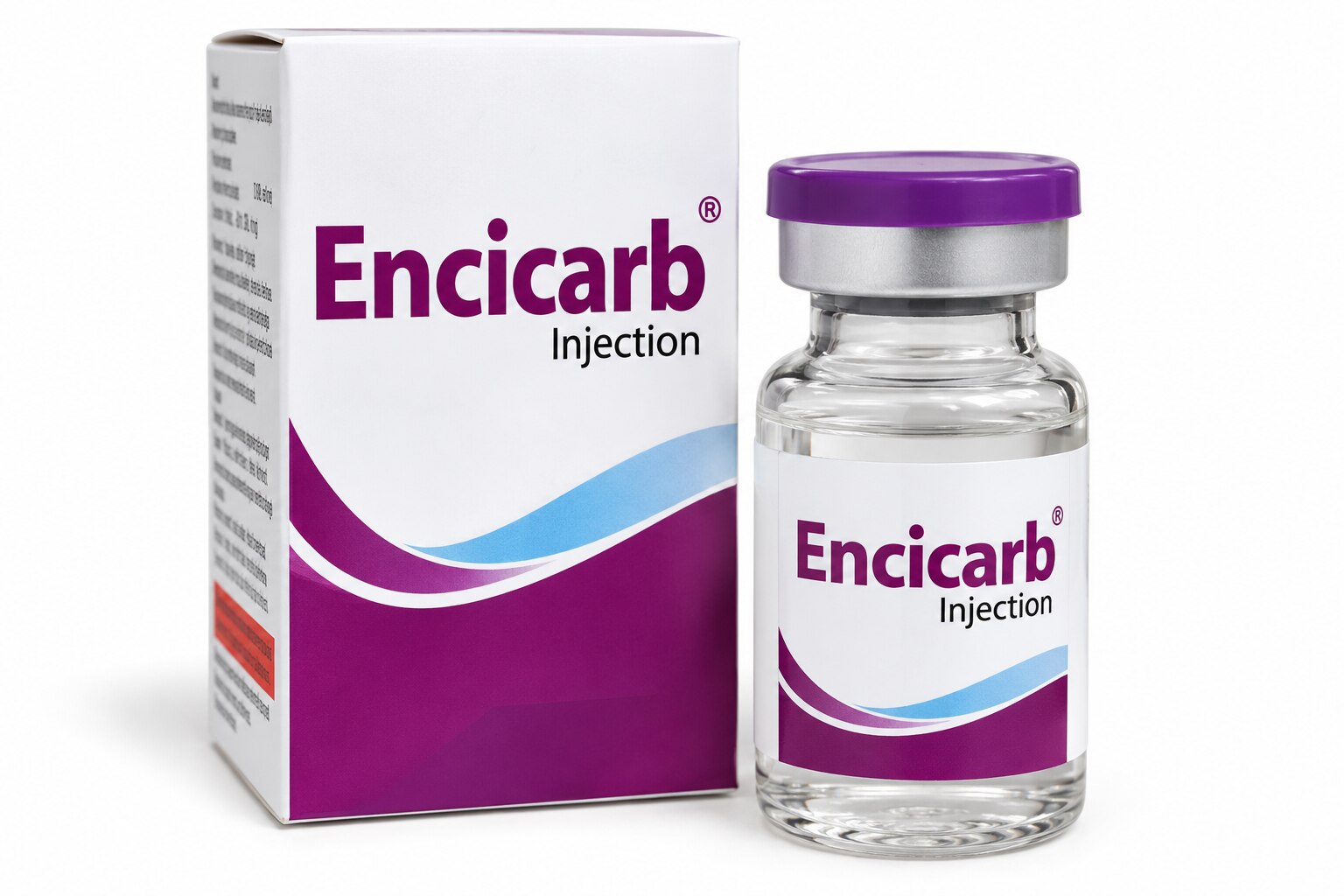
Do not compare quotations until the seller identifies the exact finished product, not merely the brand name. Encicarb should be described as sterile ferric carboxymaltose injection for intravenous use only.
A 100 mg/2 mL vial contains 100 mg of elemental iron, equal to 50 mg/mL; confirm that the stated strength refers to elemental iron, not the total iron complex.
Request these fields in one product specification and verify them against the proposed label:
- Approved generic name, brand name, dosage form, route, strength, fill volume and presentation: 100 mg/2 mL, 10 mL, or both. Ask whether the container is a vial or ampoule and whether the pack contains one unit or a stated number of units.
- Legal manufacturer, complete manufacturing-site address, marketing authorisation holder and brand owner. These parties can be different from the trading or export company.
- Evidence that the exact strength, pack size and sterile dosage form are approved, plus the site’s applicable GMP certificate and a certificate of pharmaceutical product when required.
- A specimen of the destination-market label and approved product information, including storage conditions, expiry format and intravenous-use warning.
A listing presented as an encicarb 100mg 2ml exporter or encicarb injection pharmaceutical injection for exporter is not proof of registration. Confirm whether the destination accepts Encicarb, requires registration under ferric carboxymaltose, or demands legalized documents, local-language labelling and pharmacovigilance coverage.
Which patients and doses qualify for ferric carboxymaltose?
Treatment needs a documented iron-deficiency diagnosis, not simply a low haemoglobin result. Record haemoglobin, body weight, ferritin, transferrin saturation, the suspected cause of deficiency, previous oral-iron response or intolerance, ongoing blood loss, renal status and relevant comorbidities before calculating iron.
| Patient information | Why it matters | Error if missing |
|---|---|---|
| Haemoglobin and weight | Determine the iron deficit and dose limit | Ordering a standard vial count |
| Ferritin and transferrin saturation | Support iron deficiency alongside the clinical picture | Treating anaemia without confirming iron need |
| Prior treatment and blood loss | Explain inadequate replacement or continuing depletion | Repeating treatment without addressing the cause |
| Repeated or high-dose therapy | Identifies patients needing serum-phosphate surveillance | Missing clinically important hypophosphataemia |
Use the approved product information’s dose table or calculation method for the patient’s haemoglobin and weight. A single administration must not exceed 1,000 mg of iron or 20 mg/kg, whichever is lower. If more iron is needed, separate another administration by at least seven days and reassess the clinical plan.
A 100 mg/2 mL presentation contains 50 mg/mL. Therefore, a 1,000 mg administration requires 20 mL, equal to ten 2 mL vials, subject to the authorised label and the calculated requirement. The vial is not an adult treatment course.
A ferric carboxymaltose injection exporter should support quotations against calculated milligrams, not an assumed fixed pack count.
Check serum phosphate during multiple high-dose or long-term courses and in patients with risk factors. Reassess iron status at the protocol-defined follow-up point; immediate ferritin or transferrin-saturation results can be transiently elevated after treatment.
How should the injection be prepared, administered and monitored?
Use the product intravenously only. Subcutaneous and intramuscular injection are unacceptable routes and can cause local injury without delivering the intended treatment.
1. Confirm the approved label permits the planned method: slow intravenous injection or intravenous infusion. For infusion, dilute only with sterile 0.9% sodium-chloride solution. Keep the final concentration at or above 2 mg iron/mL, and do not mix it with other medicines or infusion fluids unless compatibility is documented.
2. Check the dose against the patient’s calculated iron requirement and body weight. Under European product information, one administration must not exceed 1,000 mg of iron or 20 mg/kg, whichever is lower. If another dose is needed, separate it by at least seven days and follow the approved schedule.
3. Inspect the vial or ampoule immediately before use. Reject it for particles, precipitation, leakage, container damage or abnormal colour. Use the container once; discard unused solution under local pharmaceutical-waste rules.
4. Administer it where trained staff and functioning resuscitation equipment can treat anaphylaxis. Monitor the patient throughout administration, including for hypersensitivity, hypotension and extravasation.
5. Keep the patient under observation for at least 30 minutes after every dose. Record the product name, strength, batch number, dose, route, dilution, administration time and reaction status. Confirm the exact label’s infusion rate, minimum infusion time and line-flushing instructions before release to clinical staff.
When is ferric carboxymaltose preferable to another iron treatment or transfusion?
Ferric carboxymaltose is preferable when confirmed iron deficiency requires rapid repletion, oral treatment is unsuitable or ineffective, and reducing infusion visits matters. It is not a substitute for emergency blood-volume or oxygen-carrying support.
| Option | Speed and visits | Monitoring and trade-offs |
|---|---|---|
| Oral iron | Slow haemoglobin response over weeks; daily dosing and adherence over months | Check response and tolerance; gastrointestinal effects and poor absorption can limit success |
| Iron sucrose | IV replacement, but usually divided into several smaller administrations | Observe each infusion for hypersensitivity; more visits and venous access episodes, but useful when smaller doses are preferred |
| Ferric derisomaltose | Often permits a large replacement dose in one visit, subject to its approved label | Compare maximum dose, infusion time, price, local availability and hypophosphataemia warnings with ferric carboxymaltose |
| Ferric carboxymaltose | A large dose can reduce visits; each administration remains subject to the 1,000 mg or 20 mg/kg limit, whichever is lower | Monitor for hypersensitivity and consider serum phosphate after repeated, high-dose or long-term treatment; transiently raised iron indices can mislead early follow-up |
| Blood transfusion | Raises haemoglobin and oxygen delivery immediately; usually reserved for instability, severe symptoms or urgent clinical need | Requires compatibility testing and transfusion surveillance; it carries transfusion risks and does not correct depleted iron stores |
Choose oral iron when urgency is low and absorption and adherence are realistic. Choose IV iron when faster repletion or fewer visits outweigh infusion risks. Reassess iron status at a clinically appropriate interval, not immediately after dosing, and do not use transfusion solely to treat uncomplicated iron deficiency.
What must an international supplier prove before shipment?
Before signing, demand a batch-linked supply file—not a quotation—from an encicarb injection international supplier. The file must identify the exact strength, container size, fill volume and pack configuration, then link them to the legal manufacturer and registered manufacturing site.
Request these records before approving the supplier:
- Batch-specific certificate of analysis, showing assay, sterility, particulate testing, batch number, manufacture date and expiry date.
- Batch-release record, manufacturing licence, applicable GMP certificate and the approved product information for the destination country.
- Certificate of Pharmaceutical Product, import or marketing-authorisation evidence, legalized documents and destination-language labels where required.
- Temperature-controlled shipping plan stating storage limits, transport conditions, logger use, excursion handling, packing list, invoice and airway bill.
- Traceability procedures covering dispatch and receipt records, complaints, returns, rejected stock, recalls and pharmacovigilance contacts.
If NIBA HEALTHCARE is the exporting entity, the contract should name it separately from the legal manufacturer, marketing-authorisation holder and brand owner, with each address stated.
| Document | What it proves | Query or reject when |
|---|---|---|
| Certificate of analysis | This batch meets release specifications | Batch number does not match the cartons |
| GMP evidence | The named site operates under recognised manufacturing controls | Certificate names a different site or expired scope |
| Regulatory file | The exact strength and pack can enter the destination market | It covers another strength, brand or country |
| Shipping records | Product remained within labelled storage conditions | No temperature logger or excursion procedure exists |
| Traceability plan | Affected units can be located during a recall | Supplier cannot trace vial, batch and consignee records |
Related product
 | FERRIC CARBOXYMALTOSE INJECTION Encicarb Injection 10 ml belongs to the group of anti-anaemic medicines used to treat iron deficiency anaemia in patients who are intolerant to oral... View product → |
Frequently asked questions
What exactly is the Encicarb presentation being offered?
Encicarb should be identified as sterile ferric carboxymaltose injection for intravenous use only. Confirm the strength, fill volume, dosage form, pack size, batch number and expiry date; a listing for Encicarb 100 mg/2 mL must state those details clearly.
Which patients and doses qualify for ferric carboxymaltose?
Use ferric carboxymaltose for documented iron deficiency or iron-deficiency anaemia when intravenous replacement is clinically appropriate. The prescriber should calculate the iron requirement from the patient’s haemoglobin, body weight and approved product information.
How should the injection be prepared, administered and monitored?
Prepare and administer it only by the approved intravenous route. Check the label, inspect the solution, follow dilution and infusion instructions, observe the patient during administration, and monitor for hypersensitivity, hypertension and hypophosphataemia when clinically indicated.
When is ferric carboxymaltose preferable to another iron treatment or transfusion?
It is useful when oral iron is ineffective, poorly tolerated or too slow, or when a larger iron replacement dose is needed. Blood transfusion is reserved for clinical situations requiring red-cell support rather than routine iron replacement.
What must an international supplier prove before shipment?
Request the exact product specification, manufacturer identity, batch and expiry details, certificate of analysis, manufacturing licence, product registration or marketing authorisation evidence, storage conditions, shipping documents and export permissions.