A hospital cannot approve Hepbest from the brand name alone: it must confirm the active ingredient, strength, indication, registration, complete treatment plan, and shipment documentation. By the end, procurement and clinical teams will have a practical way to compare Hepbest supply options, screen patients, and accept stock safely in Caracas.
Key takeaways
- Confirm Hepbest is 25-mg TAF before approving the order.
- Do not use TAF alone as a complete HIV regimen.
- Review renal, liver, pregnancy, and interaction considerations before tender approval.
- Request Caracas registration, shipment, batch, and stock-acceptance records.
Confirm what Hepbest is—and what the order is meant to treat
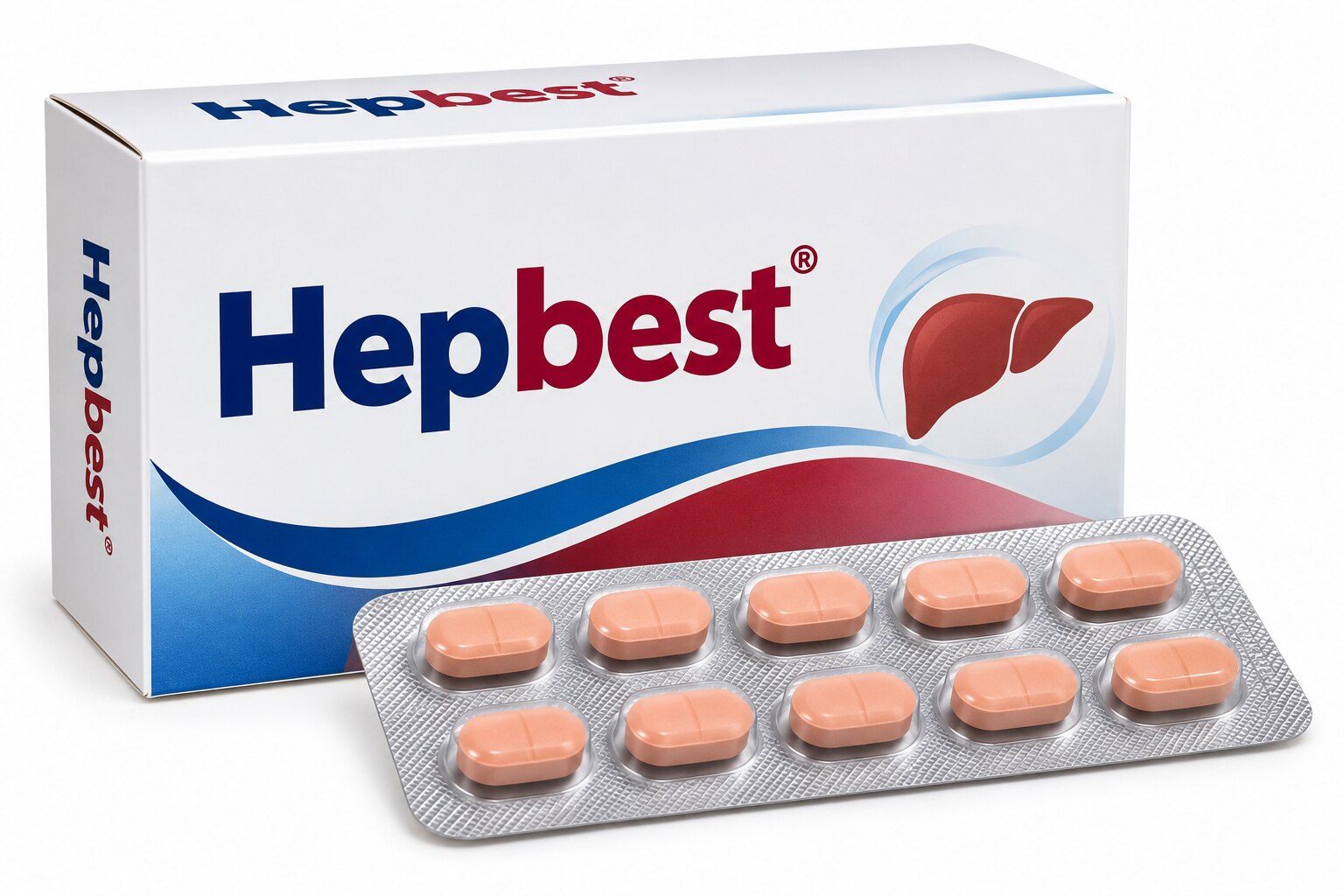
Do not approve an order from the product name alone. Hepbest is a 25-mg tenofovir alafenamide (TAF) tablet, and TAF alone is not a complete HIV regimen. Confirm whether the hospital is treating chronic hepatitis B (HBV) or procuring a complete, guideline-supported HIV combination.
Use this procedure before issuing the purchase order:
1. Specify the active ingredient and strength: tenofovir alafenamide 25 mg per tablet. Do not substitute tenofovir disoproxil fumarate (TDF) or a combination product without clinical approval.
2. State the indication: chronic HBV treatment, or HIV treatment alongside the named antiretrovirals and fixed-dose combination required. HepBest monotherapy is not adequate HIV treatment, and unrecognized HIV infection can develop resistance to TAF monotherapy.
3. Record the dosage form, tablet count per pack, blister or bottle format, proposed daily dose, and whether chronic HBV use will be 25 mg once daily with food.
4. Request the legal manufacturer, marketing authorization holder, importer of record, batch-release documentation, Venezuelan registration or authorization status, and full product label.
5. Require labeled storage and shipping conditions, including protection from excessive heat and moisture. Do not assume ambient transport suits every Caracas warehouse or port.
A search phrase such as hepbest tablets for hospitals must not replace a clinical specification. The phrase hiv medicines supplier hepbest for hospitals in caracas also does not establish that the product is authorized or suitable for HIV care. Confirm the intended disease, patient population, and prescribing decision with an infectious-disease specialist before procurement.
Separate HBV treatment from complete HIV treatment
A hospital prevents a treatment error by putting the disease indication and regimen on separate lines of the requisition. HepBest contains tenofovir alafenamide 25 mg and is used as a chronic hepatitis B treatment; HepBest alone is not a complete HIV regimen.
For hiv medicine procurement in caracas, do not approve an order that describes HepBest only as an “HIV medicine.”
Use this purchasing check:
- For HBV: record chronic hepatitis B as the indication, identify the prescriber or infectious-disease service, and require a plan for monitoring and continuation.
- For HIV: specify the complete fixed-dose combination or name every antiretroviral to be supplied, with strength, dosage form, pack size, and treatment protocol.
- Before tender approval: have an HIV or hepatology clinician confirm that the proposed products match the patient population and the applicable Venezuelan treatment guidance.
A standalone 25 mg TAF tablet can leave a person with HIV on incomplete therapy, allowing viral replication and resistance. If the patient also has HBV, stopping or changing an effective anti-HBV medicine without clinical supervision can trigger a hepatitis B flare.
Keep the HIV and HBV orders distinct, then reconcile them against the patient’s full medication plan before pharmacy release. A supplier’s catalogue label cannot substitute for that clinical review.
Complete the clinical and interaction review before tender approval
Before approving hepbest tablets for hospitals, require an infectious-disease or hepatology review of the intended patient population, indication, and complete regimen. HepBest is a 25-mg tenofovir alafenamide tablet for chronic hepatitis B; TAF alone is not complete HIV treatment.
If the tender is for HIV care, specify the approved fixed-dose combination or the additional antiretrovirals, not HepBest alone.
Use this clinical checklist:
- Confirm hepatitis B or HIV treatment intent, local indication, and the prescriber’s guideline-supported regimen.
- Check estimated creatinine clearance before treatment. Do not initiate below 15 mL/min unless the patient receives chronic hemodialysis; arrange renal monitoring during therapy.
- Review osteoporosis, prior fragility fracture, and other bone-risk factors when comparing TAF with tenofovir disoproxil fumarate.
- Screen the medication list for strong P-glycoprotein inducers, including rifampicin, carbamazepine, phenytoin, phenobarbital, oxcarbazepine, and St John’s wort.
- Flag nephrotoxic medicines, including high-dose or multiple NSAIDs, for prescriber review.
- Identify hepatitis B coinfection before any HIV regimen is changed. Stopping effective HBV-active therapy without a replacement plan can trigger a severe HBV flare.
| Review check | What to confirm | Why it matters |
|---|---|---|
| Indication | Chronic HBV or complete HIV regimen | Prevents TAF monotherapy for HIV |
| Renal status | Creatinine clearance and dialysis status | Identifies unsuitable initiation |
| Interactions | Inducers and nephrotoxic medicines | Prevents reduced exposure or kidney injury |
| Continuation plan | HBV-active replacement before stopping | Reduces flare risk |
Compare Hepbest with TDF, TAF alternatives, and combination products
A 25-mg TAF tablet cannot be compared with a complete HIV regimen on unit price alone. HepBest monotherapy is positioned for chronic hepatitis B, while HIV treatment requires a complete, guideline-supported combination. Compare the full clinical package, not just the tenofovir molecule.
| Option | What you are buying | Procurement trade-off |
|---|---|---|
| HepBest 25 mg | Single-agent TAF tablet for chronic HBV | Lower tablet cost may become waste if ordered for HIV without the required antiretrovirals |
| TDF product | Tenofovir disoproxil fumarate, alone or in a combination | Often requires closer attention to renal and bone risk |
| TAF alternative | TAF in another brand, strength, pack, or formulation | Same active moiety does not prove identical registration, quality, or interchangeability |
| TAF combination | TAF with emtricitabine or other antiretrovirals in one product | Higher unit price can reduce dispensing errors and simplify adherence, but requires regimen and interaction review |
For each of the hepbest supply options, request the exact strength, tablet count, dosage form, manufacturer, batch documentation, expiry period, storage conditions, and Venezuelan registration status. A HepBest tenofovir alafenamide supplier in Caracas should also state whether the quoted product is intended for HBV or belongs to a complete HIV regimen.
- Compare renal monitoring and bone-risk requirements, not just acquisition cost.
- Price the entire prescribed regimen, including companion medicines and dispensing workload.
- Reject substitution when the indication, formulation, strength, registration, or interaction profile differs.
Verify Caracas registration, shipment records, and stock acceptance
A HepBest tenofovir alafenamide supplier in Caracas must prove that the exact 25-mg tablet presentation is authorized for Venezuelan supply. Do not accept a product name alone; match the registration or authorization number, approved indication, dosage form, pack size, manufacturer, and importer against the shipment.
1. Request the local registration record and compare it with the outer carton, blister, Spanish patient leaflet, and invoice. Each must show the same product name, 25-mg strength, batch number, expiry date, storage statement, and manufacturer.
For HIV medicine procurement in Caracas, confirm that the registered presentation is an approved complete combination or that HepBest is being purchased for chronic HBV, not used as standalone HIV treatment.
2. Match the batch number and quantities across the purchase order, commercial invoice, packing list, certificate of analysis, and delivery note. Ask for dispatch and transport records showing departure date, route, carrier, and compliance with the labeled storage conditions. Refrigeration is not the default requirement; protect the tablets from excessive heat and moisture.
3. Quarantine the shipment until pharmacy staff inspect seals, cartons, blisters, legibility, tablet count, damage, and remaining shelf life. Reject or investigate mismatched batch details, broken packaging, unexplained temperature exposure, missing Spanish labeling, or an expiry period that fails the hospital’s policy.
If NIBA HEALTHCARE is the proposed supplier, request this document set before release to inventory, not after the first patient order. Record the acceptance decision, discrepancies, and responsible pharmacist’s approval in the hospital’s receiving log.
Frequently asked questions
What is Hepbest used to treat?
Hepbest contains 25 mg of tenofovir alafenamide. Confirm whether the order is for chronic hepatitis B treatment or for use within a complete HIV regimen.
Can Hepbest alone treat HIV?
No. Tenofovir alafenamide alone is not a complete HIV regimen. HIV procurement requires a guideline-supported combination selected after clinical and interaction review.
What should hospitals compare with Hepbest?
Compare Hepbest with tenofovir disoproxil fumarate, other TAF products, and fixed-dose combination medicines. Assess indication, renal and bone considerations, interactions, dosing, documentation, and supply continuity.
Which records should a Caracas hospital verify before accepting Hepbest stock?
Verify local registration or authorization records, supplier documentation, shipment records, batch and expiry details, packaging integrity, and the hospital's stock-acceptance requirements.