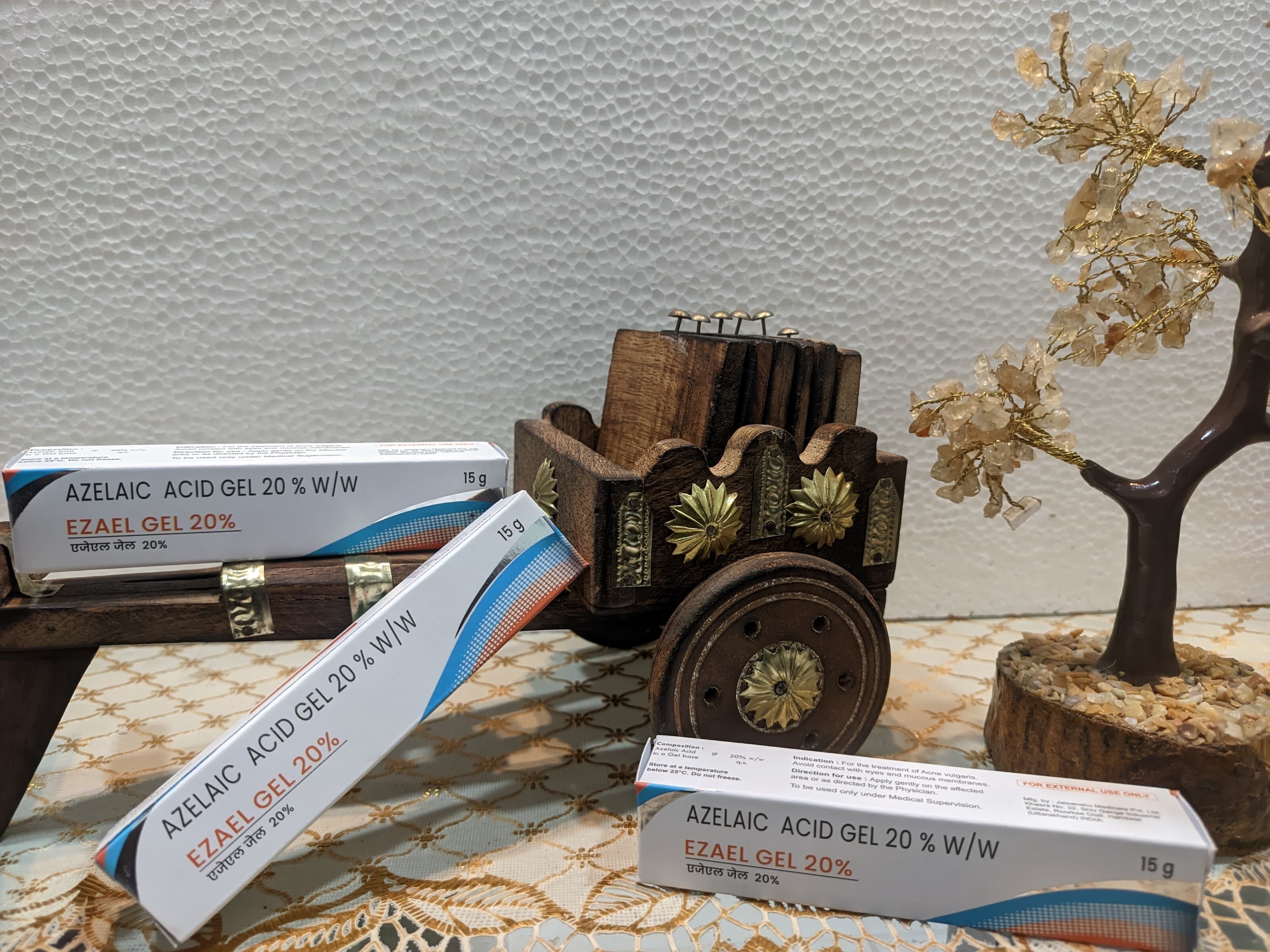
A brand-like name is not enough to identify the medicine, its dosage form, or an authorized source. By checking the active ingredient, Venezuelan import route, batch documentation, landed cost, and receiving controls, you can distinguish a legitimate Caracas procurement option from an unverified cosmetic listing.
Key takeaways
- Define the gel’s ingredient, strength, dosage form, and pack size in writing.
- Compare azelaic acid gel with creams by formulation, packaging, and intended use.
- Request supplier licences, batch records, certificates, and export documents before ordering.
- Calculate freight, insurance, duties, storage, and delivery costs—not only the unit price.
Confirm What “Ezael Gel 20 Percent” Actually Identifies
“Ezael gel 20 percent” is a search term, not proof that the product is a pharmaceutical gel. Before asking an ezael gel 20 percent supplier for a quotation, define the item in writing; otherwise, a 20% cream, cosmetic listing, or differently formulated gel can enter the offer.
- Active ingredient and strength: azelaic acid, 20% w/w. Reject descriptions that state only “20 percent.”
- Dosage form: topical gel, not cream, lotion, ointment, or powder.
- Vehicle or base: record whether the gel is aqueous, hydroalcoholic, or another base, and ask how the azelaic acid is dispersed.
- Formulation characteristics: request particle-size distribution, suspension state, rheology, spreadability, and release-performance data. Equal strength does not make two gels equivalent.
- Presentation: confirm tube size, net quantity, closure, carton configuration, and intended storage temperature.
- Manufacturer and manufacturing site: obtain the legal company name and physical production address.
- Authorization: record the market-authorization or registration number and issuing country.
For procurement in Caracas, make the Venezuelan importer confirm sanitary registration, import eligibility, Spanish-language labelling, customs documents, and product-specific release conditions before accepting a pro-forma invoice or reserving production capacity. Qualify listings against pharmaceutical GMP evidence and batch documentation, not the brand-like spelling or the phrase “skin care products supplier.”
Compare the Gel With Creams and Other Azelaic Acid Products
Choose the 20% gel only when its approved indication, dosage form, vehicle, and local registration match the treatment need. A higher concentration does not make it interchangeable with a 15% gel or a 20% cream.
| Option | What it means | When it applies |
|---|---|---|
| 20% azelaic acid gel | A 20% w/w topical gel with its own base, particle distribution, viscosity, and release profile | Choose when the approved label specifies this gel for the diagnosed condition |
| 20% azelaic acid cream | The same nominal strength in a different vehicle; Azelex, for example, is labelled as a 20% cream for mild-to-moderate inflammatory acne | Choose when the prescriber and local label call for a cream, especially where a richer base suits dry skin |
| 15% azelaic acid gel | A different strength and product identity; Finacea is labelled for inflammatory papules and pustules of rosacea | Do not substitute it for a 20% product without clinical and regulatory approval |
| Another treatment | A separate active, such as metronidazole, benzoyl peroxide, or a retinoid | Choose according to diagnosis, prior response, contraindications, and the prescriber’s plan |
Azelaic acid has low water solubility, so two gels with 20% on the label can spread, feel, release, and irritate differently. Ask an azelaic acid gel supplier in caracas for the registered formula, dosage form, and finished-product certificate of analysis, including assay, pH, viscosity, degradation products, microbial limits, and fill weight.
Follow the approved local label for frequency and duration. Do not replace pharmaceutical instructions with cosmetic-use advice.
Build a Caracas Import and Supplier-Due-Diligence File
Do not accept a pro-forma invoice or reserve production capacity until the Venezuelan importer confirms the product’s sanitary route and import eligibility. For ezael gel procurement in caracas, the overseas factory can supply evidence, but the importer remains responsible for registration, customs, Spanish-language labeling, and product-specific release conditions.
Request this file from the importer and supplier:
- Regulatory: sanitary classification, registration or authorization number, Certificate of Pharmaceutical Product if treated as a medicine, import permit requirements, Spanish label artwork, and the importer’s authorization to distribute it.
- Manufacturing: manufacturing licence, current GMP certificate naming the actual site, product specification, active ingredient azelaic acid, concentration 20% w/w, dosage form, vehicle or base, and manufacturing-site address.
- Quality: lot-specific certificate of analysis, batch-release record, expiry and retest dates, stability data, storage limits, and evidence supporting the tube, pump, laminate, closure, tamper seal, and nominal fill.
- Commercial and customs: signed quotation, minimum order and case configuration, lead time, payment terms, Incoterm, commercial invoice, packing list, certificate of origin, freight documents, and customs tariff information.
| Document group | Obtain before ordering | What a gap means |
|---|---|---|
| Regulatory | Registration, classification, Spanish label, importer authorization | The shipment can be detained or sold under the wrong legal route |
| Manufacturing | GMP certificate and site licence | The named seller may not be the producing facility |
| Quality | Batch CoA, release record, stability and packaging support | You cannot verify identity, potency, or transport suitability |
| Commercial | Quote, Incoterm, invoice, packing list and origin certificate | Landed cost and customs clearance remain uncertain |
Evaluate a Supplier Quote From Caracas to Final Delivery
A local pharmacy purchase wins when you need a small quantity quickly and the pack already carries Venezuelan authorization, Spanish labeling, batch number, expiry date, and an intact seal. Importation becomes worth comparing when you need repeat supply or wholesale volume, but only after calculating the complete landed cost in Caracas.
| Option | Cost and effort | Best fit |
|---|---|---|
| Local pharmacy | Retail price, no freight or customs work, immediate availability | Small urgent purchase from an authorized outlet |
| Finished-medicine import | Product price plus freight, insurance, brokerage, duties, taxes, testing, and registration costs | Planned business supply with predictable demand |
| Cosmetic marketplace listing | May omit pharmaceutical batch records, approved claims, and a valid import route | Not a substitute for a therapeutic finished product |
Request every supplier to quote the same delivery point and Incoterm. Ask for separate figures for product, minimum order quantity, samples, Spanish artwork changes, testing, freight, insurance, customs brokerage, duties and taxes, and local registration. A low Indian ex-works price can become the most expensive Caracas option after these additions.
For a quote from NIBA HEALTHCARE, require the manufacturing licence, current GMP evidence, product specification, batch certificate of analysis, stability data, certificate of pharmaceutical product, and proof that the named site manufactures the finished 20% w/w azelaic-acid gel. An active-ingredient certificate is not enough.
Confirm the dosage form, vehicle, registration number, authorized importer, lead time, payment terms, and case configuration before comparing offers. Keep cosmetic instructions separate from the approved local medicine label.
Receive, Store, and Control Each Batch
Reject the shipment only after documenting the reason. On arrival, photograph the outer carton, seals, shipping damage, and any temperature indicator before opening. Quarantine the batch until you confirm the name, azelaic acid concentration of 20% w/w, gel dosage form, manufacturing site, lot number, expiry date, pack size, and Venezuelan registration or authorization details.
- Match the lot and expiry on every tube, carton, and shipping document.
- Check that tubes are sealed, clean, undamaged, and free from leakage, separation, crystals, or unexpected changes in colour, odour, or texture.
- Request the finished-product certificate of analysis for that lot. Compare its appearance, identification, assay, related substances, pH, viscosity, microbial limits, fill weight, and packaging checks with the registered specification.
- Record the received quantity and quarantine any carton with mismatched labels, missing Spanish information, broken seals, or an unexplained storage excursion.
For ezael gel procurement in caracas, do not release stock because a marketplace listing or an ezael gel 20 percent supplier calls the product “skin care.” Use the approved local label for every use instruction.
| Information source | What it controls | Do not substitute it with |
|---|---|---|
| Approved local label | Indication, amount, frequency, application method, duration, warnings, age limits, and storage | Supplier marketing copy |
| Certificate of analysis | Batch quality and test results | A generic “COA available” promise |
| Cosmetic instruction sheet | Cosmetic handling information only | Prescribing information for a finished pharmaceutical |
Frequently asked questions
What does “Ezael Gel 20 Percent” identify?
Treat it as a product name or search term until the supplier confirms azelaic acid concentration, gel dosage form, pack size, composition, manufacturer, batch number, and regulatory status.
How should you compare 20% azelaic acid gel with a cream?
Compare the active ingredient, inactive ingredients, texture, container, stability data, application instructions, and product classification. A 20% cream is not interchangeable with a 20% gel.
Which documents belong in a Caracas supplier due-diligence file?
Collect the supplier’s legal identity, manufacturing and export details, product specification, certificate of analysis, batch documentation, regulatory evidence, invoice, packing list, and shipping documents.
What should you check when receiving each batch?
Match the goods against the purchase order, inspect seals and packaging, record batch and expiry details, check storage conditions, quarantine discrepancies, and retain the certificate of analysis and delivery records.