A hospital cannot safely evaluate Hepbest from the brand name alone. The buyer must first determine whether the service needs a single-agent tenofovir alafenamide product for hepatitis B or a complete HIV regimen, then verify the Brazilian presentation, patient criteria, import route and supply continuity. By the end, you will have a practical checklist for comparing the product with other formulary options and screening a Brasília supplier.
Key takeaways
- Confirm whether the request is for HBV treatment or a complete HIV regimen.
- Check kidney function, liver status, pregnancy, age and interacting medicines before selection.
- Compare TAF with TDF and fixed-dose combinations against the hospital formulary.
- Request ANVISA documentation, batch records and defined receiving conditions before shipment.
Confirm whether the hospital needs Hepbest for HBV or a complete HIV regimen
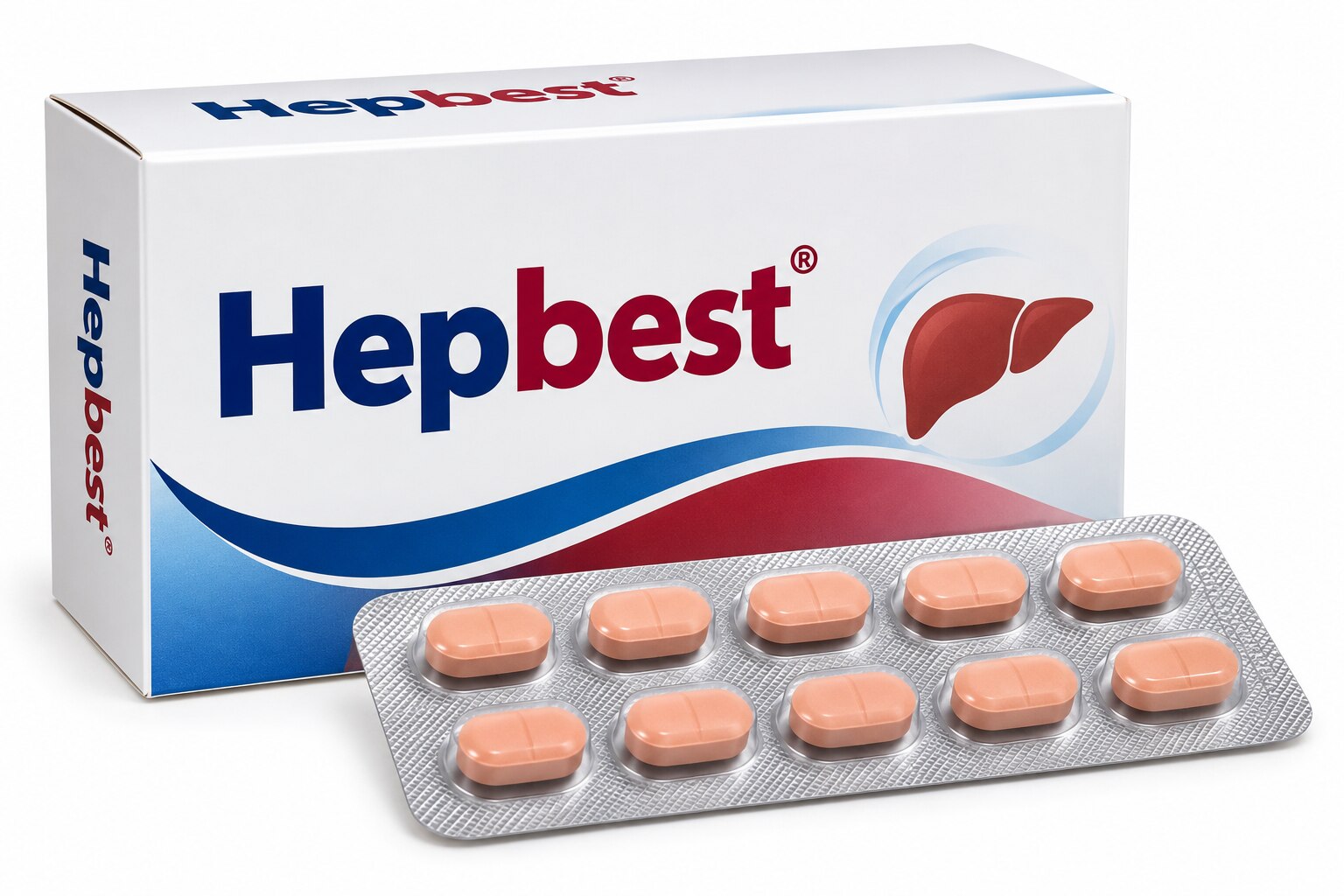
A 25 mg tenofovir alafenamide fumarate tablet marketed as HepBest is an HBV medicine, not a complete HIV treatment. A request for an “HIV medicines supplier HepBest for hospitals Brasília” therefore needs clarification before anyone issues a quotation: one TAF tablet cannot replace a regimen containing multiple active antiretrovirals.
- Ask the requesting service to state the indication: chronic hepatitis B, HIV treatment, or both.
- For HBV, specify HepBest 25 mg tablets only if the prescriber has selected tenofovir alafenamide for that patient and the hospital can maintain uninterrupted treatment.
- For HIV, request the complete approved antiretroviral regimen, including every active ingredient, strength, dosage form, pack size and monthly quantity. Add HepBest separately only when the HIV specialist explicitly confirms its role within that combination; never offer HepBest monotherapy as HIV treatment.
- Match the purchase order to the exact authorized product: manufacturer, marketing-authorisation holder, tablet composition, batch documentation and Brazilian regulatory status. Do not treat a foreign quotation as proof that the product is interchangeable with a locally authorized HIV combination.
Clarify treatment history before substitution. A patient stable on an HIV fixed-dose combination needs that complete combination, not an isolated TAF tablet; a patient receiving TAF for HBV needs a continuity plan because abrupt interruption can cause severe hepatitis B exacerbation.
Screen renal, hepatic, pregnancy, paediatric and interaction risks before selection
Before approval, document the indication, kidney function, liver status, pregnancy status, weight, age and complete medication list. For HBV, test for HIV infection before using TAF alone; unrecognised HIV treated with a single active agent can select resistance. For HIV, approve TAF only within a complete antiretroviral regimen.
| Check | What to review | Decision point |
|---|---|---|
| Renal | Serum creatinine, estimated glomerular filtration rate or creatinine clearance, dialysis status and nephrotoxic medicines | Follow the Brazilian product information for reduced kidney function; do not treat TAF’s lower tenofovir exposure as freedom from renal monitoring |
| Hepatic | HBV status, HIV status, ALT, bilirubin, albumin, INR and Child-Pugh class | Confirm that the registered product covers the patient’s liver condition, especially decompensated cirrhosis |
| Pregnancy and paediatrics | Pregnancy or pregnancy intention, breastfeeding, age and body weight | Check the registered indication; HBV use is established for patients aged 12 years or older weighing at least 35 kg, not for every child |
| Interactions | Rifampicin, rifabutin, carbamazepine, phenytoin, phenobarbital and St John’s wort | Avoid strong P-glycoprotein inducers that can lower TAF exposure |
| Duplication and toxicity | Other tenofovir or TAF products, antiretrovirals and nephrotoxic drugs | Remove duplicate therapy and create a renal monitoring plan |
Also review lipids and cardiovascular risk. TAF can raise lipid parameters compared with TDF, so renal and bone advantages do not make it the safest choice for every patient.
Compare TAF with TDF, fixed-dose combinations and other formulary choices
A 25 mg HepBest tablet can offer a useful HBV formulary advantage when renal or bone risk makes lower systemic tenofovir exposure important.
TAF produces smaller average changes in renal-function measures and bone mineral density than TDF, but it is not metabolically neutral: lipid parameters can rise, so include cardiovascular risk and lipid monitoring in the decision.
| Option | Formulary advantage | Better hospital purchase when |
|---|---|---|
| TAF 25 mg alone | HBV treatment with lower circulating tenofovir exposure than TDF | The indication is chronic HBV and the approved product matches the patient’s needs |
| TDF alone | Established, potentially lipid-favourable alternative | Bone and renal risks are acceptable and the formulary prioritises this presentation |
| TAF fixed-dose combination | Complete HIV regimen component in one approved tablet | HIV care requires the specific antiretroviral partners and dosing supplied by that combination |
| TDF fixed-dose combination | Complete HIV regimen with TDF and other antiretrovirals | The selected regimen fits guidelines, resistance history, renal function and procurement limits |
Do not substitute HepBest for an HIV regimen. HIV treatment requires a complete combination; a single TAF tablet leaves active drugs missing. Conversely, buying a multi-drug HIV tablet for HBV creates unnecessary exposure and may not match the approved indication.
A search for tenofovir alafenamide tablet supplier brasilia should therefore identify the indication before comparing quotations. Choose TAF when its renal or bone profile solves a defined clinical problem; choose TDF or a fixed-dose combination when the complete regimen, lipid profile, patient history and hospital formulary point there.
Verify ANVISA status, import documents and receiving conditions in Brasília
Accept the shipment only after matching the exact HepBest tablet strength, composition, pack size, manufacturer and registration holder with ANVISA’s medicines database. An export certificate or the Indian manufacturer’s GMP certificate does not make an unregistered product routinely distributable in Brazil.
For a hepbest hospital supply brasilia purchase, require the importer to provide:
- ANVISA import documentation required under RDC 81/2008, including the applicable import declaration or licence, commercial invoice, packing list and air waybill or bill of lading
- The approved Brazilian label and package leaflet, plus the product registration or authorisation details that match the shipment
- The batch certificate of analysis, batch number, expiry date and manufacturing records needed for traceability
- The Brazilian distributor’s sanitary authorisation, responsible pharmacist details, storage records, recall procedure and proof of lawful distribution
Keep product authorisation separate from distributor qualification. A foreign quotation alone does not establish a legal hospital supply route.
At receiving, quarantine the consignment until staff inspect the seals, bottles, tablets, labels, lot numbers, expiry dates and quantity against the purchase order. Record transport temperature exposure and warehouse transfer. HepBest tablets are kept in the original container, protected from moisture, at or below 30 °C; they are not handled as a routine cold-chain medicine.
Reject or investigate crushed packs, broken seals, missing identifiers, unexplained temperature excursions or mismatched Portuguese labelling. Include continuity planning because a delayed import or tender can interrupt chronic HBV treatment, and stopping tenofovir alafenamide requires prescriber-directed monitoring.
Turn the clinical decision into a reliable hospital supply specification
Set the tender around a specific presentation, not the brand name alone: 25 mg tenofovir alafenamide fumarate tablet, manufacturer, pack size, expiry at delivery, Brazilian registration holder and intended HBV use. If HIV treatment is requested, require the complete antiretroviral regimen; HepBest monotherapy is not an HIV treatment plan.
Qualify a hepbest pharmaceutical distributor brasilia against evidence that can be checked before award:
- Match the exact product, strength, manufacturer, registration holder and status in ANVISA’s medicines database. An Indian export certificate or GMP certificate does not establish Brazilian authorization.
- Request the Brazilian-approved package insert, Portuguese label, pack configuration and tablet identification. Resolve every difference from the export pack before purchase.
- Obtain the intermediary’s applicable sanitary authorization, responsible pharmacist details, storage records, batch traceability process and written recall procedure.
- Require a continuity plan covering safety stock, lead time, customs delays and substitution approval. For chronic HBV, an interruption can trigger severe acute exacerbation; include prescriber-directed monitoring after discontinuation.
| Check | Evidence to compare | Reject or escalate when |
|---|---|---|
| Authorization | ANVISA record for the exact presentation | Product or holder cannot be matched |
| Supply continuity | Forecast, reorder point and delay procedure | No alternative plan for import disruption |
| Quality release | Batch certificate, expiry and shipping records | Documents arrive after delivery |
| Distribution control | Pharmacist, storage and recall logs | Traceability ends at the importer |
NIBA HEALTHCARE should be assessed using these same product, regulatory and continuity documents, not its catalogue description or manufacturer credentials alone.
Related product
 | TENOFOVIR ALFENAMIDE TABLET HEPBEST Tablet is used in the treatment of HIV infection and chronic hepatitis B virus (HBV) infection. |
Frequently asked questions
Is HepBest a complete HIV treatment?
No. HepBest contains 25 mg tenofovir alafenamide and is an HBV medicine; HIV treatment requires a complete regimen with multiple active antiretrovirals.
Which patient risks should hospitals screen before selecting HepBest?
Review renal function, hepatic status, pregnancy, paediatric suitability and interacting medicines before adding HepBest to a patient-specific plan.
How should hospitals compare TAF with TDF?
Compare the indication, renal and bone considerations, dosage form, fixed-dose combinations, monitoring needs and formulary position rather than treating TAF and TDF as interchangeable.
Which documents should Brasília hospitals verify before importing HepBest?
Verify ANVISA status, the supplier’s import documentation, product registration details, batch records, expiry information and receiving conditions.