A hospital cannot approve an Apigat 5 mg quotation from the strength alone: it must confirm the Brazilian regulatory status, product identity, clinical fit, and import route. By the end, you will have a practical checklist for comparing domestic stock with direct import, reviewing apixaban dosing and safety, and accepting a compliant batch.
Key takeaways
- Confirm the exact Apigat 5 mg pack in ANVISA records before ordering.
- Match tablet strength, manufacturer, registration, batch, and expiry to the hospital requirement.
- Review renal function, bleeding risk, and interacting medicines before clinical use.
- Compare landed import cost, lead time, stock, and documentation with domestic wholesale supply.
How to verify whether Apigat 5 mg can be supplied in Brazil
A quotation from an Apigat 5 mg supplier in Brasília is not proof that the medicine is legal or interchangeable in Brazil. Confirm the exact finished product in ANVISA’s records and match it to the physical pack before adding it to a hospital formulary or purchase order.
1. Record the active ingredient as apixaban, strength as 5 mg, dosage form as tablet, manufacturer, registration holder, country of origin, batch number and expiry date.
2. Check the Brazilian package, bula and ANVISA database for a valid registration, or obtain the import authorization and sanitary-import documents applicable to the proposed supply. Sale in India does not authorize hospital supply in Brazil.
3. Compare the quoted presentation with the registered product: tablet composition, pack size, manufacturer, approved indications and excipients. The words “apixaban 5 mg” alone do not establish pharmaceutical equivalence or bioequivalence.
4. Require the importer to identify who holds Brazilian regulatory responsibility and whether the quotation is domestic stock or direct import. Ask for the approved label, certificate of analysis, batch-release records and traceable transport conditions.
5. Reject an undefined “temperature controlled” promise. Use the storage range printed in the approved label, and require excursion procedures, monitoring records and packaging details.
Before treating the product as interchangeable, verify the Brazilian authorization and the prescriber’s intended indication. Active pathological bleeding and serious hypersensitivity to apixaban or its excipients are contraindications; an “allopathic” description is not a safety or regulatory assessment.
Match the Brazilian product record to the hospital’s clinical need
A 5 mg tablet is suitable only when the patient’s indication and prescribed regimen require 5 mg twice daily. Confirm that the Brazilian record identifies apixaban, a 5 mg tablet, the manufacturer, registration holder, presentation, and approved indications; an exporter listing that merely says “apixaban” does not establish pharmaceutical equivalence or interchangeability.
For non-valvular atrial fibrillation, 5 mg twice daily is the usual adult dose for reducing stroke and systemic embolism. The prescriber uses 2.5 mg twice daily when at least two of these apply: age 80 years or older, body weight 60 kg or less, or serum creatinine of 1.5 mg/dL or higher.
For acute deep-vein thrombosis or pulmonary embolism, treatment starts with 10 mg twice daily for seven days, followed by 5 mg twice daily. A 5 mg pack alone therefore cannot fulfil the initial loading phase. After at least six months of treatment, recurrence prevention uses 2.5 mg twice daily when prescribed.
Before accepting an apigat 5 mg wholesale quotation, match:
- The hospital prescription to the approved indication, strength, dosage form, and Brazilian presentation in the ANVISA medicines database.
- The ordered pack to the full regimen, including 2.5 mg tablets or 10 mg loading doses when required.
- Age, weight, serum creatinine, and the prescriber’s dose decision.
- The medication review for strong combined CYP3A4 and P-glycoprotein inhibitors or inducers, which can raise exposure or reduce anticoagulant effect.
Do not substitute between indications or strengths without a prescriber’s order.
Screen renal function, bleeding risk, and medicine interactions
Before dispensing, confirm the patient’s indication, prescribed regimen, age, body weight, renal history, bleeding history, planned procedures, and complete medicine list. Do not treat 5 mg twice daily as interchangeable with apixaban’s loading or reduced-dose regimens.
1. Check serum creatinine and calculate creatinine clearance using the method required by the hospital protocol; record the result and date. Review haemoglobin, haematocrit, platelet count, and liver-function results. Investigate unexplained anaemia, thrombocytopenia, active liver disease, or deteriorating kidney function before release.
2. For non-valvular atrial fibrillation, verify whether the patient meets at least two dose-reduction criteria: age 80 years or older, body weight 60 kg or less, or serum creatinine 1.5 mg/dL or higher. The prescribed dose is then usually 2.5 mg twice daily, not 5 mg twice daily; the prescriber must confirm it.
3. Reject dispensing for active pathological bleeding or serious hypersensitivity to apixaban or any excipient listed in the approved local product information. Review recent gastrointestinal or intracranial bleeding, surgery, trauma, and neuraxial procedures with the treating team.
4. Flag ketoconazole, itraconazole, ritonavir, rifampicin, carbamazepine, phenytoin, phenobarbital, and St John’s wort. Strong combined CYP3A4 and P-glycoprotein inhibitors can raise exposure; inducers can reduce anticoagulant effect. Also check aspirin, clopidogrel, other anticoagulants, NSAIDs, and medicines that increase bleeding.
A supplier request to buy apixaban tablets wholesale does not replace this patient-level review. Document the pharmacist’s intervention and prescriber’s decision.
Compare domestic wholesale stock with direct import from an exporter
Compare the delivered hospital cost, not the Indian ex-factory tablet price. The search term “apigat exporter brasilia” does not prove that an exporter is based in Brasília or authorised to import medicines; identify the Brazilian importing entity, its ANVISA responsibilities, sanitary authorization, tax registration, and customs agent.
| Option | Domestic Brazilian distributor | Direct Indian exporter |
|---|---|---|
| Stock route | Already imported and held in Brazil | Importation arranged for the hospital or Brazilian partner |
| Regulatory work | Distributor must supply legally marketable stock | Importer handles ANVISA procedures, customs release, and applicable registration or import authorization |
| Cost profile | Unit price includes local distribution margin and delivery | Add freight, insurance, duties, taxes, brokerage, port storage, testing, currency movement, warehousing, and financing |
| Lead time | Usually shorter, with local batch visibility | Longer and exposed to customs delays, document errors, and minimum-order quantities |
Treat “apigat 5 mg wholesale” as incomplete until the quotation states tablet count, pack configuration, minimum remaining shelf life, storage conditions, and whether it covers domestic stock or direct import. Ask for:
- Certificate of analysis, batch and expiry details, and manufacturer identity
- Commercial invoice, packing list, transport conditions, and certificate of pharmaceutical product where applicable
- Evidence that the batch, presentation, and apixaban 5 mg identity match the Brazilian authorization or import file
If NIBA HEALTHCARE offers the export route, ask which Brazilian entity imports, who submits ANVISA-facing documents, and who carries release and pharmacovigilance duties. Compare that complete landed figure with a distributor’s delivered price.
Related product
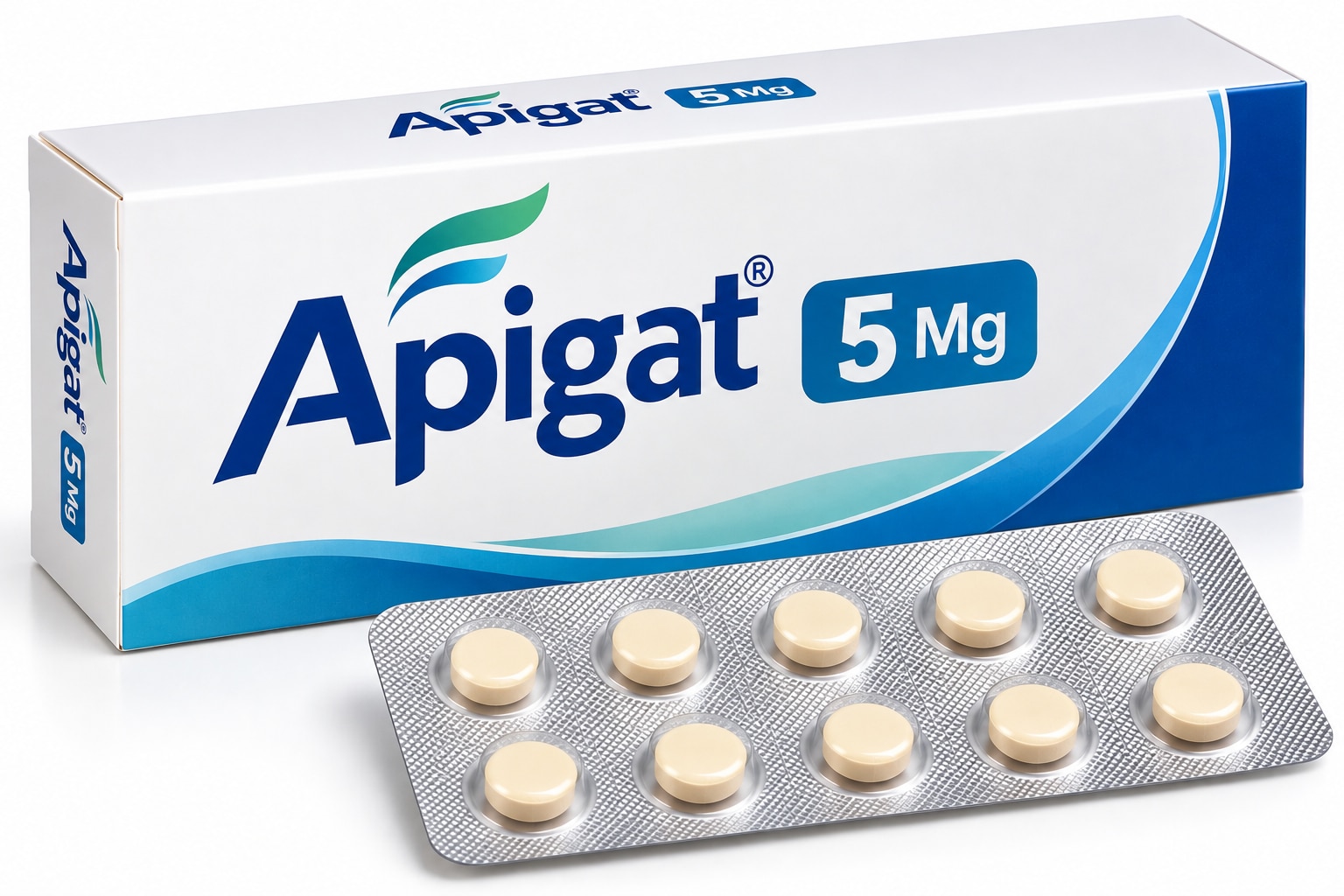
 | Apixaban Tablets 5mg Apigat 5 Tablet is a medicine known as an anticoagulant or blood thinner. It helps prevent and treat blood clots. View product → |
Build a receiving and tender checklist for every Apigat 5 mg batch
Require a complete tender file before awarding the purchase, not merely a quotation for “Apigat 5 mg wholesale.” The specification must state tablet quantity, pack configuration, minimum remaining shelf life, delivery location, storage conditions, and whether the offer is Brazilian stock or direct import.
| Document set | Require before award | Check at receipt |
|---|---|---|
| Commercial | Supplier legal details, invoice basis, country of origin, pack price, Incoterm, quantity, and delivery schedule | Invoice and packing list match the purchase order |
| Regulatory identity | Apixaban 5 mg tablet, manufacturer, registration holder, approved label, excipients, and ANVISA registration or import authorization | Batch and presentation match the authorized product |
| Quality | Batch-specific certificate of analysis, manufacturing and expiry dates, and certificate of pharmaceutical product where applicable | CoA identifiers match the cartons and release status |
| Packaging | Pack configuration, leaflet, tamper evidence, lot number, and expiry format | Seals, cartons, blisters, print, and tablet count are intact |
| Storage and transport | Label storage statement, validated temperature range, monitoring method, excursion procedure, and transport packaging | Review temperature records and investigate excursions |
For a direct import, request the commercial invoice, packing list, transport conditions, and evidence linking the shipment to the authorized presentation. A catalogue page is not batch evidence.
Quarantine any delivery with missing batch documents, mismatched strength or manufacturer, damaged seals, illegible dates, inadequate remaining shelf life, or unexplained temperature exposure. The same file protects a hospital comparing an apixaban tablets supplier Brazil with an offer to buy apixaban tablets wholesale from abroad.
Frequently asked questions
How can a hospital verify whether Apigat 5 mg can be supplied in Brazil?
Check the exact finished product and manufacturer in ANVISA records, then compare the registered details with the physical pack and supplier documents.
What should buyers match between the Brazilian product record and the hospital’s clinical need?
Match the active ingredient, 5 mg strength, tablet form, manufacturer, registration details, pack size, and intended hospital use before placing an order.
Which safety checks matter before purchasing Apigat 5 mg?
Screen renal function, bleeding risk, and the patient’s current medicines for interactions before the hospital approves clinical use.
How should hospitals compare domestic wholesale stock with direct import?
Compare available stock, delivery lead time, landed cost, regulatory documentation, batch traceability, and continuity of supply.
What belongs on an Apigat 5 mg batch receiving checklist?
Record the product name, strength, manufacturer, registration details, batch number, expiry date, pack condition, quantity, and accompanying documentation.