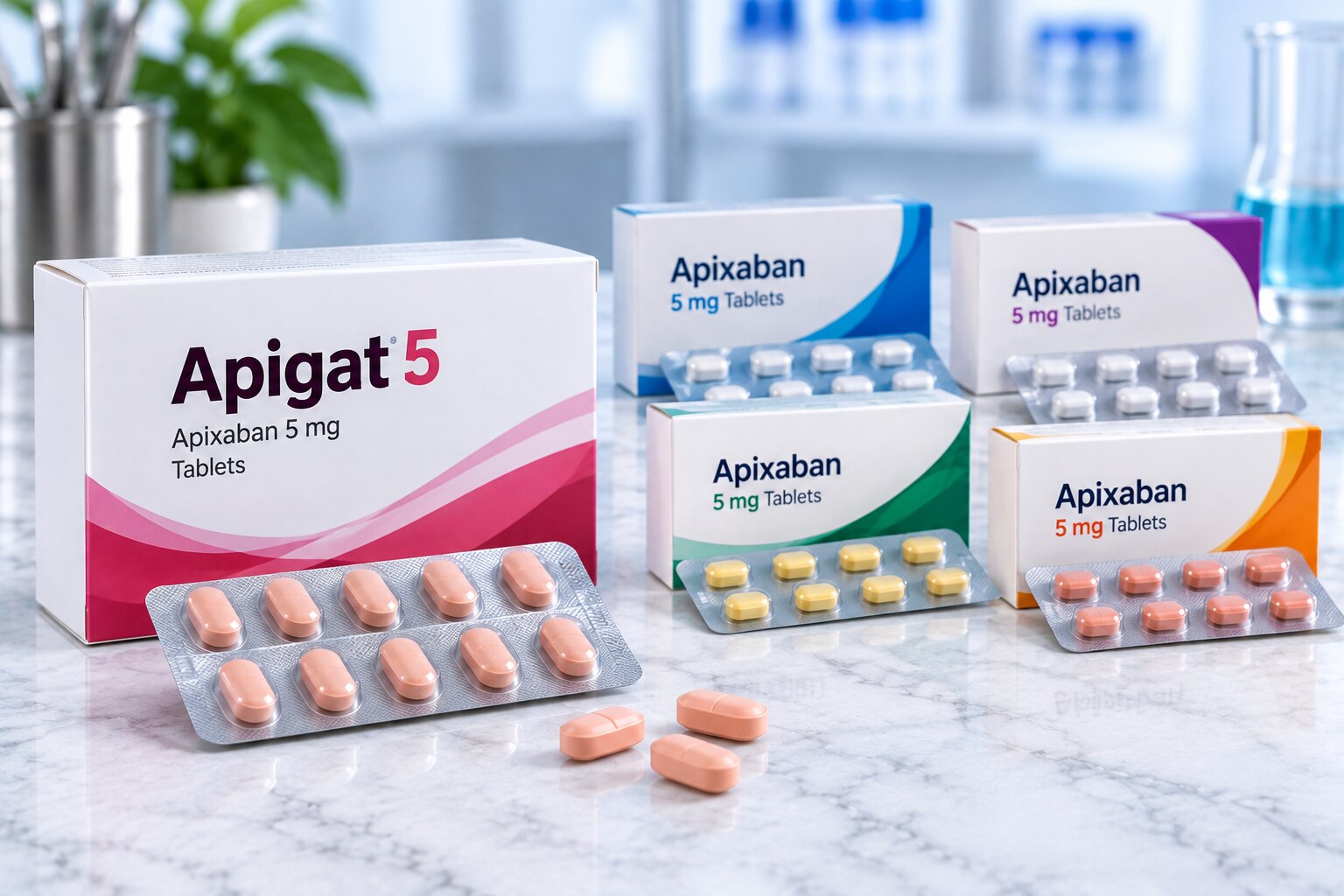
A 5mg apixaban tablet is comparable with another brand only when the active ingredient, release mechanism, approved presentation, manufacturer and regulatory status match. By the end, you will be able to assess clinical dose selection, administration instructions, safety factors and the documentation behind an apixaban purchase in Brazil.
Key takeaways
- Confirm 5mg apixaban, immediate release and matching tablet presentation.
- Use 5mg only when the prescribing criteria exclude the 2.5mg dose.
- Check bleeding risks, kidney function, interactions and missed-dose instructions.
- Request licence, registration, batch and export documents from Brazilian suppliers.
What makes Apigat 5mg comparable with another apixaban tablet?
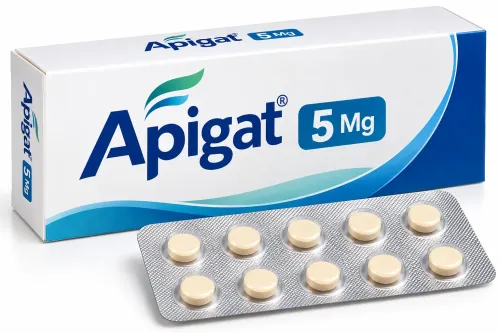
Treat Apigat 5 mg and another apixaban tablet as comparable only after checking the active ingredient, release type, regulatory status and product presentation. The brand name alone proves nothing; a different-release tablet is not an interchangeable substitute.
| Detail | What must match or be verified | Why it matters |
|---|---|---|
| Active ingredient and strength | Apixaban 5 mg | Confirms the same anticoagulant dose |
| Dosage form and route | Immediate-release oral tablet | Excludes extended-release or non-oral products |
| Dissolution profile | Comparable approved dissolution performance | Different release can change exposure |
| Excipients | Full inactive-ingredient list | Differences matter with allergies or intolerance |
| Tablet design | Dimensions, shape, colour, coating and score line | Identifies the product; a score line does not prove safe dose splitting |
| Manufacturer and origin | Named manufacturer and country of manufacture | Supports traceability and quality review |
| Packaging and pack size | Sealed presentation, batch number, expiry date and stated quantity | Prevents confusion between approved presentations |
| Brazilian status | The exact product, strength and presentation listed in ANVISA’s medicines consultation system | Commercial availability does not establish authorization |
For an Apigat 5 mg comparison in Brasília, check the Portuguese package insert and identify the marketing-authorisation holder, importer of record and pharmacovigilance contact separately. Require a documented substitution policy and continuous supply: stopping apixaban after a stock-out can increase thrombotic risk, while every apixaban product retains significant bleeding risk.
When is apixaban 5mg used instead of 2.5mg?
The 5 mg tablet is the usual maintenance dose for many adults, but the correct strength depends first on why apixaban is prescribed and where the patient is in treatment. Choosing 2.5 mg solely because someone is older or has reduced kidney function can underdose them.
- For non-valvular atrial fibrillation, the standard dose is 5 mg twice daily. Reduce it to 2.5 mg twice daily only when at least two conditions apply: age 80 years or older, body weight 60 kg or less, or serum creatinine of at least 1.5 mg/dL.
- For acute deep-vein thrombosis or pulmonary embolism, treatment starts with 10 mg twice daily for seven days, then 5 mg twice daily. After at least six months, recurrence prevention uses 2.5 mg twice daily.
- Kidney function alone does not automatically justify 2.5 mg for atrial fibrillation. For venous-thromboembolism treatment, follow the locally approved prescribing information; severe kidney failure and dialysis patients were not adequately represented in trials.
- A strong combined P-glycoprotein and CYP3A4 inhibitor can require dose reduction or an alternative, depending on the product label and indication. Do not adjust the tablet without a prescriber.
- High bleeding risk calls for reviewing interacting medicines, anaemia, kidney function and active bleeding. It does not automatically make 2.5 mg appropriate, because underdosing or stopping early increases clot risk.
Routine INR testing does not select between these strengths. Review adherence, renal function, bleeding and medicines instead.
How should apixaban tablets be taken and assessed for safety?
Take apixaban exactly as prescribed, usually twice daily at consistent times. Swallow the tablet with water; food does not materially change apixaban exposure, so you can take it with or without food unless the Brazilian package insert states otherwise.
If you miss a dose, take it when remembered on the same day and resume the regular twice-daily schedule. Do not double the next dose or stop treatment without medical advice, because interruption increases clot risk.
Before starting, changing or renewing treatment, complete these checks:
- Give the prescriber a list of every medicine, supplement and herbal product.
- Flag combined strong P-glycoprotein and CYP3A4 inhibitors; prescribing information can require a 50% dose reduction, and these combinations should generally be avoided when you already take 2.5mg twice daily.
- Report rifampin, carbamazepine, phenytoin and St John’s wort, which can reduce apixaban exposure.
- Ask before using aspirin, ibuprofen, naproxen, antiplatelet drugs or another anticoagulant.
Safety reviews should assess kidney function and bleeding history. Do not use INR adjustment as an apixaban monitoring plan; PT/INR and aPTT do not reliably measure its anticoagulant effect.
Seek urgent medical help for:
- Vomiting or coughing blood, black stools or red urine
- Uncontrolled bleeding or rapidly spreading bruises
- A severe headache, weakness, confusion or fainting
- A serious fall or blow to the head, even without visible bleeding
How does apixaban compare with warfarin and other anticoagulants?
Apixaban usually avoids routine coagulation-test dose adjustment, while warfarin requires regular INR checks and dose changes. Its twice-daily schedule is less convenient than once-daily rivaroxaban or edoxaban, but it avoids injections.
| Option | Monitoring and dosing | Food, kidneys, reversal and burden |
|---|---|---|
| Apixaban | No INR-based adjustment; usually twice daily | With or without food; assess renal function and interactions; andexanet alfa or PCC may be used under protocol; swallow tablets |
| Warfarin | INR monitoring drives dose changes; usually once daily | Keep vitamin K intake consistent; kidney failure does not remove monitoring; vitamin K plus PCC can reverse it; frequent testing is burdensome |
| Rivaroxaban | No routine coagulation monitoring; once daily for many indications | Take 15 mg or 20 mg doses with food; renal limits apply; andexanet alfa or PCC may be considered; fewer daily doses |
| Dabigatran | No routine monitoring; twice daily and capsules must not be opened | Kidney clearance is important; swallow whole; idarucizumab specifically reverses it; capsule storage and handling add work |
| Edoxaban | No routine monitoring; once daily, after initial injectable therapy for acute VTE | With or without food; dose depends on kidney function and weight; andexanet alfa or PCC availability varies |
| Injectable anticoagulants | Heparin often needs aPTT or anti-Xa monitoring; LMWH is once or twice daily | Needles and injection technique increase burden; renal adjustment matters; protamine reverses heparin and partly reverses LMWH |
PT/INR and aPTT do not reliably measure apixaban intensity. For an apixaban tablet wholesale offer, compare the registered product, batch certificate, expiry, storage and transport records rather than treating a lower price as proof of equivalence.
How can Brazilian buyers verify an Apigat supplier or exporter?
Commercial availability does not prove Brazilian authorization. Before paying an apigat 5mg supplier brasilia or an apixaban 5mg exporter brazil, match the product, 5 mg strength, immediate-release tablet, manufacturer, marketing-authorisation holder and Brazilian presentation in ANVISA’s medicines consultation systems.
1. Request the ANVISA registration number, approved Portuguese package leaflet, label, manufacturer details and the importer’s AFE covering pharmaceutical importation. Identify separately the distributor, importer of record, marketing-authorisation holder and pharmacovigilance contact.
2. Require a batch-specific certificate of analysis showing assay, identification, dissolution and microbiological results, plus the batch number, manufacturing date and expiry date. Confirm that these details match the invoice and every pack.
3. Inspect sealed, tamper-evident packaging with Portuguese labeling, tablet strength, storage instructions, serialisation or traceability marks where applicable, and the registered pack size. Reject unlabeled bulk tablets, mixed batches or packs intended for another jurisdiction.
4. Obtain the approved storage limits, warehouse records and transport temperature log. Keep tablets in their original packaging and follow the product information; do not assume ordinary warehouse conditions preserve stability. The US Eliquis label, for example, specifies 20–25 °C with excursions to 15–30 °C.
5. Ask for a supply agreement covering lot traceability, recall notification, replacement of damaged stock, continuity commitments and a documented substitution policy.
Whether you contact NIBA HEALTHCARE, an apigat distributor or another exporter, compare these documents—not a low tablet price. Stock-outs and unapproved substitutions can interrupt anticoagulant treatment.
Related product
 | Apixaban Tablets 5mg Apigat 5 Tablet is a medicine known as an anticoagulant or blood thinner. It helps prevent and treat blood clots. View product → |
Frequently asked questions
What makes Apigat 5mg comparable with another apixaban tablet?
Compare the active ingredient, 5mg strength, immediate-release form, tablet presentation, excipients, regulatory status, manufacturer and batch documentation. A brand name alone does not establish interchangeability.
When is apixaban 5mg used instead of 2.5mg?
The prescribed strength depends on the indication, age, body weight, kidney function and interacting medicines. For atrial fibrillation, dose reduction to 2.5mg twice daily applies when at least two labelled criteria are met; confirm the indication and patient details with a prescriber.
How should apixaban tablets be taken and assessed for safety?
Take the tablet exactly as prescribed, with or without food, and do not double a missed dose. Assess bleeding history, kidney and liver function, pregnancy status, and medicines such as NSAIDs, antiplatelets and strong CYP3A4 or P-gp inhibitors with a clinician.
How does apixaban compare with warfarin and other anticoagulants?
Apixaban has fixed dosing and does not use routine INR monitoring, while warfarin requires INR testing and dietary and medicine management. Choice depends on the indication, kidney function, interactions, cost, access and clinician assessment.
How can Brazilian buyers verify an Apigat supplier or exporter?
Request the supplier’s company registration, pharmaceutical manufacturing or distribution licence, product registration evidence, certificate of analysis, batch and expiry details, good manufacturing practice evidence, and export documents. Check names and licence details against official Brazilian or exporting-country records before placing an order.