A pharmacy must evaluate promethazine injection as a high-risk prescription sterile product, not simply as another antihistamine or antiemetic. By the end, you will know which applications fit, which patients and administration practices require caution, and which product, batch, regulatory, storage, and transport documents to demand before ordering.
Key takeaways
- Use injection when oral dosing is impractical and the approved label permits it.
- Screen for respiratory depression, coma, children under two, allergies, and interacting sedatives.
- Verify strength, ampoule volume, batch number, expiry date, and regulatory documents before ordering.
- Match storage and transport conditions to the product label and destination-country requirements.
Which pharmacy applications fit promethazine injection?
Promethazine hydrochloride injection fits selected allergic conditions, nausea and vomiting, motion sickness, sedation, and preoperative use when the approved product label permits that indication. Parenteral dosing has value when persistent vomiting, reduced consciousness, or inability to swallow makes tablets or syrup impractical.
Injection is not automatically preferable: it is invasive, carries route-specific tissue risks, and requires trained administration.
| Option | Practical advantage | Key limitation |
|---|---|---|
| Promethazine injection | Useful when oral dosing is not feasible; provides parenteral treatment | Not interchangeable across routes or indications; higher administration risk |
| Promethazine tablets or syrup | Easier dispensing and administration when the patient can swallow | Unsuitable when vomiting prevents reliable absorption |
| Other injectable antihistamines | May offer a different active ingredient, indication, or safety profile | Do not substitute without checking the product label and clinical protocol |
Promethazine is a sedating, anticholinergic phenothiazine antihistamine, so it is not equivalent to every injectable antihistamine. The phrase promethazine injection for pharmacies describes a controlled prescription product, not permission for retail staff to administer it without a clinician and local safeguards.
For chemotherapy-induced nausea and vomiting, classify it as limited supportive or rescue treatment unless the local protocol specifically includes it. It should not replace regimen-based prophylaxis using a 5-HT3 receptor antagonist, dexamethasone, an NK1 receptor antagonist, and olanzapine where indicated.
What administration risks must a pharmacy control?
Route selection must follow the destination-market label, not a catalogue description or a promethazine hydrochloride injection exporter’s claim that every route is suitable. Deep intramuscular administration is the preferred route when the approved label specifies it.
1. Before administration, confirm the product strength, approved route, dilution instructions, and prescriber’s order. Never give the injection subcutaneously or intra-arterially: either error can cause severe tissue injury, necrosis, or gangrene.
2. Use intravenous administration only when the applicable label permits it. A trained healthcare professional must apply the specified dilution, inject slowly with careful vein assessment, and watch for pain, swelling, blanching, coolness, or resistance.
Stop immediately if extravasation is suspected; leave the device in place for aspiration or local treatment under the facility protocol, notify the prescriber, document the event, and obtain urgent medical review.
3. Treat suspected intra-arterial administration as an emergency. Stop the injection, do not flush the line, immobilise the limb, assess circulation and neurological function, and escalate immediately to the prescriber and emergency or vascular team under local protocol.
4. Monitor the patient and injection site after dosing. Check alertness, breathing, blood pressure, and urinary function, and warn against driving or alcohol until effects are clear. Escalate respiratory depression, excessive sedation, hypotension, blurred vision, severe dizziness, urinary retention, confusion, or other anticholinergic effects; opioids, sedatives, anaesthetics, and alcohol can intensify these dangers.
Which patients, contraindications, and interactions require screening?
Children younger than two years are a do-not-use group: promethazine injection has caused fatal respiratory depression in this age range. Screen every patient before supply, and refer administration decisions to the prescriber.
| Patient group | Screening decision | Main concern |
|---|---|---|
| Children under 2 | Do not supply for use | Fatal respiratory depression |
| Older adults | Require prescriber review and closer monitoring | Excessive sedation, hypotension, confusion, falls, and anticholinergic effects |
| Pregnant patients | Confirm indication and label-based benefit–risk assessment | Maternal and fetal or newborn effects |
| Breastfeeding patients | Check the product information and prescriber’s advice | Sedation or respiratory effects in the infant |
| Asthma or other respiratory disease | Assess respiratory status before use | Worsened respiratory depression |
| Central nervous system depression | Do not proceed without urgent clinical review | Additive sedation and impaired breathing |
Ask specifically about opioids, sedatives, anesthetics, alcohol, monoamine oxidase inhibitors, sleeping medicines, and other drugs that increase sedation or respiratory depression. Check medicines with anticholinergic effects, such as some antidepressants, bladder medicines, and antiparkinsonian drugs, because combined treatment can worsen blurred vision, dry mouth, urinary retention, confusion, or hypotension.
A search for promargan injection for pharmaceutical exporter applications does not authorize retail administration. Dispensing and injecting are separate decisions: administration requires a prescription, an appropriately trained clinician, patient monitoring, and the route, emergency controls, and legal safeguards required locally.
What must you verify before placing a Promargan wholesale order?
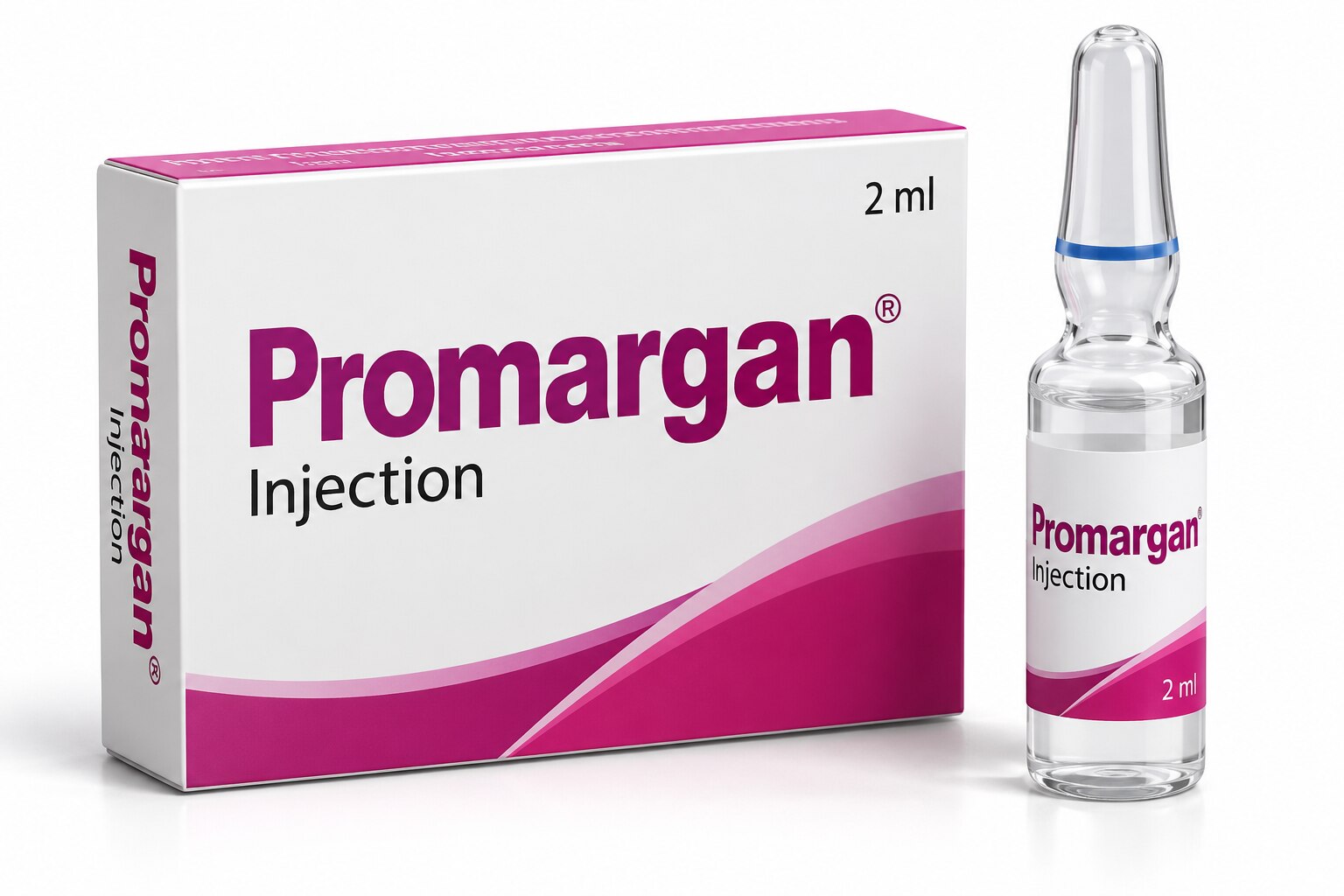
Do not treat the name Promargan as proof of its strength, route, preservatives, or legal status. Before placing a promargan injection wholesale order, ask the promargan injection export supplier for documents identifying the exact registered product and batch.
1. Request the approved composition, strength in mg/mL, vial or ampoule volume, presentation, preservative information, carton configuration, manufacturer, country of origin, approved artwork, authorised route, batch number, manufacturing date, expiry date, and minimum order quantity.
2. Require batch-specific evidence, not a promise that a COA is available. Check the certificate of analysis for assay, fill volume, sterility, bacterial endotoxins, visible and subvisible particles, container-closure integrity, and degradation products. Also obtain batch-release authorization and the applicable good-manufacturing-practice certificate.
3. Evaluate NIBA HEALTHCARE as an Indian finished-pharmaceutical exporter by checking its export documentation and customs identifiers, then separately verify that the specific product is registered, importable, and dispensable in your country. An invoice proves a sale, not regulatory authorization.
4. Confirm your importer authorization, prescription status, destination-market marketing authorization or registration, required language, ampoule warnings, and pharmacovigilance reporting route. Indian manufacture or permission to export does not automatically permit pharmacy supply or administration abroad.
5. Reconcile the exporter’s product dossier with your regulator’s records before payment. Reject mismatched artwork, unexplained strength differences, missing batch documents, or a supplier unable to identify the legal manufacturer and responsible release site.
Related product
 | Promethazine Hydrochloride Injection Ip Promethazine injection is used to relieve or prevent some types of allergy or allergic reactions. View product → |
How should the injection be stored and shipped internationally?
The word “injection” does not determine storage. A promethazine injection for pharmacies must follow the registered formulation and container-closure system, not another catalogue product. Before ordering, obtain:
- The labeled temperature range, light-protection requirement, shelf life, and instructions for a frozen vial or damaged container.
- Stability evidence for the actual strength, formulation, ampoule or vial material, and closure.
- The ICH Q1A(R2) study conditions: long-term, intermediate, and accelerated stability. Tablet data cannot justify an injectable shelf life.
- The approved pack artwork and batch documents identifying the storage statement and expiry date.
- Qualified export packaging that protects the units from light and maintains the registered temperature range.
Do not refrigerate or freeze the shipment automatically. Use temperature records covering every international transport stage, including handoffs, customs delays, and final delivery. At receipt, inspect the package and quarantine any unit that is frozen, cracked, leaking, cloudy, discoloured, or contains visible particles.
Keep suspect stock out of dispensing areas until the exporter and responsible quality professional assess it.
Release the batch to stock only after reviewing the certificate of analysis, sterility and endotoxin results, particulate inspection, container-closure integrity evidence, and batch-release authorization.
Frequently asked questions
Which pharmacy applications fit promethazine injection?
Approved uses can include selected allergic conditions, nausea and vomiting, motion sickness, sedation, and preoperative use. Confirm the product label and local authorization before supply.
What administration risks must a pharmacy control?
Control route, dose, dilution, injection technique, monitoring, and emergency readiness. Promethazine injection carries serious tissue-injury and respiratory-depression risks, so follow the approved label and local protocol.
Which patients, contraindications, and interactions require screening?
Screen for children under two years, reduced consciousness, respiratory disease, allergy, urinary retention, glaucoma, seizure risk, and medicines that depress the central nervous system. A prescriber or pharmacist must assess the full patient history.
What must you verify before placing a Promargan wholesale order?
Verify the active ingredient, strength, ampoule volume, dosage form, batch number, expiry date, tamper evidence, manufacturer, certificate documents, export authorization, and destination-market requirements.
How should the injection be stored and shipped internationally?
Use the labelled temperature range, protect the ampoules from light or freezing when specified, use qualified packaging, record temperature during transit, and check import and customs documentation before dispatch.