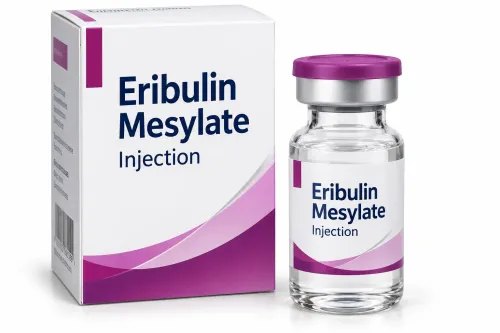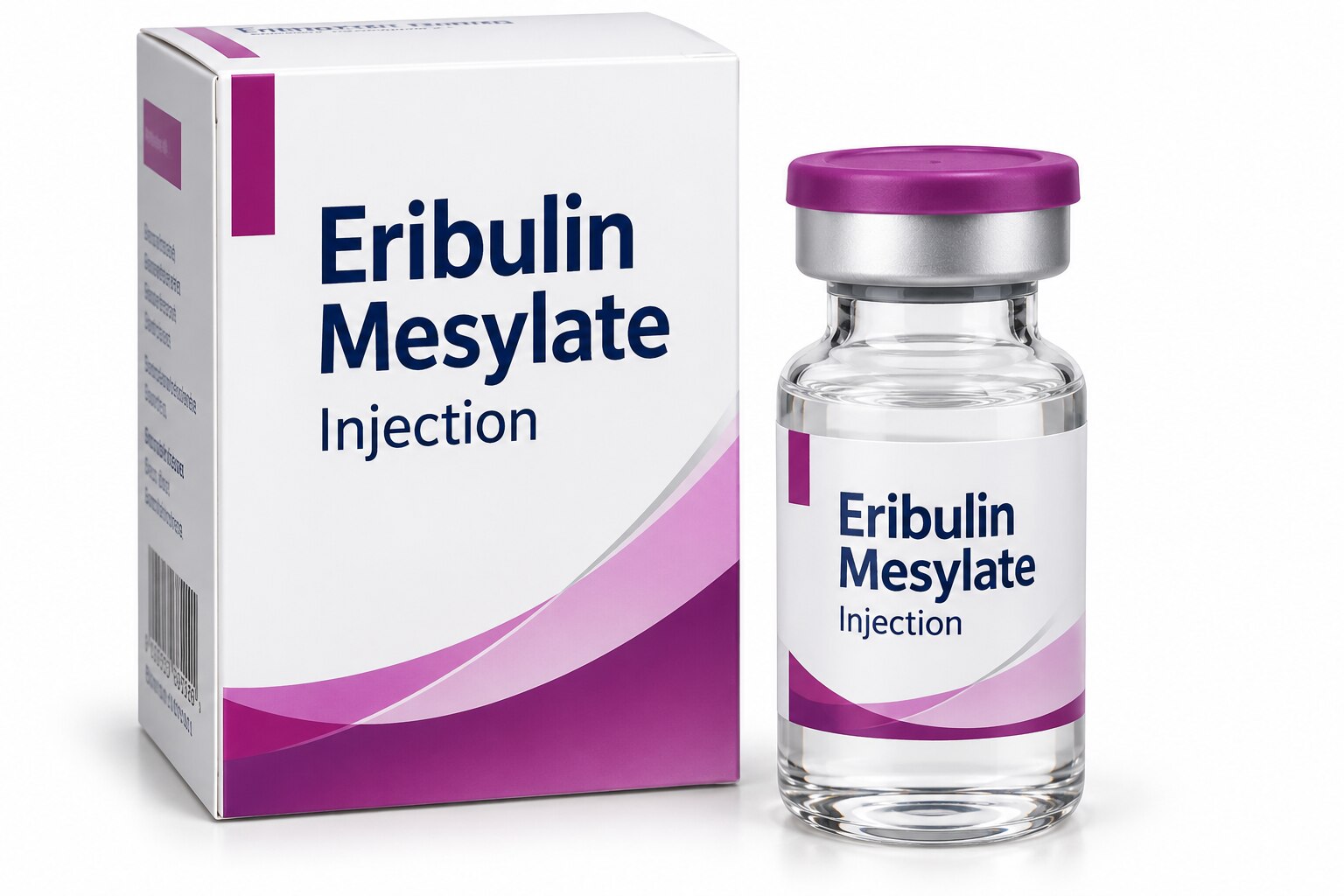
Eribulin procurement involves more than matching an anti-cancer injection to a strength and vial size. You will be able to assess its clinical fit, calculate the prescribed volume, prepare the receiving hospital, and verify whether an Accra supply route is legally and operationally ready.
Key takeaways
- Confirm the two labeled oncology indications before requesting eribulin.
- Calculate dosing from body-surface area and follow the 21-day schedule.
- Inspect vial integrity, batch details, storage records, and expiry on delivery.
- Verify Ghana FDA authorization and the exporter’s complete supply documents.
What conditions is eribulin mesylate used to treat?
Eribulin has two labeled oncology uses: metastatic breast cancer after at least two chemotherapy regimens, including an anthracycline and a taxane where appropriate; and unresectable or metastatic liposarcoma after prior anthracycline-containing therapy.
That is an indication, not a general description of eribulin as a cancer medicine. It does not establish suitability for early-stage breast cancer, resectable liposarcoma, or another tumour type. Confirm the exact wording, approved strength, and restrictions in the Ghana-registered product information before ordering.
1. For metastatic breast cancer, verify the patient’s previous chemotherapy records. The labeled role requires at least two regimens and includes prior anthracycline and taxane treatment where appropriate.
2. For liposarcoma, confirm that the disease is unresectable or metastatic and that the patient previously received an anthracycline-containing regimen.
3. For eribulin mesylate injection from a pharmaceutical exporter in Accra, separate the supply route from treatment authorization. An Indian exporter, Ghanaian importer or local representative, wholesaler, and hospital may hold different responsibilities for product authorization, importation, stock release, clinical supply, adverse-event reporting, and pharmacovigilance.
4. Before purchase, ask the Ghanaian receiving party to verify Ghana FDA registration and any shipment-specific authorization. Do not treat an exporter’s product description or overseas regulatory documents as proof that the medicine is approved for the intended Ghanaian use.
How is the dose calculated and administered?
The standard adult dose is 1.4 mg/m² intravenously over 2–5 minutes on days 1 and 8 of a 21-day cycle—not one injection every three weeks. A qualified oncology professional must calculate and administer it using the patient’s body-surface area, commonly by the Mosteller formula: √([height in cm × weight in kg] ÷ 3,600).
| Presentation | Active amount in 1 mL | Dosing implication |
|---|---|---|
| 0.5 mg/mL eribulin mesylate | 0.5 mg eribulin mesylate, equivalent to 0.44 mg eribulin | Do not treat 0.5 mg and 0.44 mg as interchangeable |
| 1 mg/2 mL vial | 0.5 mg/mL mesylate, equivalent to 0.44 mg/mL eribulin | Confirm the prescribed label basis before calculating volume |
Calculate the withdrawal volume from the approved product information and the prescribed dose basis. For a 0.5 mg/mL mesylate presentation, a mesylate dose in milligrams divided by 0.5 gives the volume in millilitres; do not substitute the 0.44 mg eribulin figure without confirmation.
Start at 1.1 mg/m² for moderate or severe hepatic impairment and for moderate or severe renal impairment under the cited US label. Hold treatment or reduce the dose according to the product label for neutropenia, thrombocytopenia, peripheral neuropathy, or other clinically significant toxicity.
An eribulin mesylate exporter in Accra should therefore provide the exact strength and approved prescribing information, not present one dose as suitable for every patient.
What checks and safety risks must the hospital review?
Before each cycle, confirm that treatment is safe for this patient rather than relying on the vial strength or a previous cycle’s results.
- Review a complete blood count, including absolute neutrophil count and platelets. Hold treatment and obtain oncology review for severe myelosuppression, neutropenia, thrombocytopenia, or fever.
- Check liver function, renal function, and electrolytes, especially potassium and magnesium. Hepatic or renal impairment affects dosing, while low electrolytes increase cardiac risk.
- Record baseline neuropathy symptoms and examination findings. Significant pre-existing peripheral neuropathy requires specialist review because eribulin can worsen numbness, pain, weakness, or loss of function.
- Ask about infection symptoms, measure temperature when indicated, and defer treatment for a serious or uncontrolled infection. Confirm pregnancy status when relevant and discuss embryo-fetal toxicity with patients who could become pregnant.
- Reconcile every medicine, including non-prescription products, for QT-prolonging drugs and other interactions. Review congenital or acquired long-QT syndrome, bradyarrhythmia, heart failure, and previous abnormal ECG results.
The principal hazards are severe or febrile neutropenia, peripheral neuropathy, QT-interval prolongation, extravasation, and embryo-fetal harm. Obtain an ECG when the patient’s history, examination, electrolyte results, or medicines create QT risk; do not use routine ECG testing as a substitute for clinical judgment.
A procurement record for an eribulin injection pharmaceutical exporter Ghana route must preserve the approved product information, because a supply quotation cannot determine whether an individual patient is fit to receive treatment. During administration, stop and assess pain, swelling, redness, or burning at the injection site for possible extravasation.
How should a hospital receive, prepare, and dispose of the injection?
Receive eribulin as a controlled-room-temperature cytotoxic medicine, not as an automatically refrigerated cold-chain product. The unopened product is stored at 20–25°C, with permitted excursions of 15–30°C.
1. On delivery, inspect the vial, seal, label, batch number, expiry date, and shipping-temperature record. Quarantine any vial with a broken seal, unclear identification, unacceptable temperature exposure, or damage until the responsible pharmacy professional resolves it.
2. Restrict preparation and administration to trained pharmacy or oncology personnel using aseptic technique and hazardous-drug protective equipment. Eribulin is preservative-free and single-use; do not retain an opened vial or describe it as a multi-dose container.
3. Administer the solution undiluted, or dilute it in up to 100 mL of 0.9% sodium chloride injection. The label does not establish compatibility with other medicinal products, so do not place it in another infusion bag or mix it through a shared line without product-specific compatibility evidence.
4. After dilution, use the solution within 4 hours at room temperature or within 24 hours under refrigeration, following the approved product information and local procedures. Record preparation time and storage conditions.
5. Manage spills with the institution’s cytotoxic-spill procedure and place unused solution, opened containers, contaminated materials, and protective equipment into the institution’s cytotoxic-waste route. Never discard them as ordinary pharmaceutical or general clinical waste.
How do you verify an eribulin supply route into Accra?
An Accra delivery address does not prove that an eribulin mesilate injection supplier in Accra holds local stock, Ghana market authorization, batch-release control, or pharmacovigilance capacity. Distinguish the Ghanaian importer or representative from an Indian manufacturer or exporter delivering into Accra; each party can hold different regulatory responsibilities.
1. Confirm the product’s Ghana FDA registration status and request the approved product information. Match the registered name, strength, dosage form, manufacturer, and presentation against the quotation. Reconcile 0.5 mg/mL eribulin mesylate with the stated eribulin equivalent before approving an order.
2. Verify the Ghanaian importer or local representative’s authorization, licence details, and receiving address. Confirm any shipment-specific import authorization before dispatch; an Indian GMP certificate alone does not authorize sale in Ghana.
3. Require a commercial file containing the batch number, expiry date, certificate of analysis, certificate of pharmaceutical product or equivalent regulatory document, storage conditions, and shipping-temperature records. Check that the batch documents match the cartons and seals on arrival.
4. Agree who controls release, handles temperature excursions, reports adverse events, and contacts the Ghana FDA. NIBA HEALTHCARE can serve as a potential finished-pharmaceutical export contact, but documentary verification and an authorized Ghanaian handoff must decide the route—not the supplier’s location or marketing wording.
Related product
 | Anti Cancer Injection Minimum order quanity 10 Vial Strength 0.44 mg/ml Packaging Type Vial Packaging Size 2 ml Vial STORAGE CONDITION Store below 30 Degree C Country of... View product → |
Frequently asked questions
What conditions is eribulin mesylate used to treat?
Eribulin has labeled uses for metastatic breast cancer after at least two chemotherapy regimens, including an anthracycline and taxane where appropriate, and unresectable or metastatic liposarcoma after prior anthracycline-containing therapy.
How is eribulin injection dosed and administered?
The labeled dose is 1.4 mg per square metre of body-surface area, given intravenously over 2 to 5 minutes on days 1 and 8 of a 21-day cycle. The oncology team adjusts or delays treatment for toxicity, organ impairment, or abnormal blood counts.
What safety checks must a hospital complete before administration?
Review the prescription, diagnosis, body-surface area, complete blood count, liver and kidney function, neuropathy, QT-prolonging medicines, pregnancy status where relevant, and any previous eribulin reaction.
How should a hospital receive and handle eribulin injection?
Check the vial, seal, label, batch number, expiry date, shipment condition, and storage records on arrival. Store and prepare it according to the approved product information, use aseptic technique, and place unused medicine and contaminated materials in cytotoxic-waste containers.
How can a hospital verify an eribulin supply route into Accra?
Ask for the Ghana FDA authorization or registration details, importer information, exporter licence, certificate of analysis, certificate of pharmaceutical product where applicable, batch and expiry records, invoice, and transport documentation. Confirm the details with the relevant Ghanaian regulator before purchase.