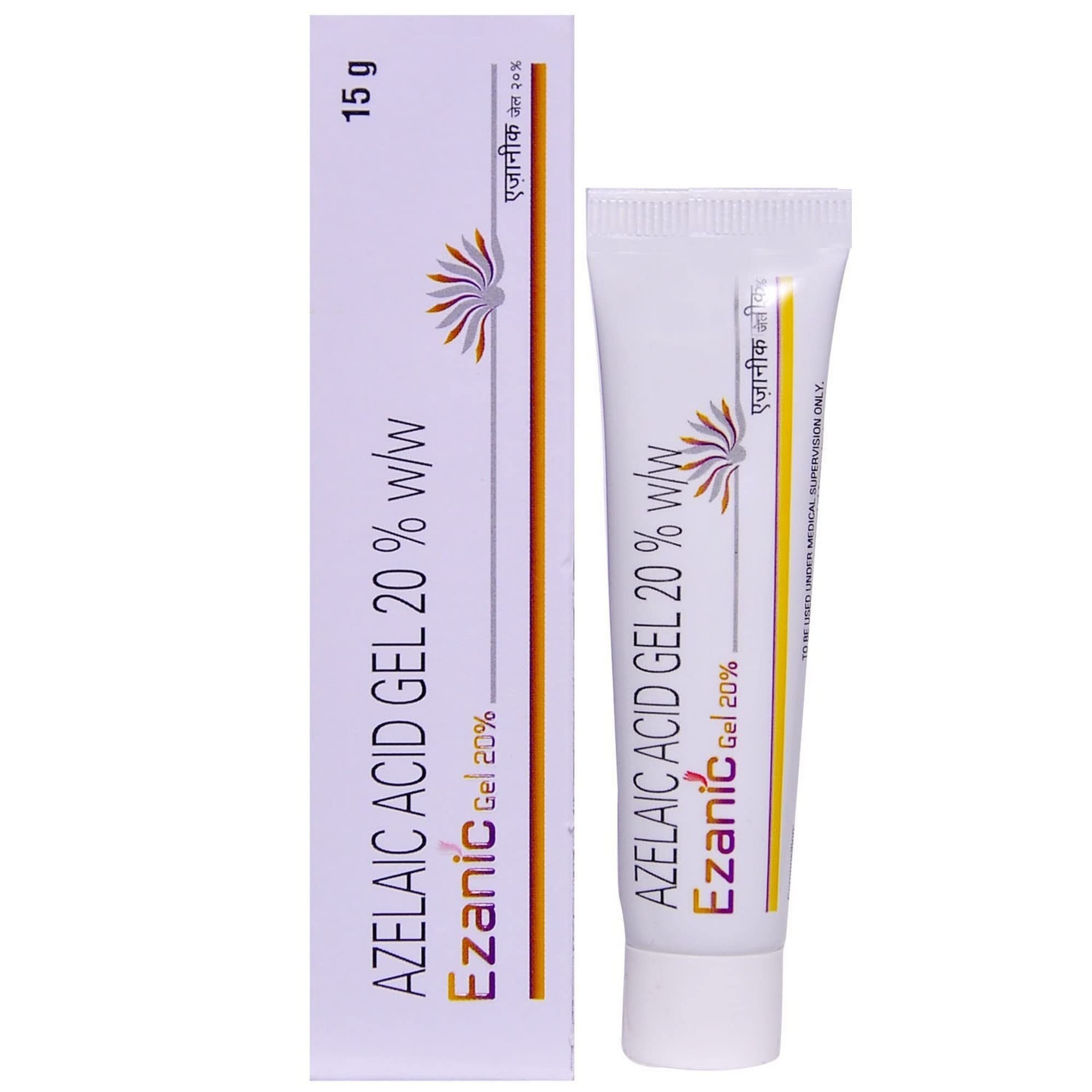
A usable purchase specification must identify more than “20% azelaic acid gel”: it must define the formulation, container, documents, storage conditions, regulatory status and commercial terms. By the end, you will have a practical checklist for comparing an exporter’s quotation with the product and records you are authorised to import.
Key takeaways
- Use the identity: nonsterile azelaic acid 20% w/w topical dermatological gel.
- Request approved artwork, master formula and a batch-specific Certificate of Analysis.
- Check tube integrity, expiry, storage conditions and transport controls before purchase.
- Make release documents, specifications and destination-market obligations contractual terms.
Define the product identity before requesting a quotation
Write the product as “Ezanic Gel 20%, nonsterile topical dermatological gel containing azelaic acid 20% w/w for topical cutaneous administration.” Confirm that wording against the current approved artwork, master formula and batch-specific Certificate of Analysis before accepting a quotation.
State gel, not cream: a 20% cream is not interchangeable because its vehicle can alter spreadability, drying, release, skin feel and tolerability.
Record these identity fields in the inquiry:
- Product status: confirm whether Ezanic is a marketed brand, generic product or private-label presentation, and record the legal product name used in the destination country.
- Composition: request the complete qualitative formula, naming the gelling agent, solvent, humectant and preservative, and stating whether fragrance is present or absent.
- Presentation: specify the exact nominal tube fill in grams, such as 15 g or 30 g; reject “standard pack” as a specification.
- Supply parties: list the legal manufacturer, manufacturing site, marketing-authorisation holder where applicable, exporter of record and country of origin as separate fields.
The phrase azelaic acid gel exporter does not identify a compliant product unless strength, gel dosage form, composition and destination-market status match your requirement. Use the same precision when searching for an ezanic gel 20 percent for pharmaceutical exporter or an ezanic gel 20 exporter: the search phrase is not the product specification.
Build the batch document and quality-control package
Pharmaceutical quality is demonstrated by batch-specific release evidence, not by a quotation or commercial invoice. For ezanic gel wholesale supply, request a Certificate of Analysis identifying the product and showing these results:
| Test | Evidence to review | Why it matters |
|---|---|---|
| Appearance | Approved description and observed batch result | Detects colour, texture or phase separation changes |
| Identification | Positive identification of azelaic acid | Confirms the stated active ingredient |
| Assay | Azelaic acid content against the approved limit | Confirms 20% w/w strength |
| Impurities | Specified and unspecified impurities or degradation products | Controls breakdown and process-related substances |
| pH and viscosity | Result against approved limits or rheological profile | Supports performance and skin tolerability |
| Net fill and microbiology | Fill result and microbial-limit results | Detects short fills and contamination risk |
The acceptance limits must come from the exporter’s approved finished-product specification, not another azelaic-acid product. Request that specification plus the analytical methods or method references used for release.
Record the batch number, batch size, manufacturing date, expiry date, release date, storage condition and manufacturing-site name. For this nonsterile dermatological gel, require microbial-limit testing. If the formulation contains an aqueous phase, request evidence that the preservative system and manufacturing controls support the intended shelf life.
Do not accept a sterility claim unless sterility appears in the approved product specification. Also request the product and packaging specifications, stability summary, certificate of origin and any destination-required Certificate of Pharmaceutical Product or GMP certificate. A commercial invoice confirms a sale; it does not prove batch quality.
Check the tube, label, shelf life and transport conditions
1. Specify the primary pack in the ezanic gel procurement specifications: compatible aluminium or approved polymer tube, exact nominal fill, screw or flip-top cap, seal design and tamper evidence. Request compatibility data showing that the container-closure system prevents unacceptable leakage, evaporation, sorption or formulation interaction throughout shelf life.
For this nonsterile gel, require applicable microbial-limit evidence rather than an unsupported sterility claim.
2. Approve the final artwork before production. Inspect the physical tube for the product name, azelaic acid strength, ingredient and excipient list, label language, batch-number location, manufacturing date, expiry date, storage statement and manufacturer details.
Record the approved carton configuration, units per carton, carton dimensions and shipping marks, including product name, batch number, quantity and handling instructions.
3. Request stability data generated in the marketed tube and closure, then record the approved expiry period and minimum remaining shelf life at delivery. The data should identify ICH Q1A(R2) long-term, intermediate and accelerated conditions; “24-month shelf life” alone is not evidence. Reject any batch whose date, pack or artwork differs from the approved specification.
4. Define transport as ambient, controlled room temperature or temperature-monitored according to the approved label and stability data. Replace “store in a cool place” with a temperature limit, light-protection requirement, freezing restriction and humidity instruction.
If a logger is required, specify its placement, excursion-report format and the authorised party who can release or reject an affected batch.
Qualify the exporter, manufacturer and destination-market status
A qualified Ezanic Gel 20 exporter can identify the legal manufacturer, actual manufacturing site and packing premises, then provide GMP evidence covering a nonsterile semisolid dermatological gel. An azelaic acid gel exporter who supplies only an ISO 9001 certificate, warehouse certificate or brochure has not established pharmaceutical manufacturing compliance.
1. Request the Indian pharmaceutical manufacturing licence, applicable product approval or permission, and the GMP certificate or inspection record naming the site and dosage form. Confirm that the documents describe the offered product, not another facility or tablet line.
2. Request the commercial invoice, packing list and certificate of origin. Add the destination country’s Certificate of Pharmaceutical Product or GMP document if its importing authority requires one for registration, distribution or institutional supply.
3. Record the legal manufacturer, marketing-authorisation holder, exporter of record, and party responsible for pharmacovigilance, complaints and recalls. These roles can belong to different entities, so put each name and address in the purchase file.
4. Verify whether the destination classifies the product as prescription, pharmacy-only, over-the-counter or cosmetic. That classification controls registration, permitted claims, import licensing and label content; an Indian sales description cannot establish local status.
5. Obtain the destination-market approved package insert. Check the indication, contraindications, warnings, excipients and directions, including application frequency, quantity, skin preparation, eye and mucous-membrane precautions, treatment duration, missed applications and irritation management.
NIBA HEALTHCARE can be assessed using this checklist, but its documents must match the offered product, batch, premises and destination market.
Related product
 | AZELAIC ACID GEL 20% Ezanic 20% Gel is used in the treatment of acne (pimples). It effectively relieves symptoms such as lumps, redness, and swelling associated with... View product → |
Turn the specification into enforceable purchase terms
Write Ezanic gel procurement specifications into both the purchase order and supply agreement, not only the quotation. State Ezanic Gel 20%, azelaic acid 20% w/w, topical gel, exact tube fill, carton configuration, legal manufacturer, manufacturing site and country of origin; the finished specification, quality agreement and contract must match.
Record these commercial terms:
- Minimum order quantity, unit price basis, currency, Incoterm, payment milestones, lead time, available stock, production capacity and shipping method.
- Whether partial shipments are permitted, and who pays for pre-shipment inspection, temperature monitoring, customs clearance and cargo insurance.
- Minimum remaining shelf life at delivery and maximum batch age, such as at least 18 months remaining and no batch older than six months.
- Prior written approval for changes to formula, manufacturing site, tube, cap, artwork, batch-release laboratory or assigned shelf life.
For Ezanic gel wholesale supply, require the batch Certificate of Analysis, approved product and packaging specifications, batch-release record, batch number, batch size, manufacture and expiry dates, storage conditions, manufacturing-site statement, certificate of origin and required export certificates before dispatch or with the shipment.
Define the logger, excursion report and named person who releases or rejects an affected batch.
Reject damaged tubes, broken seals, wrong artwork, short fills, out-of-specification results and unapproved temperature excursions. Set replacement, credit or refund within 30 days, with the buyer paying nothing for confirmed supplier failure.
| Quotation comparison | Risk controlled |
|---|---|
| Low unit price | Does not offset missing batch records |
| Undefined gel vehicle | Product identity remains unproven |
| Unclear Incoterm | Import obligations remain disputed |
| Inadequate shelf life | Stock may become unsaleable |
Frequently asked questions
How should buyers define Ezanic Gel 20% before requesting a quotation?
Write it as “Ezanic Gel 20%, nonsterile topical dermatological gel containing azelaic acid 20% w/w for topical cutaneous administration.” Confirm this wording against the current approved artwork, master formula and batch-specific Certificate of Analysis.
Which quality documents should an Ezanic Gel 20% buyer request?
Request the approved product artwork, master formula, product specification, batch-specific Certificate of Analysis and documents identifying the manufacturer and releasing quality unit.
What packaging and shipping details should buyers check?
Check the tube material and size, closure and seal, printed batch number, manufacturing and expiry dates, storage statement, shipping temperature instructions and protection from heat or freezing.
How can buyers qualify an Ezanic Gel exporter and manufacturer?
Verify the exporter’s legal identity, manufacturing site, applicable licence details, quality-system evidence and authority to supply the destination market. Match every document to the named product and manufacturing site.
What should the purchase agreement specify for Ezanic Gel wholesale supply?
State the approved product identity, composition, pack configuration, release documents, minimum remaining shelf life, transport conditions, inspection rights, deviation handling and acceptance or rejection rules.