A delayed or cancelled Knilonat 200 order creates two separate risks: the medicine may not arrive when needed, and a hurried replacement may not be legally or clinically acceptable in Chile. By the end, you will have a process for checking the exact product, confirming importability with the right parties, screening suppliers and negotiating continuity protections before you pay.
Key takeaways
- Get the delay, allocation or cancellation reason in writing.
- Match the batch, strength, dosage form and manufacturer to the product documents.
- Check Chilean ISP registration and import paperwork before shipment.
- Use staged payments, inspection rights and a documented replacement clause.
What should you do when a Knilonat 200 order is delayed, allocated or cancelled?
Stop the order from becoming an undocumented substitution. Ask the Knilonat 200 distributor or Knilonat medicine supplier to state the cancellation, delay or allocation reason in writing, then request the confirmed batch number and revised dispatch date.
- Ask whether the supplier has allocated stock, a replacement batch, a split-shipment option or another manufacturer. Keep the purchase-order and tender reference as nilotinib 200 mg capsules; do not replace it merely because another nilotinib product is available.
- Separate registered Chilean stock from a proposed direct import. Record the legal seller, Chilean importer-of-record, product identity and import route.
- Calculate interim cover from patient consumption, current inventory, confirmed lead time and the supplier’s allocation policy. Escalate immediately to the hospital pharmacist, treating team and Chilean regulatory contact when continuity is at risk.
- Procurement staff must not tell patients to change dose, take capsules with food or switch brands. The treating team and pharmacist must decide whether any replacement is acceptable.
- Set a written stop point: make no payment for commercial stock until the legal seller, importer-of-record, product identity and import route are confirmed.
| Option | What it means | Buyer’s action |
|---|---|---|
| Registered Chilean stock | Already within the ordinary local distribution route | Verify registration, batch and importer |
| Direct import | Shipment requiring import and product-status checks | Obtain written Chilean importer and ISP confirmation before payment |
| Emergency patient-specific import | Authorization tied to an identified patient or exceptional case | Do not treat it as permission for routine wholesale inventory or resale |
A patient-specific authorization addresses that patient’s access; it does not authorize maintaining commercial stock or reselling it. Record every response and escalation.
How can you prove the offered product is actually nilotinib 200 mg capsules?
A 200 mg label does not prove that the offer is interchangeable with Knilonat 200. A search for “nilotinib capsules supplier chile” should identify both the brand and the active ingredient, because Chilean records may use either.
1. Compare the quotation, official dossier, purchase order, outer carton, blister or container, and leaflet. Each should state the product name, nilotinib as the active ingredient, 200 mg strength, capsule dosage form, manufacturer, pack configuration, and country of manufacture where applicable. Resolve any mismatch before release.
2. Inspect the physical pack for the batch or lot number, manufacturing date, expiry date, storage instruction, tamper-evident seal or intact blister, and serialisation or unique identifier details where present. Require an explanation for any difference in brand name, legal manufacturer, capsule appearance, pack size, or strength.
Match the batch number to the certificate and dossier.
3. Treat a different brand, generic, or salt as a separate procurement decision, not an automatic substitute. Compare its formulation, approved indication, bioequivalence or other quality evidence, Chilean labelling, and registration basis. Confirm that the exact presentation has Chilean sanitary registration or a documented exceptional-import basis.
The responsible prescriber, pharmacist, and Chilean regulatory professionals must approve any replacement. A 200 mg strength alone does not establish interchangeability, particularly where administration restrictions, interactions, or formulation differences affect safe use.
Which documents and Chilean approvals must be checked before shipment?
Before shipment, a Knilonat 200 supplier in Santiago should provide a wholesale file that identifies one product, one legal manufacturer and one batch. Check these documents:
- Commercial invoice and packing list
- Batch-specific certificate of analysis and batch-release documentation
- Certificate of Pharmaceutical Product, where applicable
- Manufacturer’s GMP evidence and manufacturing licence
- Export authorisation, where applicable
- Approved product specification
- Chilean product-registration or import-status evidence
Every document must match the quotation and purchase order on legal manufacturer, product presentation, batch number, nilotinib strength and capsule dosage form. A Knilonat wholesale exporter cannot replace Chilean market authorisation with an Indian manufacturing licence.
Use this distinction before approving the route:
| Option | Evidence required | Permitted use |
|---|---|---|
| Registered Chilean stock | Current ISP sanitary registration and licensed importer-of-record | Ordinary wholesale distribution |
| Exceptional import | Written importer and ISP confirmation, authorisation number and defined quantity | Only the stated patient, circumstance or use |
The Instituto de Salud Pública de Chile is central to confirming the exact product’s sanitary-registration framework. The Chilean importer-of-record must also prove authority to import, store and distribute medicines; a freight forwarder or broker cannot substitute for that licensed role.
If current registration is absent, obtain written confirmation from the importer and ISP before paying for commercial stock. Record the ISP communication, registration or authorisation number, importer identity, approved presentation, quantity and permitted use. A patient-specific or exceptional authorisation does not permit routine resale.
Confirm that the container, leaflet and Spanish-language information match the Chile-authorised or specifically authorised presentation.
How should you qualify a supplier and compare a replacement nilotinib product?
Treat a “knilonat 200 distributor” as unqualified until you know which legal role it performs. A quotation from NIBA HEALTHCARE or another knilonat medicine supplier must identify:
- Legal selling entity, registered address and manufacturing site
- Wholesale or distribution licence, Chilean importer-of-record and stock owner
- Supply-chain route from manufacturer to exporter, importer and delivery site
- Party responsible for batch release, complaints and product recalls
Request invoices, transport records and batch documents that preserve this traceability. A broker can introduce stock without owning it or holding authority to release medicines.
| Comparison point | Proposed Knilonat 200 | Other nilotinib 200 mg product |
|---|---|---|
| Identity | Nilotinib 200 mg; capsule formulation | Confirm ingredient, strength and capsule formulation |
| Indication | Approved indication in Chile | Approved indication and label |
| Evidence | Bioequivalence or quality evidence | Bioequivalence or quality evidence |
| Chile status | Registration or exceptional-import basis | Registration or exceptional-import basis |
| Batch control | Certificate of analysis and release record | Same batch documents |
| Delivery | Expiry remaining, pack configuration and landed cost | Same measures |
| Supply | Lead time and continuity plan | Lead time and continuity plan |
Reconcile the certificate of analysis with the offered batch number, physical pack, seal and shipment records; it does not prove authenticity or correct storage. Define in the quality agreement whether incoming sampling, testing, temperature review and approval are required. A different brand is not an automatic substitute, even with matching ingredient and strength.
Related product
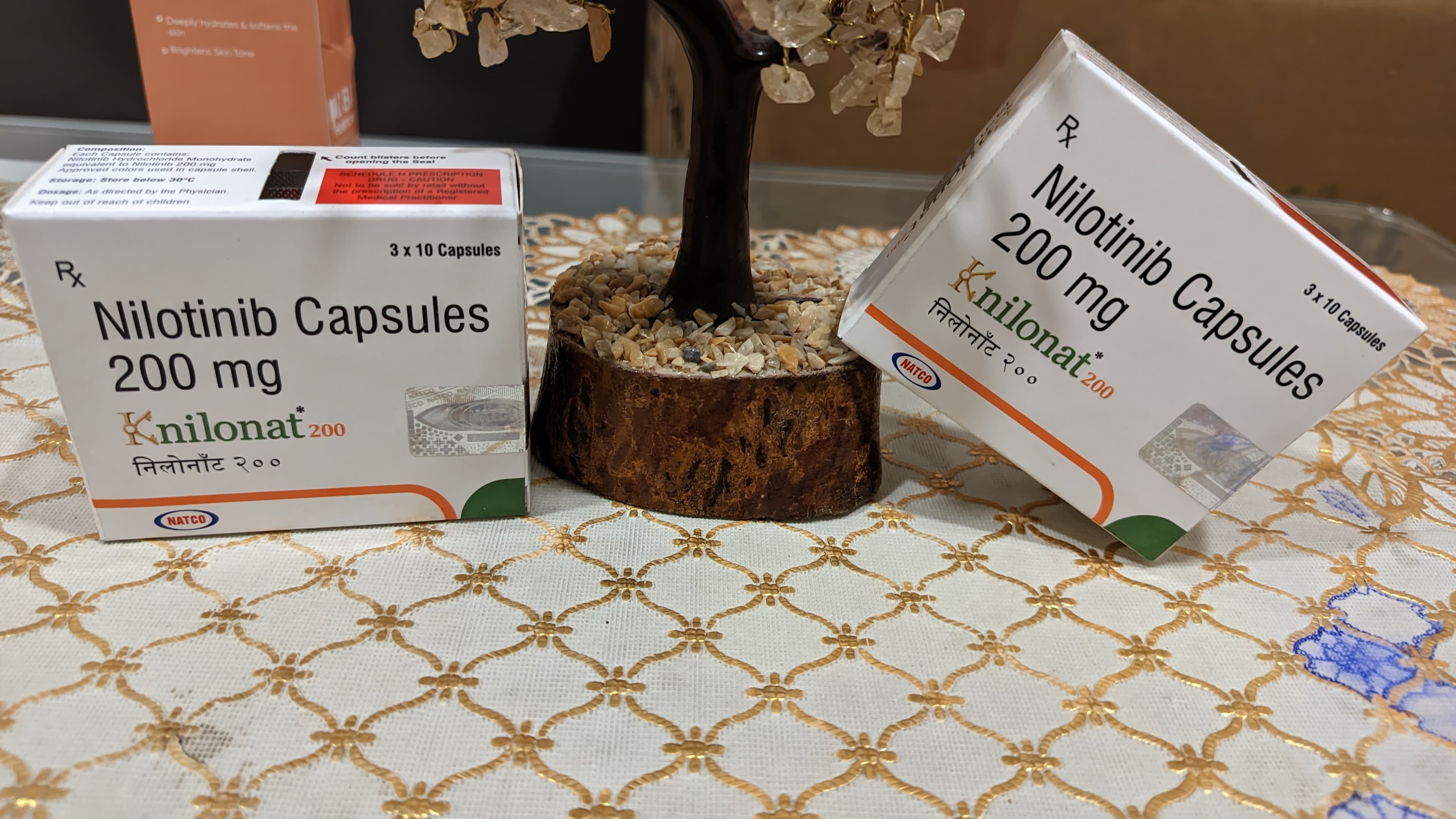 | Nilotinib 200mg Capsules Knilonat 200mg Tablet is used in the treatment of blood cancer (chronic myeloid leukaemia). View product → |
Which commercial terms reduce the risk of another Knilonat supply interruption?
A safer contract pays for a releasable batch, not merely a low unit price. Put these terms in the quotation and supply agreement:
- Minimum remaining shelf life on arrival, batch-document deadlines and permission for split shipments.
- The party responsible for Chilean customs clearance, import charges and delivery.
- Temperature-excursion handling, including replacement or credit, and remedies for failed release testing.
- Rejection of short-dated batches, with replacement or credit terms.
- Responsibility for demurrage, return freight and destruction costs when a batch fails acceptance.
Require the Knilonat wholesale exporter to disclose allocation rules, recent production capacity, expected lead times, and any formulation, packaging or manufacturing-site change. Demand at least two independently verifiable supply options. A second seller is no backup if both buy from the same factory or cannot produce batch records.
| Supply option | Evidence to require | Risk |
|---|---|---|
| Registered Chilean stock | Batch records, importer identity and delivery route | Lower clearance uncertainty |
| Direct import | Import-status evidence, clearance responsibility and Spanish-language pack review | Release delay or refusal |
| Backup source | Separate factory, verified capacity and batch documentation | False redundancy if shared |
Verify approved storage conditions and route controls. Nilotinib labeling commonly specifies 20–25 °C, with permitted excursions of 15–30 °C; cold-chain shipping is not automatically superior.
Before a public-sector purchase, check CENABAST or Mercado Público for delivery points, technical specifications, shelf-life thresholds and penalties. Apply this evidence-based screen to every Knilonat medicine supplier, including any Knilonat 200 supplier in Santiago.
Frequently asked questions
What should you do when a Knilonat 200 order is delayed, allocated or cancelled?
Ask the Knilonat 200 distributor or supplier to document the reason, affected quantity, batch status and revised dispatch date. Do not accept an undocumented substitution; request a replacement proposal with its product name, manufacturer, strength, dosage form and expiry date.
How can you prove the offered product is actually nilotinib 200 mg capsules?
Compare the outer carton, blister or bottle and certificate of analysis. Each should identify nilotinib, 200 mg, capsules, the manufacturer, batch number, manufacturing date and expiry date. Confirm the batch number matches across the commercial invoice, packing list, certificate of analysis and photographs.
Which documents and Chilean approvals must be checked before shipment?
Request the product registration details accepted by Chile’s Instituto de Salud Pública, the manufacturer’s manufacturing and quality documents, certificate of analysis, certificate of pharmaceutical product or equivalent export document, commercial invoice and packing list. Confirm who will obtain the Chilean import and customs documents, including the Certificado de Destinación Aduanera and authorization for use and disposal when required.
How should you qualify a supplier and compare a replacement nilotinib product?
Check the supplier’s legal identity, manufacturing source, export history, batch traceability, complaint process and ability to provide samples of controlled documents. Compare active ingredient, 200 mg strength, capsule dosage form, approved manufacturer, storage conditions, remaining shelf life, packaging, registration status and total landed cost.
Which commercial terms reduce the risk of another Knilonat supply interruption?
Put the confirmed product and batch requirements in the purchase order. Add a written allocation notice period, a replacement-approval clause, minimum remaining shelf life, document delivery deadlines, inspection and rejection rights, staged payment, and a refund deadline if the supplier misses the dispatch date.