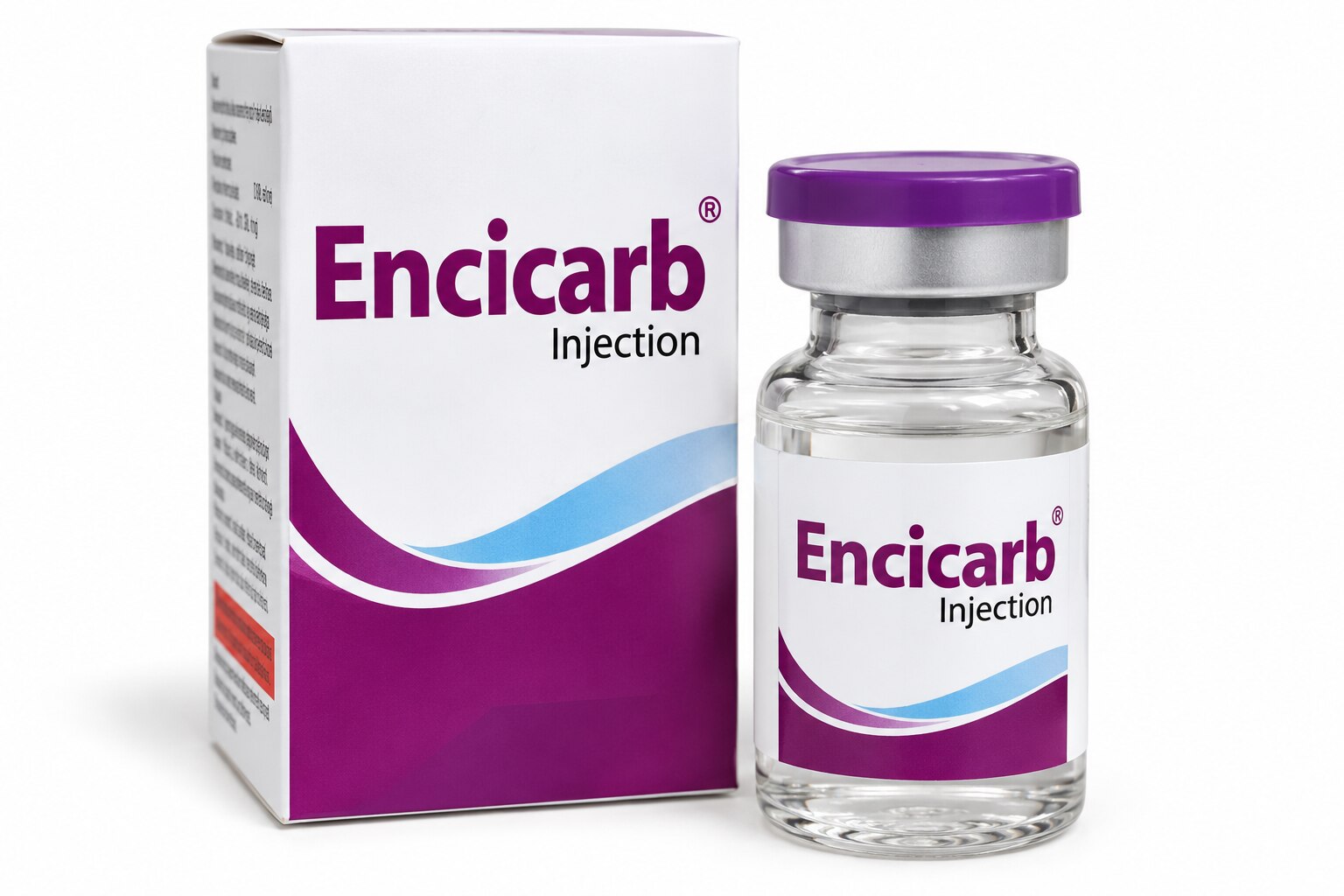
An international buyer must confirm that an Encicarb quotation identifies the correct iron strength, fill volume, intravenous route and destination-market approval before comparing suppliers. By the end, you will have a practical checklist for evaluating the product, its clinical-use documentation, safety controls, shipping records and exporter qualifications.
Key takeaways
- Confirm ferric carboxymaltose, elemental iron strength and IV route.
- Match the vial or ampoule, fill volume and batch documents.
- Calculate iron need before selecting a dose and administration schedule.
- Request the certificate of analysis, licence copies and stability records.
What exactly should an Encicarb export specification identify?
Verify the presentation against the carton and certificate of analysis, not the brand name alone. The specification must identify ferric carboxymaltose, elemental iron strength, fill volume, dosage form, IV route and whether the container is a vial or ampoule.
- Ask the encicarb injection exporter to state the exact commercial presentation: 100 mg/2 mL, equivalent to 50 mg/mL, or another size such as 500 mg/10 mL or 1,000 mg/20 mL.
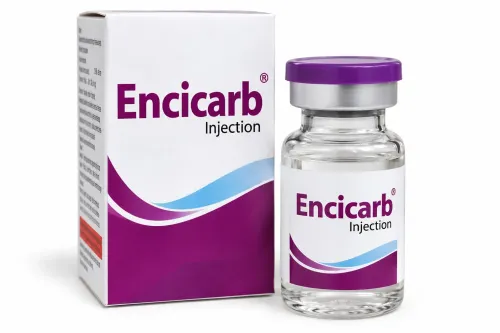
- Match the quotation with photographs or artwork of the carton and primary container. Confirm the generic name, strength, volume, dosage form, route, pack size, batch number and expiry date.
- Require a batch-specific certificate of analysis showing ferric carboxymaltose and elemental-iron content. Reject a quotation that gives only “Encicarb injection” without the 100 mg/2 mL strength or another clearly stated presentation.
- Confirm that the approved route is intravenous only. Ferric carboxymaltose is not intended for intramuscular or subcutaneous injection.
- Record storage below 30°C, protection from freezing and retention in the original light-protective package. Include temperature protection in the shipping specification.
A supplier using the term encicarb 100mg 2ml exporter should prove that exact pack, rather than substitute a larger vial or an unrelated iron product. Also separate the exporter’s Indian Importer-Exporter Code from product approval and import licensing: an IEC supports trade paperwork but does not authorise clinical supply in the destination country.
How are ferric carboxymaltose doses calculated and administered?
Calculate the cumulative iron requirement from body weight, haemoglobin deficit and the target haemoglobin, using the destination market’s approved dosing table or formula. Do not dose from haemoglobin alone: confirm iron deficiency and exclude iron overload, non-iron-deficiency anaemia and hypersensitivity.
The approved product information and export specification should state:
- Intravenous use only; ferric carboxymaltose is not for intramuscular or subcutaneous injection.
- The maximum single dose, total course dose, dose interval and minimum interval between administrations.
- Whether the dose is given by slow IV injection or infusion, including the required administration time.
- The permitted diluent, final concentration, dilution volume, and compatibility restrictions.
- Inspection requirements, single-use status and disposal of unused solution.
Regimens differ by jurisdiction. A ferric carboxymaltose injection exporter must supply the destination-market label; a listing using the phrase encicarb injection pharmaceutical injection for exporter is not evidence that its regimen applies locally.
| Label example | Dose and interval | Administration detail |
|---|---|---|
| US Injectafer label, adults at least 50 kg | 750 mg twice, at least 7 days apart, or 1,000 mg once | IV injection or infusion under the label’s time limits |
| European Ferinject information | Up to 1,000 mg per administration and no more than 20 mg/kg; repeat after at least 7 days when more iron is needed | Dilute only with 0.9% sodium chloride within stated volume and concentration limits |
Inspect for particles or discoloration, avoid unapproved admixtures, and discard leftovers. An IEC or shipping capability does not replace destination-country product approval.
Which safety controls and follow-up tests are required?
Confirm iron deficiency before treatment; haemoglobin alone cannot establish it. Review ferritin, transferrin saturation, the cause of anaemia, prior reactions and the intended intravenous route. A ferric carboxymaltose injection exporter’s documents should support this product-specific clinical review, not replace it.
| Timing | Required control | What to do if abnormal |
|---|---|---|
| Before administration | Check allergy history, iron studies, renal and clinical status; confirm no iron overload | Do not administer for non-iron-deficiency anaemia, iron overload, or known hypersensitivity to ferric carboxymaltose or its excipients |
| During administration | Use trained staff, resuscitation equipment and IV access; monitor vital signs, symptoms and the injection site | Stop immediately for wheeze, facial swelling, hypotension, rash, chest tightness, severe dizziness or extravasation |
| After administration | Observe the patient during treatment and for at least 30 minutes afterwards | Treat suspected anaphylaxis immediately under the site’s emergency protocol and document the reaction |
Give extra assessment to patients with a previous drug allergy, asthma, eczema, multiple allergies, repeated or high-dose treatment, or conditions associated with hypophosphataemia. Consider baseline phosphate and repeat it when treatment is repeated or risk factors exist.
Follow haemoglobin, ferritin, transferrin saturation and clinical response after treatment. Do not interpret ferritin or serum iron-related results too soon: ferritin can remain falsely elevated, and ferric carboxymaltose can interfere with phosphate and some transferrin-bound iron assays. Use the local product information to set the testing interval.
When is ferric carboxymaltose the right iron product?
A single 750–1,000 mg intravenous course can make ferric carboxymaltose preferable when oral iron fails, is not tolerated, or cannot replace the calculated deficit quickly. Confirm the destination-market label: dose limits, intervals and age rules differ, and the product is not for intramuscular or subcutaneous use.
| Option | Dose capacity and visits | Risk and monitoring | Cost and storage |
|---|---|---|---|
| Oral iron | Low daily doses; weeks or months of treatment | Gastrointestinal effects, adherence and haemoglobin, ferritin and transferrin saturation | Lowest acquisition cost; follow the pack storage instruction |
| Ferric carboxymaltose | Up to 1,000 mg in one US-labelled adult dose, or 750 mg twice at least 7 days apart | Observe for hypersensitivity, blood-pressure changes and hypophosphataemia risk; repeat iron studies | Higher drug and administration cost, but fewer visits; store below 30°C, never freeze, and keep in the original light-protective package |
| Iron sucrose | Commonly 100–200 mg per session, so several visits | Hypersensitivity and blood pressure observation; monitor iron indices | More administration time and visits; follow the approved storage label |
| Ferric derisomaltose | Large replacement doses can reduce visits; use the local maximum | Observe for hypersensitivity and reassess iron indices | Compare total course cost, not vial price; verify label storage |
| Iron dextran | Total-dose replacement may reduce visits | Anaphylaxis concern can require a test dose and prolonged observation under the local label | Price and monitoring burden vary; confirm storage and test-dose requirements |
For an encicarb 100mg 2ml exporter, verify that 100 mg in 2 mL means 50 mg/mL on the carton and certificate of analysis. A credible encicarb injection exporter provides destination-market labelling, not a copied regimen.
What should an international buyer request from an Encicarb exporter?
Request a document pack, not a brand name and price. An encicarb injection exporter must resolve whether the shipment is 100 mg/2 mL, 500 mg/10 mL or 1,000 mg/20 mL, and state ferric carboxymaltose, elemental-iron content, IV route, vial or ampoule, storage temperature and shelf life.
The phrase “encicarb injection pharmaceutical injection for exporter” does not replace these facts.
- Regulatory: destination-country marketing authorization or registration evidence, importer authorization, approved local-language label, package leaflet, pharmacovigilance contact and any required manufacturing-site approval. An Indian Importer-Exporter Code supports trade; it does not authorize sale in the receiving country.
- Quality: current Certificate of Analysis showing assay, appearance, sterility, endotoxins, batch number and expiry; plus a manufacturing license, Good Manufacturing Practice evidence and product specifications.
- Logistics: pro forma invoice, packing list, certificate of origin, airway bill or bill of lading, shipping temperature instructions and a written statement confirming the product will not be frozen.
- Commercial: signed quotation stating minimum order, Incoterm, payment terms, lead time, remaining shelf life at dispatch and recall or replacement procedure. Ask NIBA HEALTHCARE for these details before comparing it with another encicarb injection exporter or ferric carboxymaltose injection exporter.
| Document | Usable offer | Listing that fails |
|---|---|---|
| Identity | Label, CoA and invoice match | Strength or fill volume conflicts |
| Legality | Destination approval is verified | IEC alone is offered |
| Supply | Batch, expiry and transport plan are stated | Price appears without traceability |
Related product
 | FERRIC CARBOXYMALTOSE INJECTION Encicarb Injection 10 ml belongs to the group of anti-anaemic medicines used to treat iron deficiency anaemia in patients who are intolerant to oral... View product → |
Frequently asked questions
What should an Encicarb export specification identify?
It should identify ferric carboxymaltose, elemental iron strength, fill volume, dosage form, IV route and container type. Match those details to the carton and certificate of analysis.
How are ferric carboxymaltose doses calculated and administered?
Calculate the patient’s iron requirement using the approved product label and clinical assessment, then administer the specified dose by intravenous injection or infusion. Confirm concentration, dilution, rate and maximum dose for the destination market.
Which safety controls and follow-up tests are required?
Use trained clinical staff, inspect the container and monitor for hypersensitivity during and after administration. Follow the label for haemoglobin, ferritin and transferrin-saturation follow-up.
When is ferric carboxymaltose the right iron product?
It is considered when intravenous iron is indicated, oral iron is ineffective or unsuitable, or a larger iron replacement course is needed. Choose it only after confirming the diagnosis and label-approved indication.
What should an international buyer request from an Encicarb exporter?
Request the product specification, certificate of analysis, manufacturing and expiry details, batch-release documents, packaging data, storage conditions, stability evidence and applicable manufacturing or export licence copies.