A Lima hospital cannot evaluate this medicine from the brand name or a per-vial price alone. By the end, you will have a specification for the exact presentation, administration requirements, clinical checks, import documents and receiving controls needed to assess an Encicarb offer safely.
Key takeaways
- Request ferric carboxymaltose strength, volume, route and pack size in writing.
- Specify IV administration, observation time and emergency-response requirements.
- Match the quantity to elemental iron need, patient weight and approved dosing limits.
- Demand batch records, certificate of analysis and Peru importer details before shipment.
What exact Encicarb presentation should a Lima hospital request?
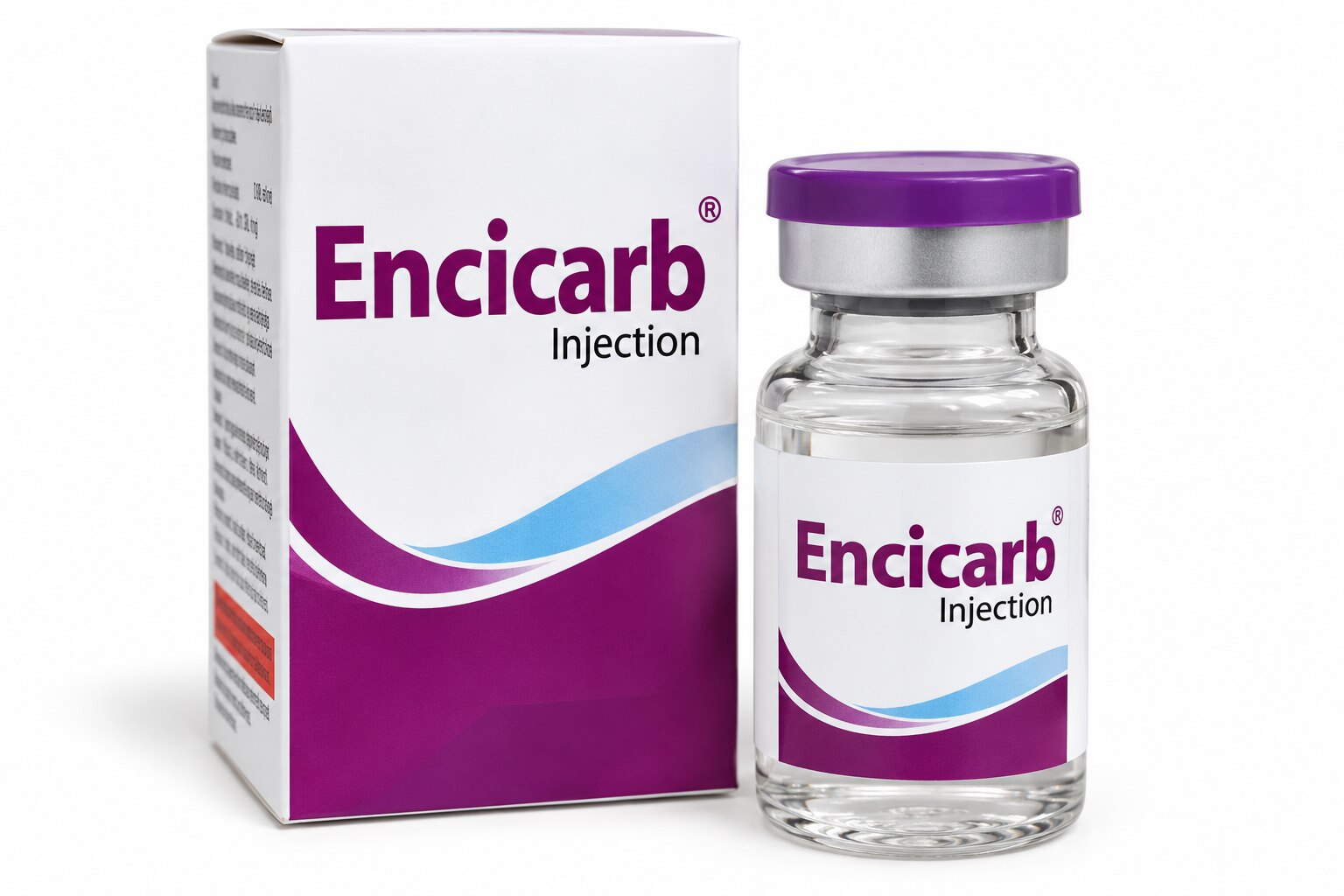
Request a single approved presentation, not “Encicarb” alone. For encicarb injection for pharmaceutical exporter product details in lima, identify ferric carboxymaltose, elemental-iron strength, dosage form, intravenous route, container type, units per pack, manufacturer, marketing-authorisation holder, and the authorised Peruvian importer.
| Reference received | What it establishes | What to confirm before ordering |
|---|---|---|
| 100 mg/2 mL | 50 mg/mL and 100 mg elemental iron per unit | Whether the approved unit is an ampoule or vial, pack size, and label status |
| 10 mL | Container volume only | Iron concentration, total elemental iron, approved presentation, and whether it is a vial or ampoule |
| 100 mg/2 mL versus 10 mL | Conflicting commercial descriptions | A current approved label and product data sheet matching the quoted stock |
For encicarb 100mg 2ml procurement, price the supply by elemental iron delivered, not by unit count. At 100 mg per 2 mL, a 500 mg dose requires five units and a 1,000 mg dose requires ten; do not apply that calculation to a 10 mL container until its concentration is documented.
Include the certificate of analysis, Indian manufacturing-site and GMP evidence, batch-release details, and certificate of pharmaceutical product where required. Before purchase, confirm the product’s sanitary-registration status with DIGEMID and the legally authorised importer or marketing-authorisation holder in Peru.
Do not approve substitution with iron sucrose, ferric derisomaltose, or iron dextran because the word “iron” appears on both offers.
What administration and observation requirements belong in the hospital specification?
Ferric carboxymaltose is for intravenous use only: never specify intramuscular or subcutaneous administration. The hospital specification must identify the approved label and require its exact dilution, infusion rate, slow-injection method, maximum dose and minimum administration time. Do not copy instructions from iron sucrose or another iron product.
| Administration method | What the specification must require | Consequence of omission |
|---|---|---|
| Slow IV injection | Confirm that the approved label permits it; state the injection rate and minimum time | Rapid administration can increase adverse-reaction risk |
| IV infusion | Name the permitted diluent, final concentration, infusion rate and minimum time | Incorrect dilution or rate can make an otherwise suitable dose unsafe |
| IM or subcutaneous injection | State “not permitted” | The product is not interchangeable with injectable iron products approved for other routes |
For an encicarb injection hospital supply, require administration by clinicians trained to recognise and treat hypersensitivity. Keep the patient under observation during dosing and for at least 30 minutes afterward, with trained staff and resuscitation facilities immediately available.
Specify access to oxygen, suction, airway equipment, a defibrillator, emergency medicines such as epinephrine, and the hospital’s anaphylaxis protocol. Stop administration immediately if wheezing, hypotension, facial swelling, rash or breathing difficulty develops.
A ferric carboxymaltose injection exporter should provide the approved product label with every technical submission. Confirm the local marketing authorisation and authorised importer through DIGEMID before approving the supply; a brand name or quotation does not establish legal or clinical suitability.
How should clinicians select patients and calculate the required quantity?
Confirm iron deficiency before ordering: haemoglobin documents anaemia but does not prove iron depletion. Use ferritin and transferrin saturation (TSAT); low ferritin or TSAT below 20% supports deficiency. In infection, inflammation, liver disease or chronic kidney disease, ferritin can appear normal or high, so interpret it with C-reactive protein, clinical history and the local protocol.
- Estimate the total iron requirement from body weight, haemoglobin and the approved label. If the protocol uses the Ganzoni formula, calculate: weight in kilograms × (target haemoglobin − actual haemoglobin in g/dL) × 2.4 + 500 mg for stores. Do not apply a US schedule automatically; the Peruvian-approved label controls maximum dose, interval and course.
- Convert the prescribed milligrams of elemental iron into vials only after confirming the Encicarb presentation. Divide the required iron by the labelled iron per vial and round up; never infer vial count from “100 mg/2 mL” or “10 mL” alone. Record wastage and the batch quantity in the encicarb injection hospital supply request.
| Option | Advantage | Choose it when |
|---|---|---|
| Oral iron | Lowest administration burden | Deficiency is mild, absorption is reliable and time permits |
| Ferric carboxymaltose | Large replacement in fewer visits | Oral iron fails or is unsuitable, or rapid repletion is needed |
| Iron sucrose | Fractionated IV dosing | Smaller repeated doses fit the protocol or phosphate risk favours avoiding carboxymaltose |
Use another treatment for B12 or folate deficiency, anaemia without iron deficiency, untreated major bleeding, iron overload, or unstable anaemia requiring urgent transfusion. Check phosphate before repeat courses in patients with vitamin-D deficiency, malabsorption, inflammatory bowel disease or secondary hyperparathyroidism.
Which exporter and Peru import documents should a hospital demand?
A quotation is not evidence that a medicine can enter Peru. For Encicarb, demand a reviewable dossier naming ferric carboxymaltose, the approved strength, route, manufacturer, marketing-authorisation holder and Peruvian regulatory status. An iron injection international supplier must support each claim with controlled documents, not a brand name or price.
Request these items before tender approval:
- The approved product label and package artwork, including active ingredient, iron concentration, dosage form and intravenous route.
- Marketing-authorisation information, including the registration number, holder and approved presentation in Peru.
- The Indian manufacturing site’s licence and GMP evidence, with the site name matching the offer.
- A batch-specific certificate of analysis and batch-release certificate or equivalent release record.
- A certificate of pharmaceutical product where DIGEMID or the importing procedure requires it.
- The Peruvian importer’s legal name, import authority and relationship to the marketing-authorisation holder.
- Written batch-level recall, pharmacovigilance, replacement and credit procedures.
| Document | What it proves | What to check |
|---|---|---|
| Approved label | The permitted product and use | Strength, route, pack size and holder match the tender |
| GMP evidence | Manufacturing-site compliance | Site address matches the batch documents |
| Certificate of analysis | Batch conformance | Batch number, test results, dates and signatures are complete |
| DIGEMID record | Peruvian regulatory pathway | Registration status and authorised importer are verifiable |
NIBA HEALTHCARE can be assessed as an Indian finished-pharmaceutical exporter supplying Lima buyers, but its quotation cannot replace DIGEMID verification. Record the checks under encicarb injection for pharmaceutical exporter product details in lima.
How should Lima hospitals receive, monitor and trace each shipment?
Do not release an Encicarb injection hospital supply into inventory until receiving staff reconcile the shipping documents with every container. Record the batch number and expiry date, calculate remaining shelf life against the tender minimum, and match the certificate of analysis to that batch.
Reject or quarantine stock with a broken seal, cracked vial, leak, visible particles or discoloration.
- Review temperature records, data-loggers and any excursion report from dispatch through delivery.
- Store at 20–25 °C, allowing only labelled excursions to 15–30 °C; protect every container from freezing. If the approved Peruvian label states a different range, follow that label and document the decision.
- Record product name, presentation, quantity, batch, expiry, receiving date, carrier and destination facility in the inventory system.
- Link each administration record to the patient, dose, date and batch so a recall reaches named patients rather than a warehouse total.
Monitor haemoglobin, ferritin and transferrin saturation to assess response and prevent unnecessary re-dosing. Add serum phosphate before repeat courses and during follow-up for patients with repeated or high-dose treatment, malabsorption, vitamin-D deficiency, disorders that increase hypophosphataemia risk, or symptoms such as weakness and bone pain.
A ferric carboxymaltose injection exporter should support written recall, complaint and pharmacovigilance procedures identifying every Lima facility supplied, with rapid notification and documented replacement or credit for recalled stock.
Frequently asked questions
What exact Encicarb presentation should a Lima hospital request?
Name ferric carboxymaltose, elemental-iron strength, injection volume, intravenous route, container type, units per pack, manufacturer, marketing-authorisation holder and authorised Peruvian importer. Do not order “Encicarb” without these details.
What administration and observation requirements belong in the hospital specification?
State that trained staff must administer the product intravenously, keep resuscitation equipment available, inspect the solution and observe the patient during administration and afterward according to the approved product information.
How should clinicians select patients and calculate the required quantity?
Confirm the indication, haemoglobin, body weight, iron deficit, renal and allergy history, prior intravenous-iron reactions and the approved maximum dose. Calculate total elemental-iron need, then convert it into the selected vial strength and pack quantity.
Which exporter and Peru import documents should a hospital demand?
Request the product specification, certificate of analysis for the batch, certificate of pharmaceutical product or equivalent regulatory certificate, manufacturing and expiry details, GMP evidence, commercial invoice, packing list, transport record and the authorised Peruvian importer’s sanitary-registration information.
How should Lima hospitals receive, monitor and trace each shipment?
Record the supplier, importer, product presentation, batch number, expiry date, quantities, transport condition, arrival date and receiving staff. Quarantine damaged, leaking, incorrectly labelled or temperature-exposed stock until quality staff release or reject it.